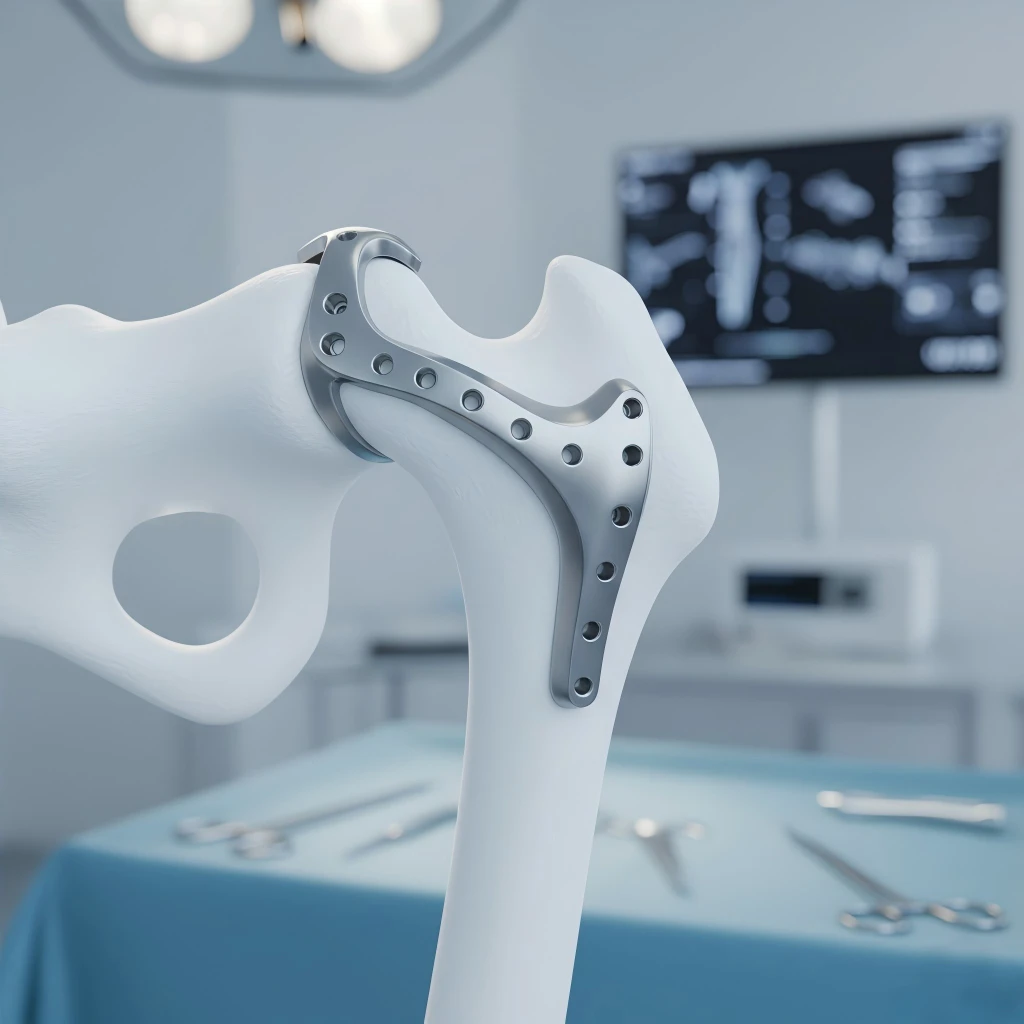
Let’s be real for a second—if you’re running a medical distribution business, you’ve probably noticed that the “old reliable” hardware just isn’t moving like it used to. I’ve been chatting with a lot of surgical reps and hospital procurement folks lately, and the vibe is shifting. Big time. Everyone is asking for the Proximal Femoral Locking Plate II.
It’s not just some marketing buzzword. There is a genuine, slightly frantic move toward anatomical designs. In this deep dive, I want to talk about why the global orthopedic market trends are leaning so heavily into this specific plate and what that actually means for your bottom line as a distributor. If you’re still stocking the first-gen stuff, you might be sitting on a “dinosaur” without even realizing it.
The Reality of the Global Orthopedic Market Trends in 2024
I was looking at some recent data from Fortune Business Insights, and the orthopedic trauma market is expected to hit something like $11.5 billion by 2028. But the growth isn’t coming from generic screws. It’s coming from specialized kits.
Why? Because the world is getting older. It’s a bit of a grim reality, but hip fractures—especially those nasty trochanteric ones—are skyrocketing. Surgeons are tired of the “one size fits most” approach because “most” usually means “doesn’t actually fit anyone perfectly.”
Here’s the thing: hospitals are under massive pressure to cut down on OR (Operating Room) time. If a surgeon has to spend 20 minutes bending a plate to match the patient’s femur, that’s thousands of dollars wasted. This is why the anatomical fit has become the gold standard.
Breaking Down the Numbers: Why the Surge?
Let’s look at a quick comparison of what’s happening in the market right now.
| Market Driver | Impact on Demand | Why Distributors Should Care |
| Aging Population | High – More fragility fractures | Constant stream of cases; no “slow season.” |
| MIPO Techniques | High – Minimal invasive is in | Requires plates with specific insertion guides. |
| Re-operation Rates | Critical – Surgeons hate failures | Anatomical plates reduce “screw cutout” risks. |
| Hospital Efficiency | Very High – Time is money | Pre-contoured plates save 15-30 mins per case. |
I’ve seen it myself—distributors who pivoted to the OrthoPro Plate II series saw a much higher “stickiness” with their surgical accounts. Once a surgeon gets used to a plate that just drops in, they aren’t going back to the clunky stuff.
What “Anatomical Fit” Actually Means in the Scrub Room
We talk about anatomical fit like it’s a feature, but for a surgeon, it’s a lifesaver. Think about the proximal femur. It’s got a complex curve. Traditional plates were flat. You’d screw them in, and the plate would pull the bone toward it, sometimes messing up the alignment.
The Proximal Femoral Locking Plate II is pre-contoured. It mimics the natural lateral bow of the femur.
The Biomechanics (The Nerdy But Important Part)
If you want to impress a Head of Orthopedics, you need to talk about load sharing. In a fracture, the plate shouldn’t take 100% of the weight, but it needs to stabilize it enough for the bone to heal.
There’s a simple way to look at the stress distribution. If we look at the Tension (T) on the lateral side and Compression (C) on the medial side:
Stability Factor = (Number of Locking Screws * Screw Diameter) / Plate-to-Bone Distance
In the older plates, the “Plate-to-Bone Distance” was often inconsistent because the fit was bad. With the Plate II, that distance is minimized. This means the screws are under less “toggle” stress. I’ve heard surgeons call it the “kickstand effect.” When the plate fits the bone perfectly, the screws can focus on holding the fracture together instead of fighting the plate’s shape.
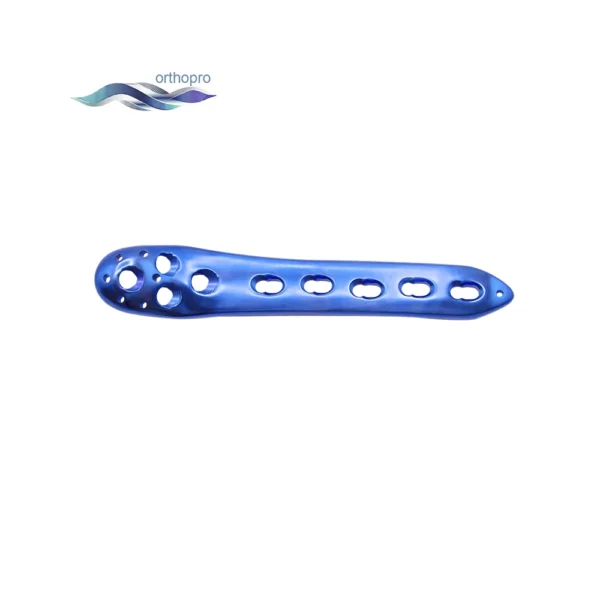
Anatomical Proximal Femoral Locking Plate II for Trochanteric and Subtrochanteric Fractures – High-Performance Orthopedic Trauma Fixation System
The Proximal Femoral Locking Plate II is a premier orthopedic trauma implant specifically designed for the stable internal fixation of complex proximal femur fractures. This Proximal Femoral Locking Plate II offers superior anatomical contouring and fixed-angle stability for trochanteric and subtrochanteric injuries. As a trusted proximal femoral locking plate system, it ensures reliable clinical results for medical distributors and trauma centers worldwide.
Why Trochanteric Fracture Fixation is a Profit Engine
Let’s talk money. Why is trochanteric fracture fixation specifically driving the demand?
Intertrochanteric fractures are the “bread and butter” of trauma centers. But they are notoriously difficult in elderly patients with “eggshell” bones (osteoporosis). Standard plates often fail because the screws “cut out” of the soft bone.
The Plate II design uses a convergent/divergent screw pattern in the femoral neck. This creates a “web” of support. I think this is where OrthoPro really nailed it. By offering multiple locking options in the proximal head, they give surgeons a plan B, C, and D during a difficult surgery.
A Quick “Anonymous” Success Story
I have a buddy who distributes in Latin America. He was struggling to get into a major private hospital because a “big name” brand had a lock on the contract. He managed to get a trial for the Proximal Femoral Locking Plate II by highlighting the reduced need for intraoperative bending. The surgeons loved it so much that they literally forced the procurement office to add it to the preferred vendor list. He didn’t win on price—he won on frustration reduction.
The Distributor’s Dilemma: Stocking and Premium Space
I get it. You don’t want to carry 50 different types of plates. But the market is moving toward “Premium Trauma.” Patients (and insurance companies) are looking at outcomes. A failed hip surgery can cost a hospital upwards of $40,000 in re-hospitalization fees.
When you sell the Proximal Femoral Locking Plate II, you aren’t selling metal; you’re selling an insurance policy against failure. That’s where your premium space is. You can charge more for a plate that reduces the “re-op” rate.
Supply Chain Messes and Reliability
One thing I’ve noticed is that the “big” brands are having a nightmare with their supplie chains lately. I’ve heard of cases being cancelled because a specific screw was out of stock. Being a distributor for a brand like OrthoPro gives you a bit more agility. You can actually get the gear when you need it. Nothing kills a relationship with a surgeon faster than saying “sorry, we don’t have the plate for your 8 AM case.”
Technical Specs You Can Actually Use
Don’t just read the brochure. Understand the material. Most of these plates are Ti-6Al-4V (Grade 5 Titanium). Why titanium? It’s not just about the “cool” factor.
The Modulus of Elasticity (the “stiffness”) of Titanium is much closer to human bone than Stainless Steel.
Stress Shielding = (E_plate – E_bone) / E_plate
Where ‘E’ is the Modulus of Elasticity. If the plate is way stiffer than the bone (like steel), the bone gets “lazy” and doesn’t heal because it isn’t taking any weight. Titanium’s lower ‘E’ means the bone stays active. It’s “Wolf’s Law” in action—bone grows where it feels stress. Anatomical titanium plates facilitate this way better than old-school steel ones.
Common Mistakes Reps Make
I’ve seen plenty of reps walk into a hospital and just talk about the price. “Hey, I can save you 10% on your trauma spend.”
That’s a weak move.
Instead, talk about the “Low Profile” design. Mention how the plate is thinned out in areas where soft tissue is sparse to prevent bursitis. Talk about the tapered plate tip that makes insertion through a small incision (MIPO) a breeze.
Surgeons care about:
- Can I put it in easily?
- Will it stay there?
- Will the patient stop calling me with pain?
The Proximal Femoral Locking Plate II hits all three.
The Future: Where is the Demand Going?
If I had to guess (and I’ve been doing this a long time), the next 5 years will see an even bigger push toward “smart” implants. But for now, the “smart” move is anatomical. We’re seeing a lot of interest in the Asia-Pacific and Latin American regions where the healthcare infrastructure is expanding rapidly. They don’t want the hand-me-down tech from the 90s. They want the good stuff.
As a distributor, you need to be the expert. You should be able to explain why the locking holes are spaced the way they are. You should know why the OrthoPro version is superior to the generic knock-offs coming out of some factories. (Hint: it’s usually the surface treatment and the precision of the screw threads).
Let’s Talk About the “Premium Space” Again
I can’t stress this enough. The “race to the bottom” on price is a losing game for distributors. If you’re selling on price, someone will always be cheaper. But if you’re selling a specialized solution like the Proximal Femoral Locking Plate II, you’re in a protected niche.
Surgeons are loyal to hardware that doesn’t fail. If you help them achieve a 98% success rate in their trochanteric fracture fixation cases, they will never let the hospital fire you. That’s your true value as a partner, not just a vendor.
Why OrthoPro is the Right Call Now
I’ve looked at a lot of manufacturers. Some are too big to care about a medium-sized distributor. Others are too small to be reliable. OrthoPro seems to hit that sweet spot. They focus on the high-demand trauma items that actually move.
The Proximal Femoral Locking Plate II is their flagship for a reason. It’s the answer to the most common problems in the trauma ward.
Some things to check before you order:
- Inventory Depth: Make sure you have the full range of lengths (from 4 holes to 12+).
- Instrumentation: Is the kit easy to clean? (Surgeons hate “fiddly” instruments).
- Training: Does your team know the specific surgical technique?
If you get these right, you’re not just selling plates; you’re building a legacy in your territory.
FAQ Section
Q: Is the Proximal Femoral Locking Plate II compatible with standard locking screws?
A: Usually, it’s designed to work specifically with the matching OrthoPro screw set. Using mix-and-match screws is a recipe for disaster (and legal headaches). The thread pitch is precisely matched to ensure the “locking” actually locks.
Q: Why choose the II over the original version?
A: The main difference is the refined anatomical contour and the improved screw hole placement. The “II” was basically designed based on feedback from hundreds of surgeons who wanted a better fit on the lateral condyle. It’s simply more ergonomic.
Q: How does the plate handle extremely osteoporotic bone?
A: It handles it better than most because of the “fixed-angle” construct. Since the screws lock into the plate, they don’t rely solely on the bone’s “grip” to provide stability. It acts like an internal scaffold.
Q: What about the lead times for international shipping?
A: This is where being a partner matters. Lead times can vary, but typically, they are much more manageable than the “Big 3” orthopedic companies right now.
Ready to Scale Your Trauma Portfolio?
Look, the market isn’t waiting for anyone. The shift toward anatomical plates is happening whether we like it or not. You can either be the distributor that provides the cutting-edge gear surgeons are asking for, or you can watch your competitors do it.
A – Attention: The global orthopedic market is moving toward specialized, anatomical solutions.
I – Interest: The Proximal Femoral Locking Plate II is the top choice for complex trochanteric fracture fixation.
D – Desire: Imagine having a “failure-proof” trauma line that surgeons actually trust and request by name.
A – Action: Don’t let your territory get stale. Contact OrthoPro today or shoot an email to info@orthopro.mx to get the latest catalog and pricing. Let’s get your warehouse stocked with gear that actually moves.
I’ve seen the sales data. The “Plate II” is the future. Are you coming with?