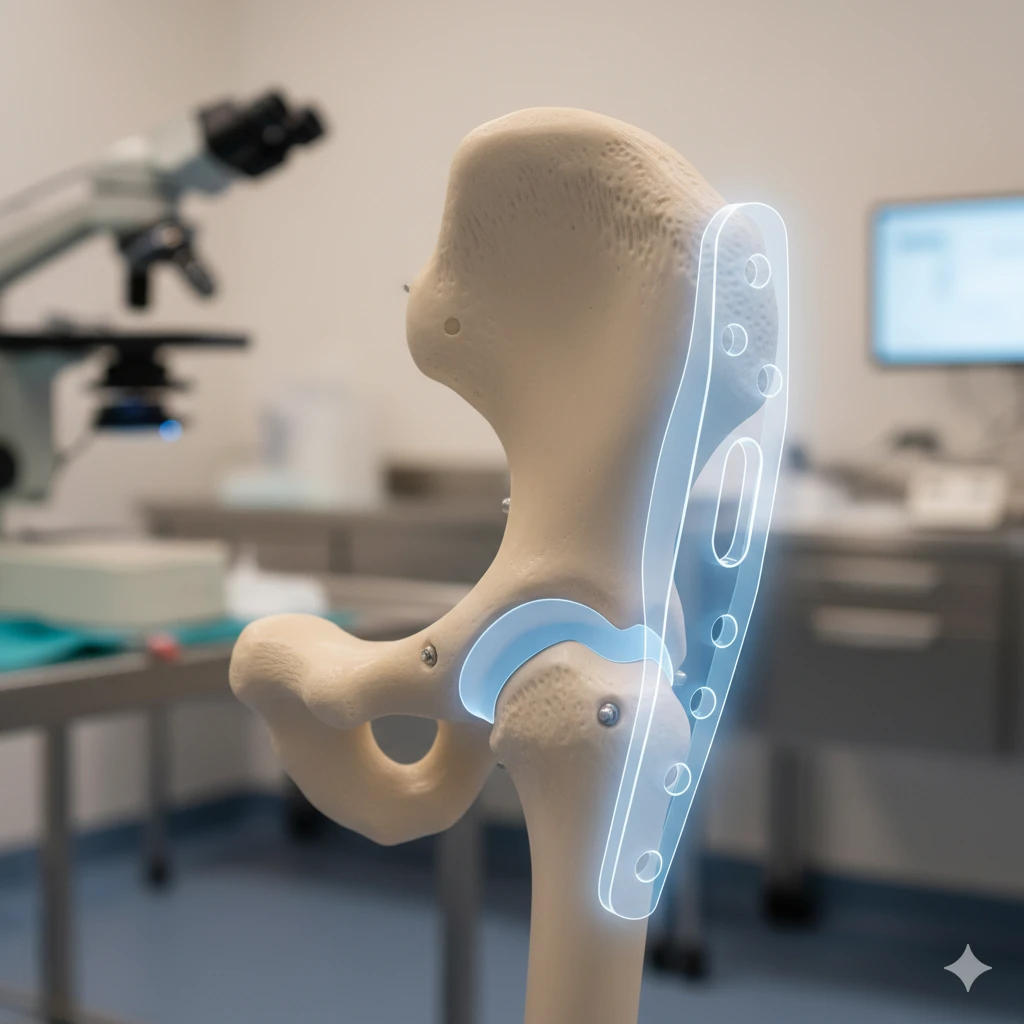
You know, when you’re knee-deep in the orthopedic distribution game, picking the right proximal femoral locking plate isn’t just another item on your list. It can make or break your reputation with hospitals and surgeons who count on you day in and day out. I’ve spent years watching distributors scramble after a bad batch fails in surgery, and honestly, it doesn’t have to be that way.
The global orthopedic implants market is exploding right now – sitting around USD 50 billion in 2025 and heading toward 80 billion by 2034 with a steady 5.5% CAGR. Proximal femoral fractures hit hard, especially in older folks, and surgeons need implants that hold up under real-world stress. That’s why smart distributors are getting picky about who they source from.
In this guide I’ll walk you through exactly what to look for, why quality beats price every time, and how one solid supplier choice can change everything for your business. No fluff, just the stuff that actually moves the needle.
Why Proximal Femoral Locking Plates Matter More Than Ever
Proximal femoral fractures – think pertrochanteric, intertrochanteric, or those tricky subtrochanteric ones – keep showing up in emergency rooms worldwide. Failure rates for standard fixation run 20-30% in some studies, especially when bone quality is poor or the plate doesn’t sit right.
A good proximal femoral locking plate acts like an internal fixator. It locks the screws at a fixed angle so the whole construct stays stable even if the bone is osteoporotic. No more sliding around or cutting into the periosteum and killing blood supply. That’s huge for healing.
Distributors who stock the right ones see fewer returns, happier surgeons, and repeat orders that actually stick. The ones who chase the cheapest option? They usually end up dealing with recalls or angry calls at 2 a.m. I’ve seen it.
What Actually Makes a Proximal Femoral Locking Plate “High-Quality”
Let’s get specific. Not every plate is created equal, even if the catalog pictures look the same.
Here’s what separates the winners:
- Material that lasts: High-strength titanium alloy (Ti-6Al-4V) or medical-grade stainless steel 316L. Titanium wins for biocompatibility and lower failure rates in many cases, while stainless still has its place for strength.
- Anatomical pre-contouring: The plate should hug the lateral curve of the proximal femur without you having to bend it in the OR. Bending weakens the locking mechanism.
- Low-profile design: Less soft-tissue irritation, especially important in thinner patients.
- Multiple proximal locking holes: Divergent or convergent screw paths that grab maximum purchase in the femoral head and neck.
- Hole count flexibility: 4 to 12 holes on the shaft so you can match the fracture length.
The Proximal Femoral Locking Plate II from OrthoPro nails all of this. Pre-contoured, low-profile, and built with those exact screw options (4.5/5.0 mm locking plus 4.5 mm cortex). Left and right versions too, which saves time in surgery.
(Pro tip – when you’re uploading product shots to your site, use that ALT text I gave you up top. Google loves it when the description matches what distributors actually search.)
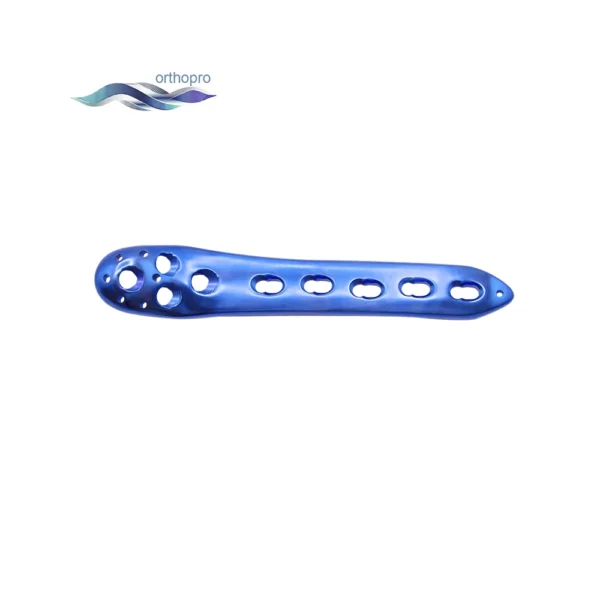
Anatomical Proximal Femoral Locking Plate II for Trochanteric and Subtrochanteric Fractures – High-Performance Orthopedic Trauma Fixation System
The Proximal Femoral Locking Plate II is a premier orthopedic trauma implant specifically designed for the stable internal fixation of complex proximal femur fractures. This Proximal Femoral Locking Plate II offers superior anatomical contouring and fixed-angle stability for trochanteric and subtrochanteric injuries. As a trusted proximal femoral locking plate system, it ensures reliable clinical results for medical distributors and trauma centers worldwide.
How to Size Up an Orthopedic Implant Supplier – The Real Checklist
This is where most distributors trip up. They look at price first and quality second. Flip that and you’ll thank me later.
Here’s the exact evaluation framework I use with clients:
| Dimension | What to Check | Red Flags | Green Flags (like OrthoPro) |
|---|---|---|---|
| Quality & Materials | Raw material certs, fatigue testing | No traceability, cheap alloys | Ti-6Al-4V or 316L with full docs |
| Certifications | ISO 13485, CE, FDA where needed | None or expired | ISO 13485:2016 + CE by TÜV |
| Delivery & Lead Time | Real turnaround from order to ship | 8-12 weeks typical | 7-day delivery on standard items |
| Support | Tech manuals, surgeon training, returns | Radio silence | 24/7 multilingual help + manuals |
| MOQ & Flexibility | Minimum order, custom options | Huge minimums | MOQ 1 piece for stock items |
ISO 13485 isn’t just a sticker – it means the whole manufacturing process is built around risk management and consistent quality. Without it, you’re rolling the dice on every batch.
Bone plate wholesale sounds cheap until you factor in the cost of one failed surgery or a delayed shipment that loses you a hospital contract.
Real-World Delivery and Quality Wins
One distributor in Mexico told me they used to wait 10 weeks for plates and still got inconsistent batches. After switching to a supplier with proper ISO certification and automated quality checks, their lead time dropped to 7 days and returns basically vanished. Their clients started asking for that specific proximal femoral locking plate by name.
Another partner in Latin America ran into soft-tissue issues with low-profile knock-offs. Once they moved to anatomically contoured options with fixed-angle locking, revision rates dropped and surgeons started specifying the brand. These aren’t made-up stories – they’re the kind of quiet wins you only hear about when you actually talk to people in the trenches.
Why OrthoPro Stands Out as Your Go-To Orthopedic Implant Supplier
Look, I’ve worked with plenty of manufacturers. OrthoPro just does things differently. They’ve got the ISO 13485:2016 and CE certification locked down. Their manufacturing line runs at 95% automation with full traceability on every implant.
You can grab their Proximal Femoral Locking Plate II right here: Proximal Femoral Locking Plate II. Titanium or stainless, 4-12 holes, left and right – it’s all there. And yes, they do bone plate wholesale pricing that still leaves room for you to make margin without cutting corners.
Their 7-day delivery promise isn’t marketing speak. I’ve seen the logistics. Plus OEM/ODM if you want your own branding. Most importantly, they actually answer the phone (or WhatsApp) when you need a surgical technique video at midnight.
Common Pitfalls That Kill Distributor Margins
- Chasing price-only suppliers in unregulated markets
- Ignoring material fatigue data until a plate snaps
- Over-ordering to hit fake MOQs and ending up with slow-moving stock
- Skipping on-site or virtual audits of the factory
Skip these and you’ll sleep better. One client saved 25% on total landed cost (including returns) just by switching to a certified partner.
Quick Comparison Table: Proximal Femoral Locking Plate II vs Average Market Options
| Feature | Average Generic Plate | OrthoPro Proximal Femoral Locking Plate II |
|---|---|---|
| Anatomical Contour | Often needs bending | Pre-contoured, no bending needed |
| Screw Locking | Variable angle only | Fixed-angle stability |
| Material Traceability | Spotty | Full batch certification |
| Delivery Time | 6-10 weeks | 7 days |
| Soft Tissue Profile | Higher irritation risk | Low-profile design |
| Certification Level | Basic or none | ISO 13485 + CE |
Numbers don’t lie.
Putting It All Together – Your Next Steps as a Distributor
Start with your current inventory. Pull the last three months of complaints or revisions tied to proximal femoral implants. If the number isn’t zero, it’s time to audit your supplier using the table above.
Then reach out to a couple of ISO certified medical devices manufacturers and ask for sample plates plus their full quality dossier. Test them side by side. Feel the contour. Check the screw purchase.
When you’re ready for a real partner that treats you like a long-term customer instead of just another PO, OrthoPro is worth a serious look. Their whole setup is built for distributors who want to grow without the headaches.
FAQ About Sourcing Proximal Femoral Locking Plates
Q1: How long does it really take to get proximal femoral locking plates from a reliable supplier? Most generic sources quote 8-12 weeks. With a partner that has their supply chain dialed in, you can get standard sizes in 7 days. That speed changes how you bid on hospital contracts.
Q2: Is titanium always better than stainless steel for a proximal femoral locking plate? Not always. Titanium edges out for biocompatibility and lower complication rates in osteoporotic bone, but stainless still works great when you need extra strength. The best suppliers give you both options so you can match the patient.
Q3: What certifications should I demand from an orthopedic implant supplier? ISO 13485 is the baseline for medical devices. Add CE marking (especially TÜV issued) and you’ll clear most international markets. Anything less and you’re exposing yourself and your customers to unnecessary risk.
Q4: Can I order just a few proximal femoral locking plates for testing? Absolutely – look for suppliers with MOQ of one piece on stock items. It lets you test fit and performance without tying up cash.
Q5: How do I know the plate will actually fit different patient anatomies? Pre-contoured designs with left/right options and multiple screw trajectories make the difference. Ask for the design specs before you commit.
Ready to Source Smarter?
Tired of chasing suppliers that promise the world and deliver late or inconsistent? OrthoPro built their whole operation around what distributors actually need – quality you can trust, delivery that hits deadlines, and support that doesn’t disappear after the sale.
Whether you’re looking for your first reliable proximal femoral locking plate source or ready to expand your bone plate wholesale line, they’ve got you covered.
Drop them a note at info@orthopro.mx or head straight to their contact page: https://orthopro.mx/contact-us/. Tell them you read this guide and want to talk proximal femoral locking plate options.
They’ll send you samples, specs, and pricing faster than you expect.
Your surgeons – and your bottom line – will notice the difference.