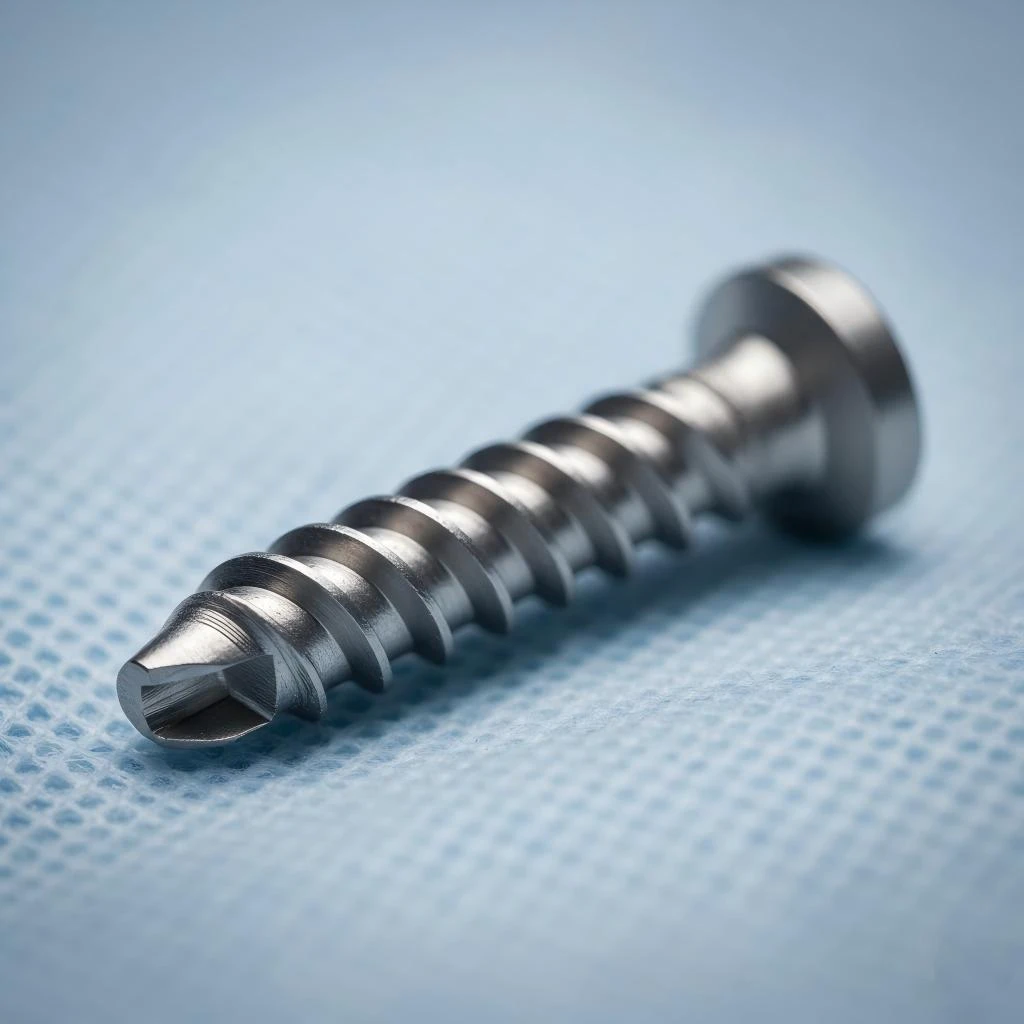
Sourcing medical implants isn’t like buying office chairs. When you’re in charge of procurement for a hospital group or a large distribution hub, the pressure is massive. You aren’t just looking for a “good price”—you’re looking for a part that literally keeps someone’s ankle or hip together. I’ve seen procurement managers get burned by choosing a 4.0mm cancellous screw manufacturer based solely on a flashy catalog, only to have the surgeon complain about “stripping” during the very first case. It’s a nightmare you want to avoid.
If you’re hunting for a new partner in the wholesale medical devices space, you need a system. This isn’t just about checking a box; it’s about understanding the bone screw manufacturing process from the raw titanium rod to the final sterile pack. Let’s dive into what actually matters when you’re doing an orthopedic implant supplier audit.
Why the 4.0mm Cancellous Screw is a Technical “Goldilocks” Part
In the world of small fragment sets, the 4.0mm cancellous screw is the workhorse. It’s used in areas where bone is softer and more porous (cancellous bone). Because it’s so common, many factories think they can cut corners. But “standard” isn’t “simple.”
Actually, the thread geometry on a 4.0mm cancellous screw is much more aggressive than a cortical screw. If the pitch isn’t perfectly machined, the screw won’t grab the bone—it’ll just act like a drill and destroy the internal structure. I’ve visited plants where they used the same blunt tools for 500 units, and by the end, the “sharp” threads were more like rounded hills. That’s a fail.
The Bone Screw Manufacturing Process: What Happens Behind the Curtain
When you audit a factory, you’ve got to get out of the meeting room and onto the floor. If they don’t let you see the CNC machines, run away. Here is what a high-quality process looks like.
1. Swiss-Type CNC Machining
The best screws are made on Swiss-type lathes. These machines are incredible because they support the material very close to the cutting tool. This means zero vibration. If a manufacturer is using old-school lathes for a 4.0mm screw, the tolerances will be all over the place. At OrthoPro, we insist on high-precision CNC because it’s the only way to ensure every screw in a batch of 10,000 is identical.
2. The Deburring Nightmare
After machining, screws have tiny metal burrs. If these burrs aren’t removed, they can break off inside a patient. Some cheap manufacturers use manual deburring (a guy with a tiny file). That’s incredibly inconsistent. You want to see “Centrifugal Barrel Finishing” or “Electropolishing.” It’s cleaner and way more reliable.
3. Cleaning and Passivation
This is where many “low-cost” suppliers fail. Titanium forms a natural oxide layer that makes it biocompatible. Passivation (usually with nitric or citric acid) strengthens this layer. If they skip this, the screw might corrode or cause an inflammatory reaction. During your orthopedic implant supplier audit, ask to see their chemical management logs. If they can’t tell you how often they change their acid baths, they aren’t serious about quality.
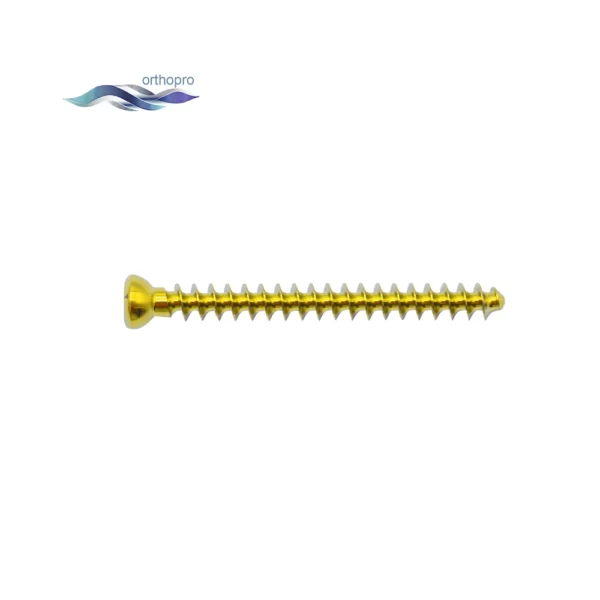
4.0mm Cancellous Screw for Metaphyseal Bone Fracture Fixation – Titanium and Stainless Steel Orthopedic Small Fragment Implants | OrthoPro
The 4.0mm Cancellous Screw is engineered for optimal fixation in spongy, metaphyseal bone during orthopedic trauma surgeries. This 4.0mm cancellous screw provides superior pull-out resistance and interfragmentary compression for small fragment fractures. OrthoPro offers high-quality 4.0mm cancellous bone screws in various thread configurations to ensure surgical precision and patient recovery.
The Science of Pull-Out Strength: The “Secret” Formula
B2B buyers often ask me: “How do we know if the screw will actually hold?” Well, there is some math involved, though most people ignore it until something goes wrong. Pull-out strength is basically the measure of how much force is needed to yank that screw out of the bone.
While we aren’t in a lab right now, you can estimate the Pull-out Force (F) using this general relationship:
F = S * (pi * D * L * f)
Where:
- F = Pull-out Force
- S = Shear strength of the bone (the patient’s bone quality)
- pi = 3.14159
- D = Major diameter of the screw (for us, it’s 4.0mm)
- L = Thread engagement length
- f = Thread efficiency factor (this depends on the thread shape and pitch)
A top-tier 4.0mm cancellous screw manufacturer focuses on maximizing that “f” factor. By making the threads sharper and deeper, they increase the surface area that grips the bone. If you compare a cheap screw and an OrthoPro screw under a microscope, you’ll see the difference in the “f” factor immediately.
Orthopedic Implant Supplier Audit: Your 5-Point Checklist
Don’t just take their word for it. When you’re looking at wholesale medical devices, use this checklist during your next Zoom call or site visit.
| Feature | What to Look For | Red Flag |
| Material | Ti-6Al-4V ELI (Grade 23) with Mill Certs | Standard Grade 5 Titanium (too brittle) |
| Machining | Swiss CNC with auto-loading | Manual lathes or old equipment |
| Cleaning | Validated Ultrasonic Cleaning Line | “Washing” in a bucket of solvent |
| Traceability | Laser-etched Batch Numbers on Every Screw | No markings or “box-only” labels |
| Testing | Torque and Pull-out testing reports | “We’ve never had a complaint” (means they don’t test) |
The Controversial Truth About Pricing in B2B
Here’s an unpopular opinion: If you’re paying the absolute lowest market price for a 4.0mm cancellous screw, you’re probably buying a liability.
I once worked with a distributor who bought “budget” screws from a factory that didn’t do proper torque testing. During a surgery, the head of a screw snapped off while the surgeon was seating it. The hospital had to do an emergency revision, the distributor lost the contract, and the legal fees were 100x the money they saved on the purchase.
Quality in wholesale medical devices isn’t an expense; it’s insurance. A slightly higher unit price for a screw that has been through a rigorous bone screw manufacturing process saves you millions in the long run.
Raw Materials: ELI is the Only Way
When you’re auditing, ask for the “Heat Number” on the titanium. You want Ti-6Al-4V ELI. The “ELI” stands for Extra Low Interstitials. Basically, it’s a super-purified version of Grade 5 titanium. It has better ductility, meaning it can bend a little bit without snapping. In a pediatric or active adult patient, that “give” is vital. Standard Grade 5 is often too “glass-like” for bone screws. If your manufacturer is just saying “Titanium Alloy,” dig deeper. They might be trying to save 15% on material costs at the expense of patient safety.
How OrthoPro Approaches 4.0mm Cancellous Screw Quality
At OrthoPro, we don’t just act as a middleman. We focus on the B2B relationship by providing full documentation. We know that as a buyer, you need to answer to your regulatory board and your surgeons.
We’ve optimized our 4.0mm cancellous screw to include:
- Self-Tapping Flutes: These cut the bone efficiently, reducing the heat generated during insertion. High heat kills bone cells (osteonecrosis).
- Standardized Hex or Torx Drive: We ensure the recess is deep enough so the screwdriver doesn’t “cam out” and strip the head.
- Anodized Surfaces: For easier identification and improved fatigue resistance.
I remember a client—a mid-sized distributor in Latin America—who was struggling with high return rates from their local clinics. We ran a small audit on their previous supplier’s screws and found the thread pitch varied by up to 12% across the same batch. After switching to our precision-machined line, their return rate dropped to near zero. That’s the power of a proper bone screw manufacturing process.
Avoiding the “Middleman” Trap
In the wholesale medical devices world, there are hundreds of “trading companies” pretending to be factories. They use stock photos of cleanrooms they’ve never actually stepped foot in.
Pro Tip: Ask for a live video tour of the “Quality Control Lab.” If they can’t show you a profile projector, a hardness tester, and a CMM (Coordinate Measuring Machine) within 5 minutes, they are likely just a trading office. You want to buy from a 4.0mm cancellous screw manufacturer that owns the machines, because when you have a technical question, you need an engineer, not a salesperson.
Understanding the Logistics and Regulatory Paperwork
B2B procurement isn’t just about the hardware; it’s about the “software”—the paperwork. An orthopedic implant supplier audit must include a review of their ISO 13485 certification. But don’t stop there.
- Certificate of Conformity (CoC): Does it come with every shipment?
- Sterilization Validation: If you’re buying sterile, ask for the Dose Audit report.
- Packaging Integrity: I’ve seen great screws ruined because the double-blister pack was made of cheap plastic that cracked during air freight.
Anyway, if you’re looking for a partner that understands these headaches, we’ve built OrthoPro specifically to be that “easy” button for B2B buyers. We speak the language of surgeons and the language of procurement.
Conclusion: Making the Final Decision
Choosing a 4.0mm cancellous screw manufacturer is a high-stakes game. You need a partner that combines technical mastery of the bone screw manufacturing process with a transparent, “no-BS” approach to quality.
Remember the formula: Price + Quality + Documentation = Total Value. If any of those are zero, the whole thing is zero.
Don’t settle for “okay” when it comes to implants. Your reputation (and the health of patients) depends on it. If you’re tired of the “low-bid” lottery and want a partner who actually knows their CNC from their elbow, let’s talk.
FAQ: Common Questions from B2B Buyers
Q1: What is the most common failure point for a 4.0mm cancellous screw?
Usually, it’s the “head-neck junction.” If the machining creates a sharp corner instead of a smooth radius where the head meets the shaft, stress concentrates there. Under the weight of a patient, the head can snap off. A good manufacturer always designs a “fillet” or radius into that junction to spread the load.
Q2: Can we use the same instrument set for different manufacturers’ screws?
This is a risky one. While a “4.0mm screw” sounds universal, the screwdriver recess (Hex vs. Torx) and the thread pitch might differ slightly. I always recommend using the instrument set designed by the screw manufacturer to prevent stripping the head. This is a common point of friction we address in our orthopedic implant supplier audit consultations.
Q3: Is there a big difference between partially threaded and fully threaded 4.0mm screws?
Huge difference in application. Partially threaded screws are for “lagging”—pulling two bone fragments together. Fully threaded are for stabilization. A reliable wholesale medical devices supplier should stock both and be able to explain the torque limit differences for each.
Ready to Secure a Reliable Supply Chain?
Are you feeling overwhelmed by the sheer number of suppliers in the market? Or maybe you’re just done with the “quality flip-flop” of your current partner.
At OrthoPro, we specialize in high-precision orthopedic solutions that pass the most rigorous audits. We don’t just sell you a box of screws; we provide the peace of mind that comes with a validated, high-end bone screw manufacturing process.
Stop gambling with your procurement.
- Explore our full range: Visit our Product Page for detailed specs.
- Get a Custom Quote: Need bulk pricing or a trial batch for your hospital group? Contact us here.
- Talk to an Expert: Shoot us an email at info@orthopro.mx and we’ll get back to you with the technical data you actually need.
Let’s build a supply chain that surgeons trust and procurement loves. Reach out to OrthoPro today!