Look at the news this morning. US Marines just seized an Iranian ship, the rhetoric out of Washington is getting hotter by the hour, and the Strait of Hormuz is basically a no-go zone for commercial frieght right now. If you are sitting in an office in Europe, South America, or anywhere outside of Asia waiting on a container of bone plates to arrive, you are probably sweating.
I don’t blame you. Being a medical distributor in April 2026 feels like playing Russian roulette with your cash flow.
You’ve got hospital procurement directors calling your cell phone at 6 AM demanding to know where their surgical kits are. You check the tracking, and your ocean frieght has been rerouted around the Cape of Good Hope, adding a brutal 15 to 20 days to your transit time. That is, if it even left the port on time.
The harsh truth we all have to swallow right now? Relying on a single shipping lane and hoping your overseas factory can magically deliver on time is a dead stratergy. Today, we need to have a serious, unfiltered conversation about the massive medical supply chain disruption happening globally, and how you need to radically change how you evaluate an orthopedic implant supplier before your local competitors steal your hospital contracts.
The Death of “Just-in-Time” Inventory for Medical Devices
Let’s get a controversial opinion out of the way right off the bat: the “Just-in-Time” (JIT) inventory model is an absolute scam in the medical device industry in 2026.
For the last decade, supply chain gurus told distributors to keep their warehouses lean. Don’t tie up cash in inventory. Just order what you need, exactly when you need it. That works great if you are selling cheap plastic toys on Amazon. It is a disaster when you are supplying Level 1 trauma centers with life-saving equipment.
When a surgeon has a patient with a shattered femur from a motorcycle crash on the operating table, they don’t care about global geopolitical tensions. They don’t care that the Drewry World Container Index just spiked or that insurance premiums for ships entering the Middle East have tripled overnight. They just need their intramedullary nails.
If your current CE orthopedic manufacturer operates on a JIT model—meaning they only buy raw titanium after you place your order—you are screwed. By the time they source the metal, machine the implants, get them sterilized, and fight for space on a container ship that is actively dodging military blockades, 90 days have vanished. Your hospital clients won’t wait 90 days. They will simply call the next distributor on their list.
How the Hormuz Crisis Actually Impacts Your Trauma Implants Wholesale Business
Let’s dig into the dirt of what is actually happening on the water right now. The Strait of Hormuz handles roughly 20% to 30% of global oil consumption, sure. But the panic has a massive spillover effect on standard container shipping routes across the Indian Ocean and the Red Sea.
Shipping conglomerates are pulling vessels from regular routes to compensate for the massive delays caused by rerouting around Africa. This creates artificial scarcity at major export hubs.
Here is what that looks like for your trauma implants wholesale business:
- Rolled Cargo: Your factory finishes your order of external fixators. They book a container. You pay the balance. You think you are safe. Then the shipping line “rolls” your cargo to the next vessel because someone else paid a massive premium to jump the line. Your gear sits on the dock for an extra three weeks.
- Cash Flow Paralysis: You pay for your inventory upfront or upon shipment. If transit times jump from 30 days to 60 days, your working capital is trapped in a steel box floating off the coast of Madagascar for an extra month. You can’t turn that inventory into cash. Alot of smaller distributors are going bankrupt simply because their cash is hostage on the ocean.
- Spiking Freight Costs: Airlines know ocean freight is a mess. So air freight rates are going through the roof. If you are forced to air freight heavy boxes of stainless steel bone screws just to save a hospital contract, your profit margin evaporates instantly.

1.5mm Mini Condylar Locking Plate | Titanium Hand & Finger Fracture Implants | OrthoPro
The 1.5mm Mini Condylar Locking Plate is precision-engineered for the fixation of intra-articular and condylar fractures in phalanges and metacarpals. Featuring a low-profile anatomical design, this mini condylar locking plate ensures stable reconstruction of the joint surface while minimizing soft tissue irritation. OrthoPro supplies high-quality 1.5mm locking plates to global orthopedic distributors.
The Brutal Math Behind Stockouts (And Why You’re Failing)
We need to look at the numbers. Honesly, most distributors don’t calculate their safety stock correctly. They use old data. Let’s look at the basic formula for calculating Safety Stock and see how the current crisis breaks it.
The formula is:
Safety Stock = (Maximum Daily Usage x Maximum Lead Time) – (Average Daily Usage x Average Lead Time)
Let’s say you supply a regional hospital network with standard 3.5mm titanium locking plates.
- Old Average Daily Usage: 5 plates.
- Old Average Lead Time: 45 days (from your overseas factory to your warehouse).
- Old Maximum Daily Usage: 8 plates (during a busy trauma weekend).
- Old Maximum Lead Time: 55 days (accounting for minor customs delays).
Old Safety Stock = (8 x 55) – (5 x 45) = 440 – 225 = 215 plates. You felt safe keeping 215 plates in backup inventory.
Now, let’s plug in the 2026 Hormuz Crisis reality:
The usage hasn’t changed, but your supplier is failing and shipping lanes are blocked.
- New Average Lead Time: 75 days.
- New Maximum Lead Time: 110 days.
New Safety Stock requirement = (8 x 110) – (5 x 75) = 880 – 375 = 505 plates.
Because of the geopolitical mess, your actual risk exposure more than doubled overnight. If you are still operating on your 2024 or 2025 inventory models, you are going to hit a massive stockout within the next month. You will have zero plates to sell, while your overhead costs keep burning.
How to Vet a CE Orthopedic Manufacturer in the Middle of a Crisis
When the market panics, bad suppliers show their true colors. Trading companies masquerading as direct factories will start making up wild excuses. “The port is closed.” “The titanium price went up yesterday so we need 20% more money before we ship.”
You need to ruthlessly audit your orthopedic implant supplier. Don’t just look at their glossy brochures. You need to ask them hard, uncomfortable questions about their internal supply chain.
Here is a cheat sheet I use when evaluating if a factory can actually survive a global shipping crisis:
| The Metric | The Red Flag (Run Away) | The Green Flag (Sign the Contract) |
|---|---|---|
| Raw Material Sourcing | “We buy raw materials as soon as you pay the deposit.” | “We maintain a 6-month buffer stock of medical-grade titanium and stainless steel in our own warehouses.” |
| CE Certification | They send you a blurry PDF from a testing lab no one has ever heard of. | They have a verifiable CE mark under the new MDR regulations, issued by a tier-1 Notified Body (like TUV or BSI). |
| Logistics Support | “Shipping is your problem. We just do EXW.” | They have dedicated freight forwarding partners, pre-booked air freight space, and offer DDP/DAP options. |
| Production Capacity | They refuse to show you a live video of their CNC machining floor. | They gladly walk around their factory on a WhatsApp video call to show you machines actually cutting metal. |
| Inventory Buffering | Every single order is treated as a fresh OEM run requiring 45+ days. | They hold semi-finished stock for common implants (like standard pedicle screws) to slash production time in half. |
The Hidden Threat: The Titanium Squeeze
Let’s go deeper into the manufacturing side, because what you don’t know will hurt your margins. The conflict isn’t just affecting ships carrying finished goods. It’s affecting the vessels carrying the raw materials.
Aerospace and defense industries are ramping up production globally right now. Guess what they use? The exact same high-grade titanium alloys (like Ti-6Al-4V) that your CE orthopedic manufacturer needs for spine implants and locking plates.
When military contractors start hoarding titanium, the spot price on the open market spikes. If your supplier is a small, under-capitalized factory, they won’t be able to afford the raw materials. They will delay your order, hoping the price drops next month. Meanwhile, you are the one taking the heat from the hospital.
You need an orthopedic implant supplier that has massive buying power and sits on mountains of raw material.

2.4 mm Mini Y Locking Plate | Titanium Hand & Foot Fracture Fixation | OrthoPro
The 2.4 mm Mini Y Locking Plate is engineered to provide superior stability for intra-articular and juxta-articular fractures in small bones. Featuring an anatomical Y-shape, this 2.4 mm Mini Y Locking Plate is ideal for capturing fragments in the metacarpals and metatarsals. Its low-profile design minimizes soft tissue irritation, ensuring optimal healing and functional recovery.
The OrthoPro Strategy: Beating the Geopolitical Chaos
This is where the rubber meets the road. At OrthoPro, we saw the writing on the wall long before the current news cycle hit the fan. We don’t believe in leaving our B2B partners exposed to the whims of international shipping lanes.
We built our entire operational model around buffering our distributors against this exact type of medical supply chain disruption.
First off, we killed the JIT raw material model years ago. We warehouse massive quantities of imported medical-grade raw materials. If a shipping lane shuts down tomorrow, our CNC machines don’t stop. We keep cutting. We keep producing.
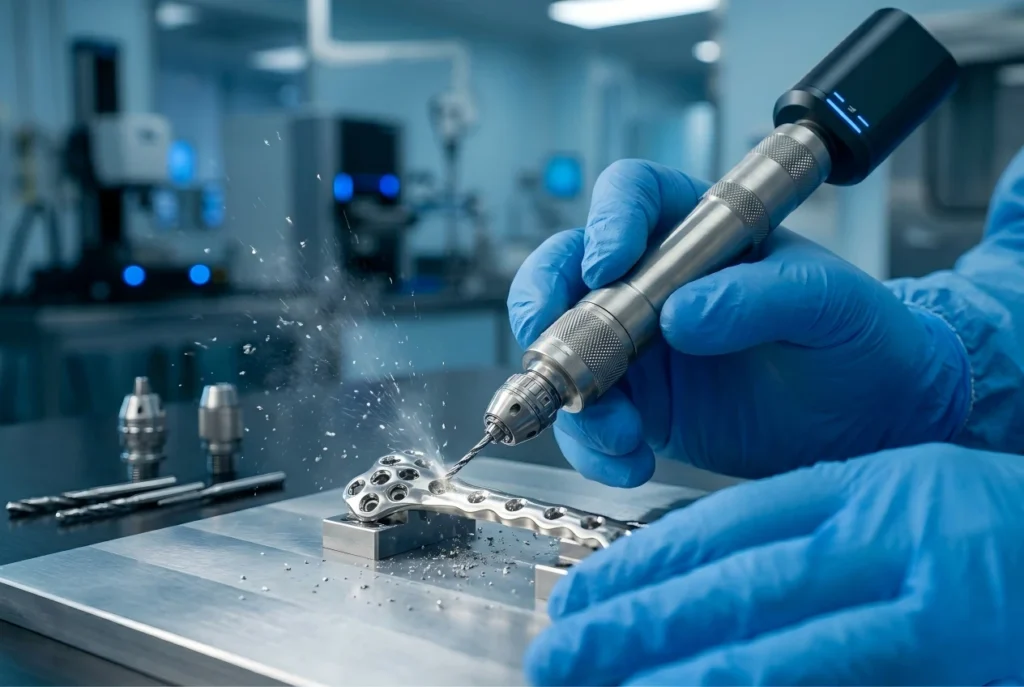
Secondly, we maintain significant stockpiles of semi-finished products. When a distributor comes to us desperate for a trauma implants wholesale order because their old supplier went dark, we aren’t starting from scratch. We pull semi-finished stock, finalize the surface treatments, run it through our rigorous quality control and sterilization protocols, and get it ready for shipping in a fraction of the normal lead time.
And let’s talk about the actual shipping. Cheap ocean freight is gone, maybe forever. If you want to survive, you need a partner who knows how to navigate emergency logistics. We have established deep relationships with premium air freight carriers. Yes, air freight is more expensive, but missing a massive hospital tender because you were too cheap to fly the goods over will cost you your entire business. We work out the math with you to optimize split shipments—flying over 20% of the urgent stock to keep your clients happy, while the remaining 80% takes the slow boat.
A Real-World Story from Last Month (The Anonymous Case Study)
I’ll tell you a story about a distributor we started working with just a few weeks ago. They are based in South America, supplying a network of private orthopedic clinics.
For three years, they relied on a single factory in Southeast Asia for all their maxillofacial plates. In late March, right as the tensions in the Middle East started boiling over, their factory sent an email. “Sorry, your container is delayed by 5 weeks due to port congestion, and oh by the way, our raw material costs went up so we are adding a 15% surcharge to your next order.”
The distributor was panicking. They had a massive contract renewal coming up with their biggest clinic network. If they couldn’t deliver, they lost the account.
They contacted OrthoPro. They explained the mess. Because we already had the raw materials in-house and a streamlined OEM protocol, we fast-tracked their specific plate designs. We bypassed the congested ocean ports entirely and arranged a split air-freight delivery directly to their capital city.
They paid a bit more for the flights, sure. But they saved their million-dollar contract. Their old supplier? Still hasn’t shipped that original container.
This is the difference between a vendor and a strategic partner.
Your Immediate Action Plan: Securing Your Inventory Now
If you are reading this and realizing your supply chain is fragile, you don’t have time to form a committee to discuss it. You need to act this week.
- Audit Your Current Pipeline: Call your frieght forwarder today. Find out exactly where your current shipments are. Don’t accept “it’s on the water.” Get the actual vessel tracking.
- Recalculate Your Safety Stock: Use the formula I gave you above. Plug in 90 days for your lead time and see how terrifying your inventory levels actually are.
- Diversify Immediately: Even if you like your current supplier, you need a backup. You need a vetted CE orthopedic manufacturer on standby who can step in when the primary fails.
- Communicate with Hospitals: Be honest with your procurement directors. Tell them global logistics are a mess. Ask them for accurate forecasting for the next 6 months so you can lock in production capacity now. They will respect your proactive approach.

Advanced High-Speed Orthopedic Surgical Drill System | Medical Bone Drill Power Tools for Spine & Neurosurgery – OrthoPro
The OrthoPro high-speed orthopedic drill ensures absolute precision in spine and neurosurgery. This advanced high-speed surgical drill delivers stable torque, brushless motor efficiency, and superior control. Our autoclavable high-speed orthopedic drills are ideal for global B2B distributors.
FAQ: What Distributors Are Asking Us Right Now
I spend my days talking to medical device wholesalers all over the world. Here are the three questions I get asked almost every single day during this crisis.
Q1: Can I trust new CE certificates under the updated MDR regulations when switching suppliers?
You have to be incredibly careful. The transition to the new European Medical Device Regulations (MDR) wiped out thousands of low-quality factories because they couldn’t pass the stricter clinical audits. If a supplier shows you an MDD certificate that claims to be “extended,” verify it directly with the Notified Body. At OrthoPro, we maintain full, transparent compliance with international quality systems, including ISO 13485 and relevant CE marks, so our distributors never have customs clearance nightmares.
Q2: If I switch my trauma implants wholesale sourcing to you today, how fast can you actually ship?
It depends entirely on the product mix and whether you need custom OEM branding (laser etching, custom packaging). Because we buffer our raw materials and semi-finished goods, our emergency lead times are drastically shorter than the industry average. For standard specs, we can often cut traditional manufacturing times by 30-40%. Contact us with your exact SKU list, and we will give you a brutally honest, exact timeline. No empty promises.
Q3: How do we handle the insane freight costs right now to maintain our profit margins?
You cannot absorb the costs alone. You need a mix of strategic pricing adjustments in your local market and optimized logistics. We help our partners model “split shipping.” We manufacture the full batch, air-freight the critical 20% to keep your hospital shelves stocked, and send the bulky 80% via the safest ocean routes available. This blends your landed cost and protects your overall ROI.
Stop Hoping. Start Securing Your Supply Chain.
Hope is not a valid business stratergy, especially not in 2026. If you wait for the news to get better, you are going to be out of stock, out of cash, and out of business.
The global medical supply chain disruption is weeding out the weak distributors. The ones who survive and dominate their local markets are the ones who partner with a deeply capitalized, heavily buffered orthopedic implant supplier who actually understands the reality of modern manufacturing.
You need a partner who holds raw materials. You need a partner with a transparent factory. You need a partner who doesn’t make excuses when geopolitics get messy.
Stop risking your hospital contracts on unreliable factories. Let’s fix your supply chain today.
Go directly to our contact page and tell us what SKUs you are dangerously low on. Or, if you want to skip the forms and talk to a human who understands B2B medical sourcing, email us right now at info@orthopro.mx.
We have the production capacity. We have the materials. Let’s secure your inventory before your competitors do.