Finding a reliable factory for orthopedic implants used to be a matter of getting on a plane, walking around a massive trade show in Düsseldorf or Shanghai, shaking some hands, and placing a trial order. Those days are gone. Global trade in 2026 is a completely different beast. Supply chains have fractured, freight costs do whatever they want, and worst of all, the regulatory environment has become an absolute nightmare for anyone unprepared.
I’ll just say the quiet part out loud right now: most of the sourcing directories you rely on are flooded with middle-men pretending to be actual factories. You type “B2B orthopedic supplier China” into a search bar, and you get thousands of results with shiny badges. But when you ask for their unredacted clinical evaluation reports or try to verify their Notified Body number, they suddenly stop replying to your emails. It’s a huge headache.
If you’re a distributor or a medical brand, buying non-compliant surgical products isn’t just a financial risk anymore. It’s a legal one. The transition to the EU MDR (Medical Device Regulation) has exposed thousands of factories that were coasting on old, grandfathered MDD certificates. A shocking number of them simply couldn’t afford or pass the strict new clinical requirements. So, how do you actually find a CE certified orthopedic manufacturer that won’t disappear when the auditors come knocking? Let’s break down what’s realy happening in the market and how you can protect your business.
The Ugly Truth About Sourcing Medical Implants in 2026
Let’s look at some actual numbers. According to recent data from MedTech Europe, the bottleneck at Notified Bodies (the organizations that actually issue CE marks) caused nearly 30% of legacy medical devices to risk falling off the market. While the EU extended some transition deadlines to 2027 and 2028 depending on device class, smart buyers know that factories without their MDR paperwork sorted right now are basically walking zombies.
Many buyers are obsessed with finding the absolute cheapest unit price. I get it, margins are tight. But chasing the lowest price for trauma plates or spinal screws is the fastest way to bankrupt your distributorship. A cheap supplier will save you $5 on a titanium locking plate, but cost you $50,000 when your entire shipment gets seized by customs because the manufacturer’s ISO certificate was suspended.
The total cost of your inventory isn’t just the unit price. If we look at a basic sourcing formula, your real cost is: Total Sourcing Cost = (Unit Price * Quantity) + Logistics + Import Duties + (Cost of Poor Quality / Defect Rate) + Regulatory Compliance Time. If that last variable—regulatory compliance time—spikes because your supplier doesn’t know how to format a technical file, your “cheap” implants become the most expensive ones you’ve ever bought.
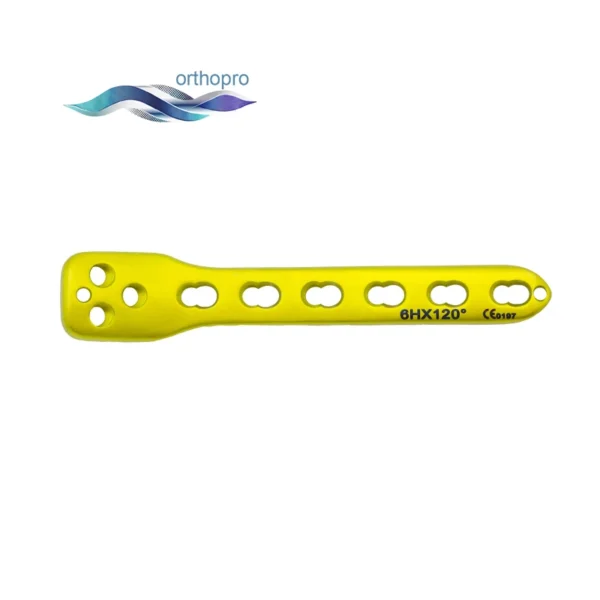
2.7mm LCP Pediatric Hip Plate | Proximal Femoral Osteotomy System for DDH & Deformity Correction
The 2.7mm LCP Pediatric Hip Plate is a specialized orthopedic implant designed for stable fixation in proximal femoral osteotomies and fracture management in infants. Featuring advanced locking compression technology, this pediatric hip plate offers superior angular stability, making it ideal for treating Developmental Dysplasia of the Hip (DDH). Our 2.7mm locking plate system ensures precise anatomical alignment and rapid bone healing for pediatric patients.
How to Verify an ISO 13485 Medical Implants OEM
Anyone with Photoshop can fake a certificate. I’ve seen guys lose hundreds of thousands of dollars because they didn’t do a basic background check on their supplier’s quality management system (QMS). When you are looking for an ISO 13485 medical implants OEM, you definitly need to look past the PDF they send you.
Here is exactly how you vet them:
- Check the Registrar: Look at the logo of the company that issued the ISO 13485 certificate. Is it a globally recognized body like BSI, TÜV SÜD, or SGS? If it’s an obscure agency you can’t find on Google, run away.
- Verify the Scope: Read the tiny text on the certificate. Does the scope say “Manufacture and distribution of non-sterile orthopedic instruments”? If you are trying to buy sterile titanium implants, that certificate is useless to you. The scope must match exactly what you are buying.
- Ask for the Audit Report: A real factory won’t just send you the certificate; they will, under an NDA, share the executive summary of their latest surveillance audit. If they claim they don’t have it, they aren’t the real manufacturer.
- Trace the Raw Materials: Ask them for the material test reports (MTR) for their titanium. Real medical implants use specific alloys like ISO 5832-3 (Ti-6Al-4V ELI). If they can’t trace a finished screw back to the specific batch of raw titanium they bought, their ISO 13485 system is broken.
Is a B2B Orthopedic Supplier China Still Viable?
There’s a lot of talk about nearshoring and moving supply chains out of Asia. But let’s be pragmatic. Can you still rely on a B2B orthopedic supplier China? The short answer is yes, absolutely. But the rules of engagement have changed.
Ten years ago, you could buy from tier-3 factories in China and get away with it. Today, the Chinese manufacturers that have survived the regulatory purge are actually world-class. They operate 5-axis Swiss CNC machines, have ISO Class 7 cleanrooms, and use automated optical inspection (AOI) to check the thread pitch on every single bone screw. The problem isn’t the country; the problem is your filtering process.
If you decide to source from Asia, you must conduct a live video audit of the shop floor if you can’t visit in person. Ask the production manager to walk over to a CNC machine and show you the calibration sticker on the digital calipers being used by the operator. Ask them to open the quarantine cage where non-conforming products are kept. A trading company acting like a factory will panic. A genuine OEM will gladly show you their scrap bin because it proves their quality control actually catches mistakes.
That being said, many global buyers are diversifying. They want the precision of top-tier manufacturing but without the geopolitical tariff headaches or shipping delays. This is exactly why medical device hubs in places like Mexico have exploded in popularity. You get the strict adherence to international standards, plus highly favorable trade agreements with major markets.
The Critical Role of ODM Surgical Instruments
Most buyers focus heavily on the implants—the plates, screws, and rods that stay inside the patient. But the instruments used to put them there are just as critical. If a screwdriver strips out a screw head during a spinal fusion, the surgeon is going to blame your brand, not the factory.
This is where finding a capable partner for ODM surgical instruments (Original Design Manufacturer) becomes a game changer. You don’t just want a factory that blindly prints your logo on a generic drill guide. You need an engineering team that understands ergonomics, material hardness (like using martensitic stainless steel for cutting edges), and sterilization longevity.
A good ODM partner will ask you questions you hadn’t even thought of. They’ll ask if you want a silicone handle for better grip under bloody conditions, or if you prefer a fully stainless steel design for easier autoclave sterilization. They will design instruments that reduce surgeon fatigue, which ultimately makes hospitals want to buy your specific kits over the competitors.

Distal Volar Radial Locking Plate with Drill Guide | Titanium Orthopedic Wrist Implants for B2B Wholesale
The Distal Volar Radial Locking Plate with Drill Guide is a premium orthopedic implant engineered for complex wrist fracture fixation. Featuring an anatomical design, this Distal Volar Radial Locking Plate with Drill Guide ensures precise screw trajectory. Ideal for B2B procurement, our Distal Volar Radial Locking Plate promotes rapid patient recovery.
Fake OEMs vs. Real OEMs: A Quick Comparison
To make this easier to digest, I put together a rough comparison of what you’ll see when dealing with a sketchy middleman versus a legitimate manufacturing partner.
| Feature | The Middleman / Fake OEM | The Genuine Certified Partner |
|---|---|---|
| Initial Quote Speed | Promises a price in 5 minutes without looking at your technical drawings. | Takes 48 hours to review tolerances, surface finishes, and material availability. |
| Regulatory Documents | Sends a blurry PDF of a CE mark that expires next month. | Provides current NANDO-verified CE certs and detailed Technical Files. |
| Facility Tour | Always has an excuse why the cameras aren’t working in the factory today. | Hosts live video audits and explains their CNC machining and cleanroom flows. |
| Prototyping | Forces you to buy standard off-the-shelf items with a laser-etched logo. | Has an in-house R&D team to develop custom ODM surgical instruments for you. |
| Post-Market Support | Disappears the second the container is loaded onto the ship. | Assists with post-market surveillance data required by EU MDR auditors. |
Anonymized Case Study: The Cost of Cutting Corners
Let me share a story from a mid-sized medical distributor based in South America. We’ll call them Company X. In late 2024, they won a massive government tender to supply trauma kits to public hospitals. To maximize their margin, they dumped their long-term supplier and went with a new factory they found online that offered prices 20% below the market average.
The first two shipments were fine. But on the third shipment, the local health ministry decided to do a random lot inspection. They requested the updated ISO 13485:2016 audit report specifically covering the new locking plates included in the kits. Company X emailed their new “factory”. Crickets.
It turned out the supplier was a trading firm that had outsourced the third batch to a completely uncertified sub-contractor to save money. The surface anodizing on the plates was failing, and the thread pitch on the screws was out of tolerance. The government cancelled the entire multi-million dollar contract, and Company X was blacklisted for three years.
Now contrast that with a brand that partners with a true CE certified orthopedic manufacturer. When regulators ask for documentation, a real OEM hands over a 300-page technical file complete with biocompatibility testing (ISO 10993) and sterile packaging validation (ISO 11607). You sleep alot better at night when you know your supply chain is bulletproof.
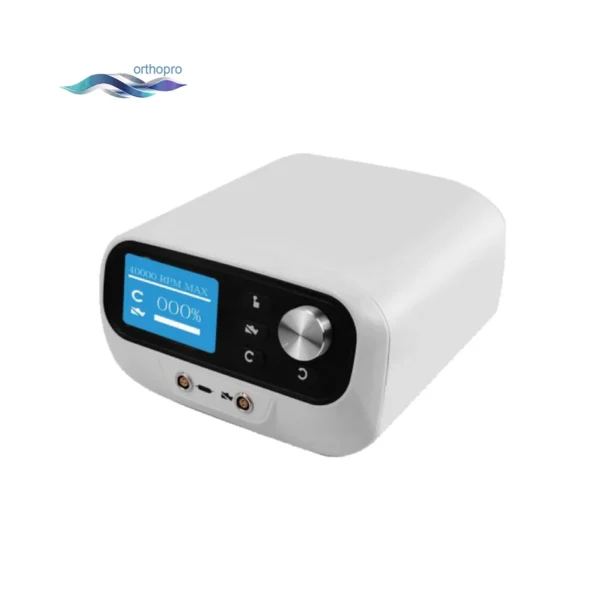
High-Performance Orthopedic High-Speed Drill for Neurosurgery & Spine Surgery | Professional Medical Power Tools for Hospital Procurement
Our Orthopedic High-Speed Drill is a premium surgical power tool designed for precision in neurosurgery and spinal procedures. This high-performance orthopedic high-speed drill offers stepless speed control and high torque for efficient bone cutting. As a reliable high speed orthopedic drill system, it ensures patient safety and clinical excellence.
Why Serious Brands Are Shifting to OrthoPro
Look, I’m not just writing this to hear myself talk about regulatory compliance. I’m writing this because I see good businesses fail every day due to bad sourcing decisions. If you are tired of playing guessing games with overseas suppliers, it might be time to look at what we are doing at OrthoPro.
We built OrthoPro specifically to solve the trust gap in B2B medical sourcing. We don’t hide behind stock photos or generic promises. We are a fully transparent, highly compliant manufacturer focusing on premium orthopedic implants and instruments. We handle the heavy lifting of OEM and ODM production so you can focus on what you do best: selling to hospitals and surgeons.
We know exactly what the EU MDR requires. We know the documentation you need for FDA registration. From the raw medical-grade titanium entering our facility to the final sterile pouch being sealed in our cleanrooms, we control the entire process. This means you never have to worry about a surprise inspection ruining your business.
Frequently Asked Questions (FAQ)
1. How can I verify if an orthopedic supplier’s CE certificate is actually valid?
First, ask for the Declaration of Conformity and the CE certificate. Look for the 4-digit Notified Body number on the certificate. Go to the European Commission’s NANDO database online, search for that 4-digit number, and make sure that specific Notified Body is legally authorized to certify medical devices. Then, contact the Notified Body directly with the certificate number to confirm it hasn’t been suspended or revoked.
2. What is the real difference between OEM and ODM in the medical device industry?
OEM (Original Equipment Manufacturer) means you provide the exact engineering drawings and specifications, and the factory simply builds it to your print. ODM (Original Design Manufacturer) means the factory’s engineering team actually designs the product for you based on a general concept or problem you want to solve, like creating a more ergonomic screwdriver handle for spinal surgeries.
3. Why are my current B2B orthopedic suppliers suddenly raising prices in 2026?
The cost of regulatory compliance has skyrocketed. To maintain a legitimate ISO 13485 QMS and comply with the new EU MDR rules, factories have to hire dedicated clinical affairs teams, pay massive fees to Notified Bodies, and conduct expensive post-market clinical follow-ups. If a supplier hasn’t raised their prices slightly to cover these new global standards, it’s a huge red flag that they aren’t actually compliant.
Stop Guessing, Start Growing
Are you spending more time chasing your current suppliers for basic paperwork than you are actually selling to orthopedic surgeons? Are you worried that your next container of implants might get flagged at customs because of a shady CE mark?
You don’t have to operate your business with that kind of stress. Partnering with a legitimate, globally certified manufacturer gives you the foundation to scale your brand aggressively. We already have the quality systems, the high-end CNC machinery, and the regulatory expertise in place.
Let’s have a real conversation about your product line and how we can upgrade your supply chain. You can check out our full capabilities and certifications by visiting the OrthoPro Contact Us page. If you have specific technical drawings or need a quick compliance check on an upcoming project, drop us an email directly at info@orthopro.mx.
Don’t let bad manufacturing ruin your reputation. Get in touch with us today, and let’s build something world-class together.