Finding a reliable manufacturer for surgical equipment can honestly feel like navigating a minefield blindfolded. I’ve spent years dealing with hospital procurement teams and medical device distributors across the globe, and the horror stories rarely change. You order a batch of shiny new bone drills, they look fantastic in the supplier’s glossy PDF catalog, and the bulk price makes your finance guy smile.
But then, after just ten autoclave cycles in the hospital’s sterile processing department, the motors start smoking. Or worse, the battery completely dies mid-surgery while the orthopedic surgeon is halfway through fixing a femur fracture.
Let’s talk real market numbers for a second so you understand the landscape you’re dealing with. According to market researchers like Grand View Research, the global surgical power tools market was sitting around USD 1.5 billion recently and is projected to keep climbing steadily. Because this market is heavily funded and growing, everyone and their brother wants a piece of the pie. We are seeing a massive flood of new “manufacturers” popping up on B2B platforms overnight.
But here is the brutal truth: a vast majority of them have absolutely no clue how to build a medical device that can actually survive the brutal, wet, high-heat environment of a modern operating room.
If you handle medical power tool sourcing for a clinic or a massive hospital network, you can’t just look at the invoice price. You need to know what happens inside the aluminum casing. This guide is going to strip away the marketing fluff and show you exactly how to evaluate suppliers, choose the right tech, and keep your surgeons happy without bankrupting the hospital.

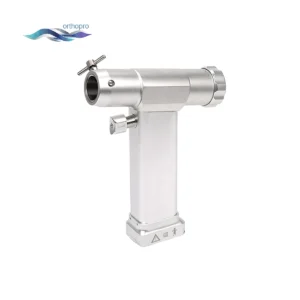
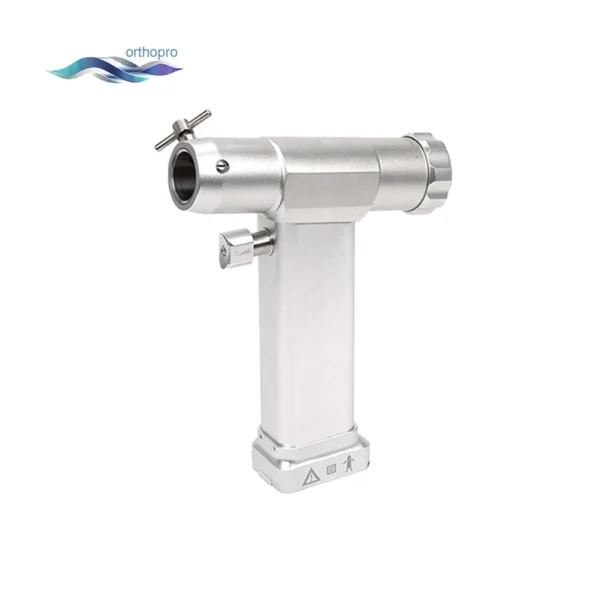
Heavy-Duty Orthopedic Brushless Reciprocating Saw for Joint & Large Bone Surgery | Premium Surgical Power Tools
The OrthoPro orthopedic brushless reciprocating saw is an advanced surgical power tool engineered specifically for large bone osteotomy and joint reconstruction. Featuring a high-torque brushless motor, this brushless reciprocating saw delivers highly precise, low-heat cutting. Ideal for hospital procurement, our autoclavable surgical reciprocating saw ensures reliable, maintenance-free performance.
The Brutal Reality of Hospital Procurement Today
Most purchasing managers are under immense pressure to slash budgets. I get it. Funding is tight everywhere. But buying cheap power tools is the fastest way to bleed money.
Here is a slightly controversial take that a lot of premium Western brands will hate: you absolutely do not need to spend $20,000 to $30,000 on a single drill setup from the “big three” brands for 70% of standard trauma procedures. I see hospitals making this mistake all the time out of pure fear. They assume if they don’t buy the absolute most expensive name brand out there, the tool is going to fail and they’ll get sued.
That’s just nonsense.
Mid-tier manufacturers who actually invest heavily in solid brushless motor technology and top-tier sealing mechanisms can deliver the exact same clinical outcomes for a fraction of the price. The real headache in hospital procurement is simply knowing how to spot a legitimate factory versus a trading company that just slaps their logo on cheap garbage.
When you buy orthopedic drills, you aren’t just buying a drill. You are buying a highly calibrated, precision engine that needs to survive being cooked in pressurized steam at 134°C (273°F) over and over again. If the rubber O-rings are cheap, moisture gets into the copper windings of the motor. The next time the surgeon pulls the trigger, the thing short-circuits.
Spotting Fake Factories When Buying Surgical Power Tools Wholesale
If you are looking for surgical power tools wholesale, your very first job is verifying who is actually on the other end of the email chain. You’d be amazed how many “factories” listed online are just two guys in a rented office buying from three different cheap assembly lines and marking up the price.
You want to partner with an actual OEM/ODM manufacturer like OrthoPro. Why? Because when a drill breaks down in two years (and it will, these are mechanical items used in harsh conditions and dropped by nurses), you need spare parts. A trading company will have switched suppliers by then, and you’ll be left holding a dead $2,000 paperweight.
Here is a quick breakdown to help you spot who you are actually dealing with during your supplier evaluation phase. Ask these questions and watch how they respond.
| Evaluation Metric | Genuine Manufacturer (e.g., OrthoPro) | Trading Company / Broker |
|---|---|---|
| Pricing Structure | Lower unit cost, stable bulk pricing based on raw materials | Marked up by 20-40%, pricing fluctuates wildly |
| Customization (OEM) | Can alter torque, RPM, and adjust battery specs | “What you see is what you get, no changes” |
| Spare Parts | Keeps inventory of parts for 5-10 years post-purchase | Often completely unavailable after 12 months |
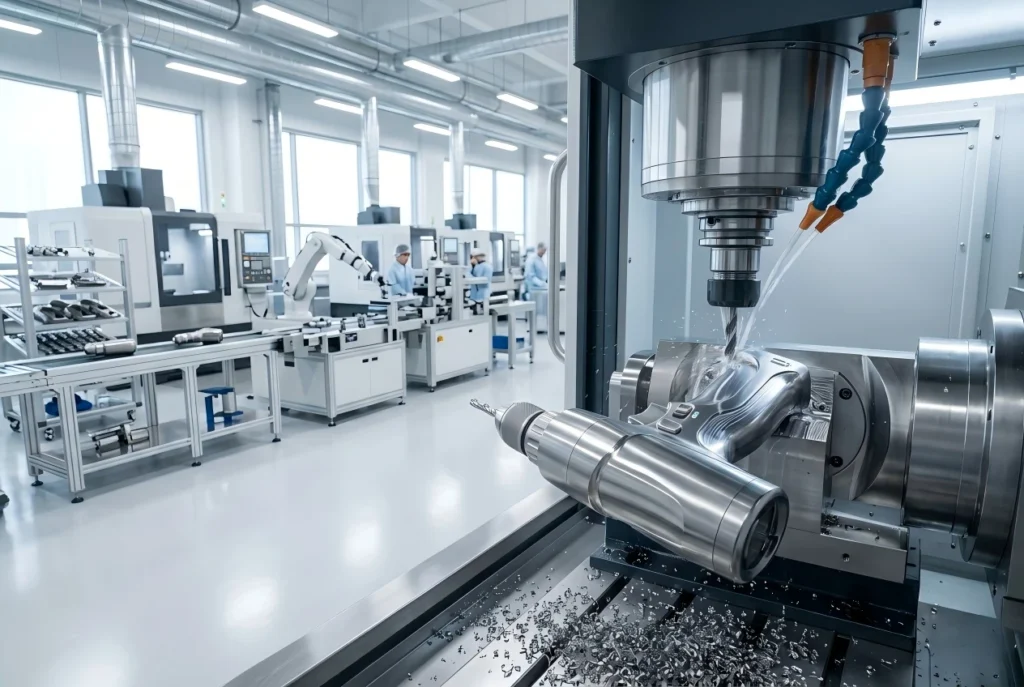
| Factory Audit | Welcomes live video tours of their CNC machines on the floor | Makes endless excuses, only shows a staged showroom |
| Regulatory Docs | Holds their own ISO 13485 and CE mark certificates | Tries to use another factory’s certificates as their own |
If they refuse a live WhatsApp or Zoom video call to walk around the production floor, cross them off your list immediately. Real factories love showing off their expensive CNC machines.





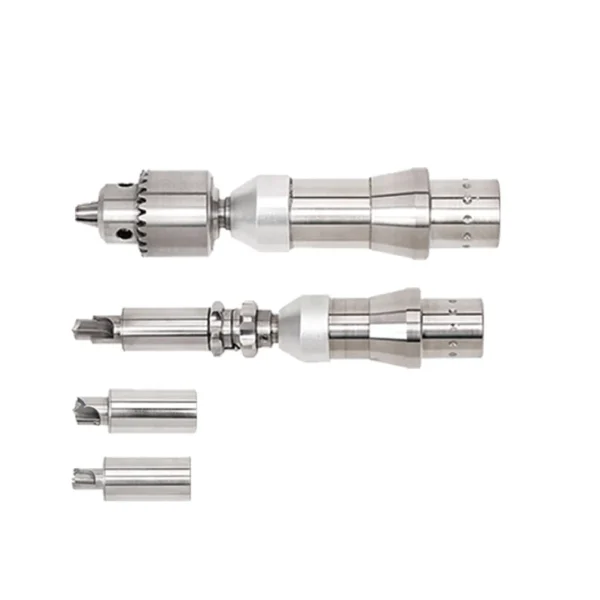
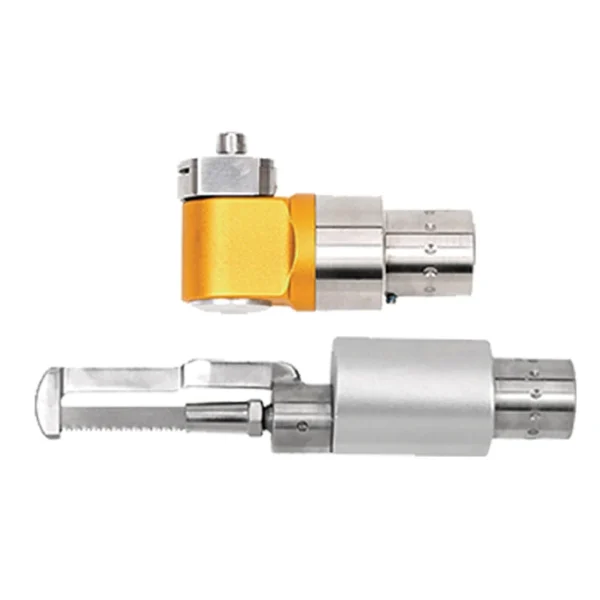
High-Performance Orthopedic Surgical Power Handpiece for Trauma and Joint Surgery | Premium Medical Bone Drill System
Discover the premium Orthopedic Surgical Power Handpiece designed for high-precision bone drilling. This advanced Orthopedic Surgical Power Handpiece ensures exceptional efficiency in trauma surgeries. Featuring an ergonomic, autoclavable design, our surgical power handpiece offers B2B medical distributors unmatched reliability and safety
Total Cost of Ownership (TCO): The Only Math You Should Care About
If you take away only one single thing from this entire guide, let it be this section right here. Do not buy based on the initial quote. You have to calculate the Total Cost of Ownership.
I’ve sat in miserable meetings where a regional distributor thought they scored the deal of the decade on a massive batch of basic trauma drills. Two years later, their maintanence costs had entirely wiped out all their profit margins because they had to constantly ship replacement batteries to angry hospital clients.
You don’t need fancy enterprise software to figure this out. Just use this basic text formula on a napkin or a blank spreadsheet:
TCO = P + (C * Y) + (M * Y)
Here is what those letters actually mean:
- P = Initial Purchase Price of the equiptment
- C = Annual Consumables Cost (things you burn through like saw blades, twist drills, K-wires)
- M = Annual Maintenance & Repair Cost (battery replacements, replacing worn out bearings, shipping)
- Y = Expected Lifespan in Years
Let’s run a quick, realistic example to prove the point.
Brand A (The Premium Giant) is a top-tier drill costing $15,000 upfront. It lasts 7 years. Yearly repairs are around $500. Consumables are aggressively priced at $2,000 a year because they force you to use their proprietary blades.
*TCO = 15,000 + (2,000 * 7) + (500 * 7) = $32,500 over 7 years.*
Brand B (The Dirt-Cheap Knockoff) costs $3,000 upfront. It lasts maybe 2 years before falling apart. Yearly repairs are $1,500 because it constantly breaks down and needs parts. Consumables are $1,000.
*TCO = 3,000 + (1,000 * 2) + (1,500 * 2) = $8,000 over 2 years.*
But wait. To survive the same 7-year period as the premium brand, you have to buy this junk 3.5 times! That totals $28,000 over 7 years, plus the massive, unquantifiable headache of constant surgical delays and angry doctors.
Brand C (A solid mid-tier OEM like OrthoPro) costs $6,000 upfront. Lasts 5 solid years. Yearly repairs are minor at $300. Consumables are standard AO connection, so they run about $1,200 a year.
*TCO = 6,000 + (1,200 * 5) + (300 * 5) = $13,500 over 5 years.*
This is the absolute sweet spot for smart medical power tool sourcing. You get reliable, consistent performance in the OR without paying the massive brand tax that kills your budget.
Battery-Operated vs. Pneumatic: The Unfiltered Truth
If you hang around surgical forums or talk to aggressive young sales reps, they will tell you that pneumatic (air-driven) tools are completely dead and batteries are the only acceptable way forward.
I strongly disagree.
Are battery-operated tools more convenient for the scrub tech? Absolutely. They eliminate the heavy, stiff air hoses that trip up nurses and get in the surgeon’s way during complex maneuvers. But pneumatic tools have practically zero delicate electronics inside them. They are essentially just mechanical turbines. You can drop them on the tile floor, boil them, abuse them, and they just keep running for a decade. For hospitals in developing nations with tight budgets, fluctuating power grids, and rough sterilization processes, pneumatic is still a wildly viable and smart option.
However, the industry is heavily shifting toward batteries. It’s undeniable. If you are going the battery route, you need to be incredibly picky about the technical specs you accept.
The Sterilization Problem with Lithium-Ion
Older medical tools use Nickel-Metal Hydride (Ni-MH) batteries because they survive high temperatures fairly well. But they suffer from terrible “memory effect” and are heavy as bricks.
Modern systems use Lithium-Ion (Li-ion). They hold a charge beautifully, don’t have memory issues, and deliver consistent, punchy power right until they die. But Lithium absolutely hates heat. Putting a bare Lithium battery in a 134°C autoclave is basically a recipe for an explosion.
So the manufacturer has to do one of two things:
- Build a highly specialized, insulated sterilization casing to protect the battery cells during the autoclave cycle (expensive and heavy).
- Use non-sterile battery transfer techniques. This is where a sterile nurse holds a sterile funnel, and a non-sterile circulating nurse drops a non-sterile battery into the sterile handpiece, which is then capped off.
If your supplier can’t explain exactly how their battery system safely handles a hospital’s standard autoclave cycle, run away fast. They haven’t thought it through.
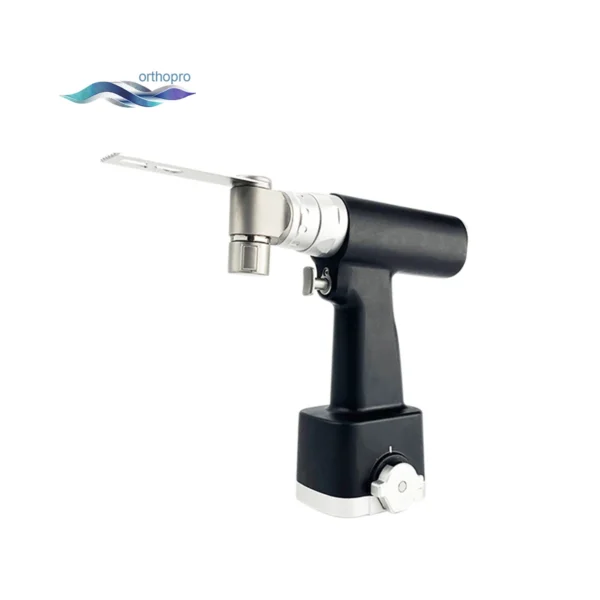
High-Performance Orthopedic Oscillating Saw | Surgical Bone Saw for Arthroplasty and Trauma
Equip your facility with our high-performance Orthopedic Oscillating Saw, engineered for precision bone cutting in joint surgeries. This Orthopedic Oscillating Saw delivers exceptional surgical control.
The Specs That Actually Matter When You Buy Orthopedic Drills
When a surgeon opens up a patient’s femur or works on a delicate spine, the absolute last thing they want is a drill that stalls out halfway through the bone. You need to look way past the shiny exterior casing and ask your supplier hard questions about the raw specs.
1. Motor Type: Brushed vs. Brushless (Don’t mess this up)
Never, ever buy a brushed motor for a modern operating room. I can’t state this strongly enough. Brushes physically rub against the motor’s internal commutator to generate power. This constant physical friction creates heat, wears down parts, and worst of all, generates tiny microscopic particles of carbon dust. In a highly controlled sterile surgical field, carbon dust blowing out the back of a handpiece is a complete disaster. It can cause infections or foreign body reactions in the patient.
You definitly want brushless motors. They use magnets instead of physical friction. They run significantly cooler, last way longer, and are far more energy-efficient, meaning the battery lasts longer during surgery. Any decenthigh-speed surgical drill manufactured today uses brushless technology. If a supplier is selling brushed motors, they are selling outdated junk.
2. Understanding Speed (RPM) vs. Torque
This is where B2B buyers who aren’t clinically trained get very confused. They look at a spec sheet and assume higher RPM (Revolutions Per Minute) is always better. More speed equals better tool, right? Wrong.
If the surgeon is doing a large bone trauma surgery (like a total hip or knee replacement), they need high torque (twisting power) and relatively low speed. If the speed is too fast, the friction creates thermal necrosis. This means the bone tissue literally gets burned and dies. When the bone dies, the expensive titanium implant they just put in won’t integrate, and it fails six months later.
If they are doing neurosurgery, ENT, or spine work, they need massive speed (sometimes up to 80,000 or even 100,000 RPM) and very little torque to make incredibly precise, clean cuts without shattering delicate bone structures.
You have to make sure you are sourcing the exact right tool for the specific surgical discipline your clients handle. A traumatology saw is useless to a neurosurgeon.
3. Attachments and Standard Couplings
A good hospital power tool system needs to be modular to save money. The main handpiece (the expensive part with the motor) should accept multiple different attachments on the front.
- AO Quick Coupling: This is the global standard for trauma drills. You push the bit in, it clicks, you’re done.
- Jacobs Chuck: The classic key-tightened chuck for holding generic or odd-sized drill bits.
- Hudson or Zimmer fittings: These are specific connections usually used for heavy reamers.
If your supplier’s quick-release mechanism gets sticky or rusts after just a few washes in the sterile processing department, the surgeons will literally throw the tool across the room. The machining tolerances on these couplings have to be flawless, usually made from high-grade 17-4 precipitation hardened stainless steel.
Anonymized Case Study: A $60,000 Procurement Disaster
I want to share a real-world scenario to show you what happens when sourcing goes wrong. Let me tell you about a mid-sized distributor in Southeast Asia I consulted for a few years back.
They won a highly competitive government tender to supply four regional public hospitals with basic orthopedic trauma sets. It was a massive win for them. Instead of properly vetting a solid OEM, they went on a massive B2B directory site, sorted by lowest price, and found a supplier offering battery-operated oscillating saws and drills for an unbelievably low price. They bought about $60,000 worth of inventory.
Six weeks into deployment at the hospitals, my phone started ringing. It was a nightmare.
First, the oscillating saws had terrible internal vibration dampening. When the surgeons tried to cut through a tibia, the saw chattered so violently it left jagged, uneven bone edges, making it impossible to fit the implants correctly.
Then, the batteries started completely failing. It turns out the “factory” had used cheap, commercial-grade RC car battery cells inside a poorly sealed plastic housing. The pressurized steam from the autoclaves penetrated the casing instantly, rusted the internal contacts, and shorted out the motherboards.
The hospitals obviously rejected the entire batch of equipment. The distributor frantically tried to get spare parts or a refund from the supplier, only to find out the supplier was just a trading broker. The broker had already dissolved that particular product line and basically said “sorry, out of warranty.”
The distributor had to eat the entire $60,000 loss, plus they got hit with brutal penalty fees from the government for failing to deliver working goods. Their reputation in that country was ruined for years.
This happens way more often than people in this industry care to admit. This is exactly why you need a long-term partner who actually engineers the tools from the ground up, rather than just flipping them for a quick buck.
Surgical Power Tools Wholesale: Real Negotiation Secrets
If you are a distributor looking to buy in bulk, how do you actually negotiate with a factory?
First off, stop asking for the absolute rock-bottom unit price on day one. Real manufacturers have very tight margins because medical-grade raw materials (like titanium alloys and specialized stainless steel) are inherently expensive. If you squeeze them too hard on price, they will simply use cheaper internal components to meet your target price. You will pay for it later.
Instead, negotiate on terms that actually protect your business and improve your margins:
- Ask for an extended warranty on the brushless motor. The motor is the heart of the tool. If they actually trust their engineering, they will gladly give you 12 to 24 months.
- Negotiate a heavy spare parts kit. Ask them to include a bunch of extra O-rings, backup batteries, replacement chuck keys, and sterilization cases with your first bulk order at no extra charge. These cost the factory very little but save you thousands in shipping later.
- Request localized OEM branding. If you are buying 50+ units, a good factory will laser etch your specific company logo onto the handpiece. This builds your brand equity in your local market so hospitals reorder from you, not from some random factory in another country.
Also, be highly suspicious of lead times that sound too good to be true. If a supplier says they can ship 100 orthopedic drill sets tomorrow, they are sitting on dead stock. Quality medical devices are usually built to order or require an extensive 48-hour pre-shipment calibration and testing phase. A lead time of 3 to 6 weeks is completely normal in this industry and actually a very good sign that they are doing proper quality control before putting it in a box.
A Quick Word on Hospital Sterilization Protocols
I have to hammer this point home because it’s where 90% of failures happen. The way a hospital cleans the tools will entirely dictate how long they last.
Most hospitals globally use steam autoclaves. The standard cycle is usually 134°C for about 5 to 18 minutes depending on the local regulations and the load size. But some hospitals still use “flash sterilization” (which is an incredibly fast, brutal cycle meant for emergencies and destroys electronics) or low-temperature chemical sterilization like STERRAD (hydrogen peroxide gas plasma).
Before you finalize any purchase contract, go to your hospital clients, talk to the sterile processing manager, get their exact sterilization parameters, and send them to the manufacturer. Ask the factory directly: “Is your tool formally validated for this specific cycle?” If they say “yes” instantly without showing you a validation report or a thick testing manual, push them harder.
FAQ: Answering Your Burning Sourcing Questions
1. How long should a medical power tool battery actually last in the real world?
Honestly, it depends almost entirely on the usage rate and sterilization abuse. A high-quality Li-ion medical battery should give you about 300 to 500 proper autoclave cycles before you notice a significant drop in its charge capacity. In a busy urban hospital doing multiple trauma cases a day, that usually translates to about 12 to 18 months of heavy use. After that, they degrade and you’ll need to buy replacements. Budget for it.
2. Can we use third-party saw blades and drill bits on branded power tools?
Yes, most of the time you can. Consumables like K-wires, twist drills, and oscillating saw blades are heavily standardized across the industry. As long as the physical coupling mechanism matches (for example, an AO connection or a standard Stryker/Linvatec hub for sagittal blades), third-party consumables work perfectly fine and can save a hospital thousands of dollars a year compared to buying OEM blades.
3. What is the actual difference between a standard bone drill and a reamer?
It’s all about the balance of speed and torque. A bone drill spins fast (usually 1,000 to 1,200 RPM) to create a clean, precise hole for a bone screw. A reamer spins very slowly (around 250 to 400 RPM) but has massive twisting power. Reamers are used to physically hollow out the hard inside canal of a large bone, like the femur, to make room for a titanium intramedullary nail. You cannot use a regular drill for reaming; the motor will stall, overheat, and burn out in minutes.
4. What lead time should I expect for a bulk wholesale order?
For a genuine factory producing high-quality medical power tools, expect a standard lead time of 3 to 6 weeks for bulk orders. This accounts for CNC machining time, assembly, rigorous quality control testing (like torque testing and heat resistance checks), and final packaging. If someone promises 50 units in three days, you’re buying their old, sitting inventory.
Let’s Wrap This Up
Look, sourcing medical equipment doesn’t have to be a blind guessing game where you just cross your fingers and hope the tools survive the year. If you focus strictly on the total cost of ownership, insist on genuine brushless motor technology, and partner with a real manufacturer who understands the brutal realities of hospital sterilization, you will easily dominate your local market.
Stop throwing your company’s money away on trading companies that go ghost and won’t answer your emails when things go wrong in the OR. You need equiptment that performs beautifully under intense pressure, every single time the surgeon steps up to the table.
If you are exhausted from dealing with unreliable suppliers and want to work with a team that actually engineers and manufactures top-tier surgical instruments from the ground up, we really need to talk. Whether you are simply outfitting a single private clinic or you need a reliable OEM partner for massive wholesale distribution across your country, my team has the deep engineering background to support you.
Head over to our main site and check out our full range of gear. You can easily reach out through our contact page to discuss your specific clinical needs, request technical spec sheets, or get a transparent, no-nonsense quote. If you don’t feel like filling out a web form, just shoot us a direct email at info@orthopro.mx and let’s figure out how to upgrade your surgical tool inventory without blowing your budget to pieces.