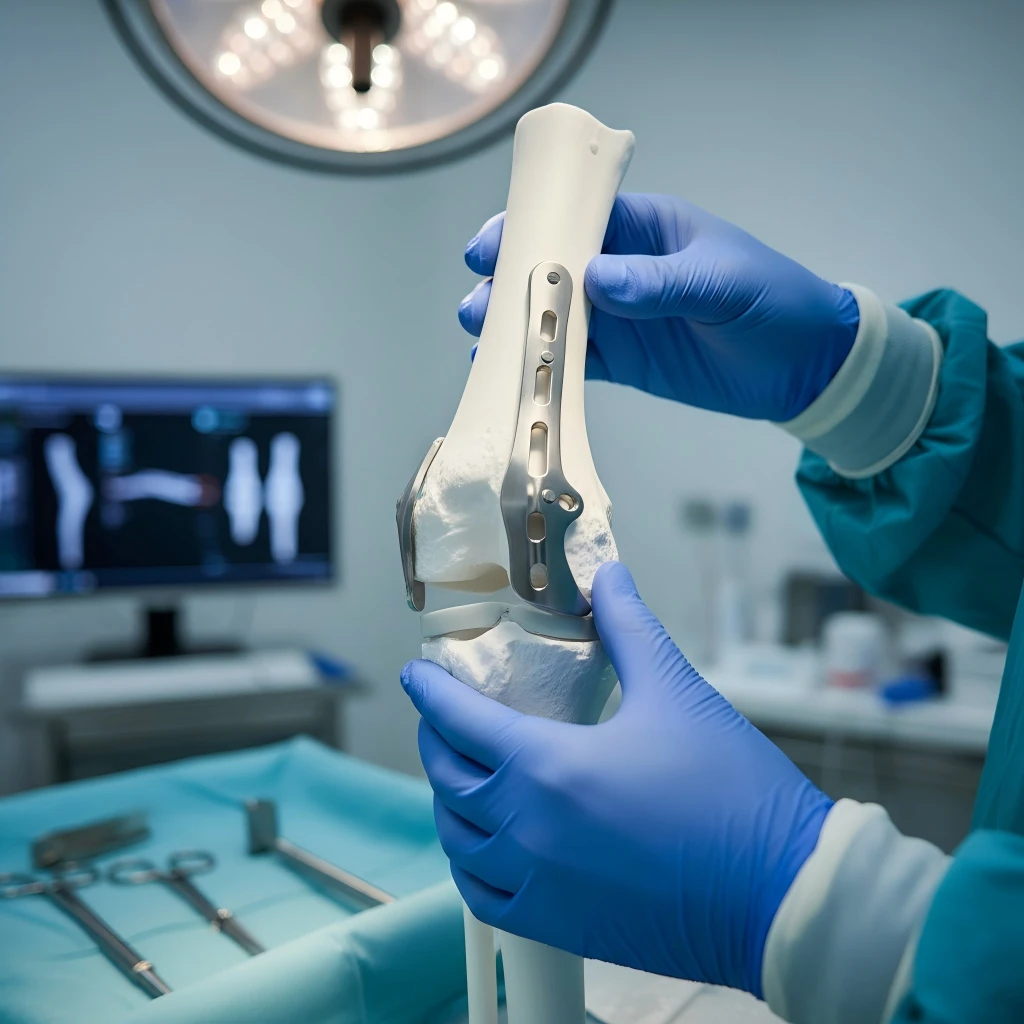
Look, if you’ve been in the orthopedic game for more than a few years, you know that the way we deal with tibial plateau fractures has changed big time. It wasn’t that long ago that surgeons were basically “eyeballing” plate contours in the OR, spending precious minutes bending stainless steel. But 2024 is different. The orthopedic trauma market is shifting fast, and if you’re a distributor, you either catch the wave or get left behind.
I’ve spent a lot of time talking to surgeons in the scrub room and distributors at trade shows like AAOS. The consensus is clear: the anatomical locking plate demand isn’t just a “trend”—it’s the new standard. Specifically, everyone is talking about the Proximal Lateral Tibial Locking Plate (PLTLP) II.
In this deep dive, I’m going to break down why companies like OrthoPro are seeing such a surge in demand and what this means for your bottom line.
What’s Actually Driving the Market Trends 2024?
The global trauma fixation device market is projected to grow at a CAGR of about 6.5% through 2030. According to recent data from Fortune Business Insights, the market was valued at roughly $7.8 billion in 2023. What’s driving this? It’s a mix of an aging population that keeps falling (sad but true) and a younger, “weekend warrior” crowd that’s pushing their knees to the limit.
But here’s the kicker for distributors: hospitals are under massive pressure to reduce “OR time.” Every minute a patient is under anesthesia costs the facility between $62 and $100. If a surgeon has to spend 15 minutes contouring a generic plate, that’s $1,500 down the drain. This is why the tibial plateau fracture management world is obsessed with anatomical designs right now.
The Shift from Conventional to Anatomical
Why is everyone ditching the old stuff? It’s about the biomechanics. When you use a standard plate, you’re fighting the bone. With the Proximal Lateral Tibial Locking Plate II, the plate is already designed to hug the lateral condyle.
Let’s look at the numbers.
| Feature | Conventional Compression Plates | Anatomical PLTLP II |
|---|---|---|
| OR Prep Time | High (Requires manual bending) | Low (Pre-contoured) |
| Soft Tissue Irritation | Common (Bulky profile) | Minimal (Low profile design) |
| Fixation Type | Friction-based | Fixed-angle locking |
| Early Weight Bearing | Risky | More predictable |
| Screw Placement | Limited angles | Divergent/Convergent options |
The Science (Without the Boring Stuff)
If you want to sound like an expert when talking to a Head of Orthopedics, you need to understand the “Locking Bolt” principle. In a traditional screw-and-plate system, the stability comes from the friction between the plate and the bone.
The formula for the stability (let’s call it ‘S’) in a non-locking system looks roughly like this: S = Coefficient of Friction * Normal Force (applied by screw torque)
The problem? If the bone is osteoporotic (thin/weak), that normal force fails. The screw strips. The “construct” fails.
With the PLTLP II from OrthoPro, the stability is a function of the “Fixed-Angle” construct. The screw threads into the plate itself. So, even if the bone is soft, the screws can’t toggle. It’s basically an internal-external fixator. This is the “secret sauce” behind the massive anatomical locking plate demand.
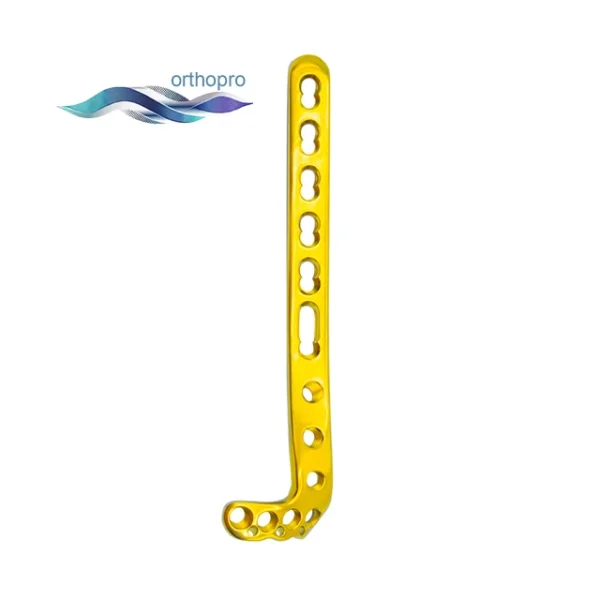
Anatomical Proximal Lateral Tibial Locking Plate II for Tibial Plateau Fracture Fixation | High-Strength Titanium Lateral Tibia LCP – OrthoPro
The Proximal Lateral Tibial Locking Plate II is a high-precision orthopedic implant designed for the stable internal fixation of complex proximal tibia fractures. This Proximal Lateral Tibial Locking Plate II offers a superior anatomical fit and fixed-angle stability, making our Proximal Lateral Tibia Locking Plate the preferred choice for surgeons treating tibial plateau injuries and metaphyseal trauma
Why Distributors are Pivoting to OrthoPro
I’ve seen plenty of distributors struggle with “me-too” products. If you’re selling the same thing as five other guys, you’re just fighting on price. That’s a race to the bottom.
The OrthoPro PLTLP II gives you a “premium” hook. The plate features a tapered tip for submuscular insertion—this is huge for Minimally Invasive Plate Osteosynthesis (MIPO) techniques. Surgeons love MIPO because it preserves the blood supply to the bone. If you can help a surgeon achieve better clinical outcomes with less scarring, you’ve got a customer for life.
Case Study: A Mid-Size Distributor’s Success
Last year, a distributor I know (let’s call him “Jim” from the Midwest) was losing his shirt on generic trauma sets. He switched his focus to the PLTLP II series. By focusing on the “Anatomical Fit” and “Reduced OR Time” pitch, he didn’t just maintain his margins; he actually increased his per-case profit by about 12% because the hospitals saw the value in the reduced “re-operation” rate.
Understanding the Schatzker Classification and Your Product Fit
If you’re going to sell in this space, you gotta know your Schatzker. Most tibial plateau fracture cases you’ll see are Type II (split and depression of the lateral condyle).
- Schatzker I-III: Usually lateral. This is where the PLTLP II shines.
- Schatzker IV-VI: These are the nasty, “high-energy” fractures. Often requires medial and lateral plating.
When a surgeon sees a Type VI fracture on the X-ray, they aren’t looking for the cheapest plate. They are looking for the most reliable one. They need a plate that can handle the “hoop stress” of the tibial plateau.
In simple terms, think of the tibia like a barrel. When weight is applied, the “staves” want to push out. The locking plate acts like the metal hoop holding the barrel together. Hoop Stress = (Internal Pressure * Radius) / Wall Thickness A pre-contoured anatomical plate distributes this stress much more evenly than a manually bent one.
The Financials: Premium Margins in the Orthopedic Trauma Market
Let’s talk money, because that’s why we’re here. The orthopedic trauma market in 2024 is seeing a weird “bifurcation.” Cheap, low-quality stuff is getting squeezed by generic competitors from overseas. High-end, “value-add” products like the OrthoPro PLTLP II are maintaining their price points.
Why? Because the “Cost of Failure” is too high. A single surgical site infection or a “non-union” (where the bone doesn’t heal) can cost a hospital upwards of $30,000. Paying an extra $200 for a superior anatomical plate is basically an insurance policy for the hospital.
As a distributor, you should be focusing your marketing on these “Total Cost of Care” metrics, not just the sticker price of the plate.
Common Mistakes Reps Make
I’ve seen it a thousand times. A rep walks in and says, “Hey, I’ve got a cheaper plate.” Stop doing that. Instead, show the surgeon how the PLTLP II matches the watershed line of the tibia. Show them how the locking holes allow for “kickstand” screws to support the joint surface. Talk about the Grade 5 Titanium alloy (Ti-6Al-4V) which offers a better strength-to-weight ratio than stainless steel.
Actually, many surgeons prefer titanium because it has a lower “Modulus of Elasticity” compared to steel. Modulus of Elasticity (E) = Stress / Strain Titanium’s ‘E’ is closer to that of human bone, which reduces “stress shielding” (where the plate takes all the weight and the bone gets weak). This is a massive selling point that most reps completely ignore.
What’s Next for Tibial Plateau Management?
As we look further into 2024 and 2025, expect to see more integration with robotic navigation and 3D preoperative planning. But even with a robot, you still need a rock-solid plate to hold everything together. The demand for the Proximal Lateral Tibial Locking Plate II is only going to go up as these “precision” surgeries become common.
OrthoPro is positioning itself right at the center of this. They aren’t just making hardware; they’re providing a solution for the complex biomechanical mess that is a shattered knee.
Conclusion and How to Move Forward
The market is moving, and it’s moving toward anatomical precision. If your current catalog is full of “legacy” plates, you’re going to find it harder and harder to get time with the decision-makers.
The PLTLP II is more than just a piece of metal; it’s your ticket into the modern OR. It solves the surgeon’s need for speed, the hospital’s need for efficiency, and the patient’s need for a knee that actually works again.
FAQ: Everything You Wanted to Ask but Didn’t
Q: Is the PLTLP II compatible with standard instrument sets? A: Generally, yes, but for the best results, you really should use the dedicated OrthoPro instrumentation. It’s designed to ensure the locking screws engage at the perfect angle every time. No one wants a cross-threaded screw at 4 PM on a Friday.
Q: How does the pricing compare to the “big names” in the industry? A: Honestly, it’s about the value. OrthoPro offers a price point that allows distributors to actually make a margin while still providing a “premium” anatomical product that beats out the big-box “generic” lines.
Q: What’s the lead time for bulk orders? A: OrthoPro is pretty tight with their supply chain. Usually, you’re looking at standard industry leads, but it’s always best to reach out directly to see what’s sitting in the warehouse right now.
Q: Does the plate come in different lengths? A: Absolutely. From 3-hole up to 13-hole versions. Whether it’s a simple split or a nasty segmental fracture that goes down the shaft, there’s a size that fits.
Ready to Upgrade Your Trauma Portfolio?
Are you tired of fighting over pennies with low-quality trauma gear? It’s time to offer your surgeons something they actually want to use. The anatomical locking plate demand is peaking right now, and OrthoPro is ready to help you capture that market share.
Don’t wait for your competitors to make the move.
- A – Attention: The orthopedic trauma market is shifting toward high-performance anatomical plates.
- I – Interest: The PLTLP II offers superior biomechanics, reduced OR time, and better patient outcomes.
- D – Desire: Imagine being the go-to distributor for the most advanced tibial solutions in your region, with margins that actually make sense.
- A – Action: Contact OrthoPro today or shoot an email to info@orthopro.mx to get a full catalog and a quote. Let’s get these plates into your surgeons’ hands.
Still not sure? Just reach out and ask for a sample. Once you feel the low-profile finish and see the screw trajectory options on the PLTLP II, you’ll see why the market is moving this way.
Author’s Note: I’ve seen a lot of plates come and go, but the engineering on this series is legit. If you’re serious about your trauma business, this is where you need to be.“`