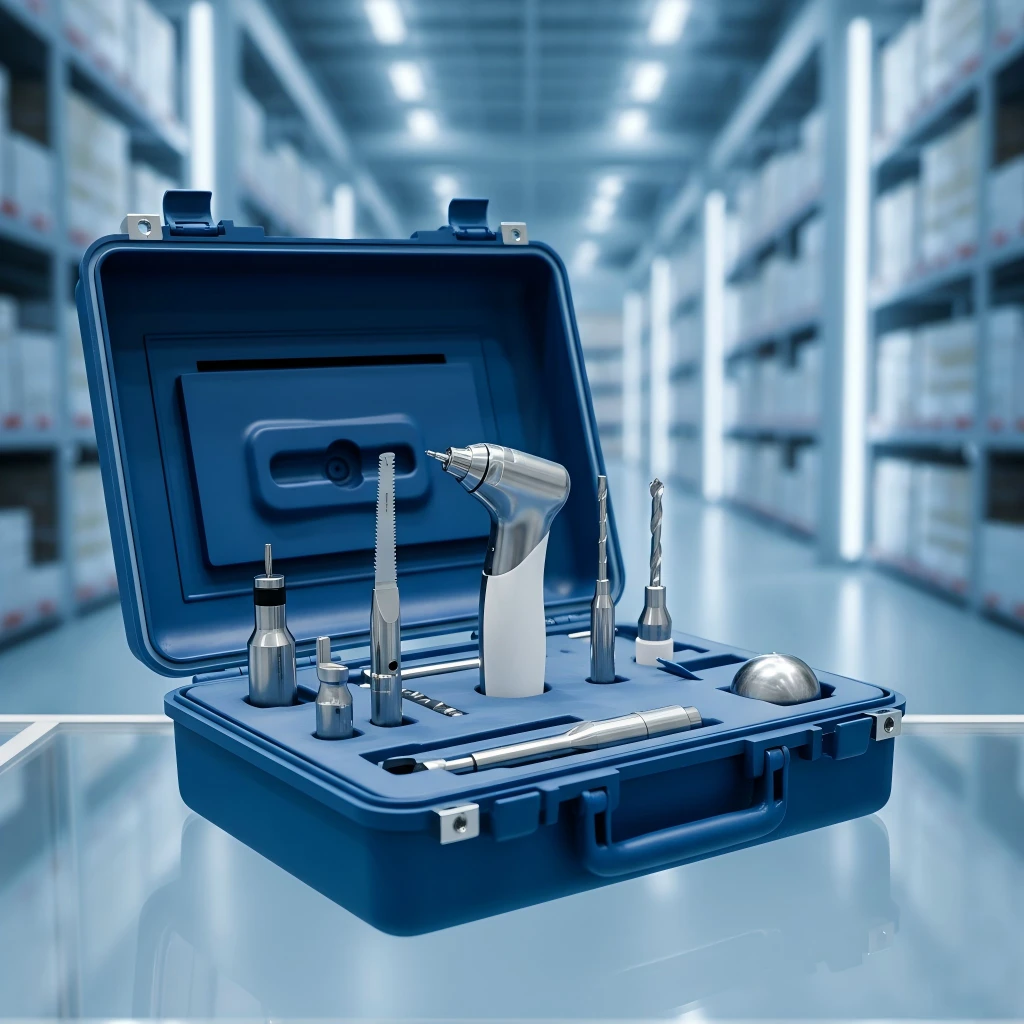
Importing orthopedic power tools can feel like walking through a minefield if you don’t have the right map. I’ve spent years at OrthoPro helping distributors and hospital procurement teams get batches of drills and saws across borders without the shipment getting stuck in customs or slapped with a rejection notice. One wrong missing certificate and your container sits there racking up storage fees while the OR waits.
The orthopedic power tools market sits around USD 1.8 billion in 2026 and keeps pushing toward USD 2.7 billion by 2033 at about 5% CAGR. Hospitals everywhere want reliable mini tools for trauma, hand, and foot cases, but regulators keep tightening the screws on safety and traceability. That’s why a solid checklist matters more than ever for anyone dealing with medical device importing regulations.
I’ve pulled together the stuff that actually trips people up based on real shipments we’ve handled. We’ll cover the big standards like CE certified surgical tools and ISO 13485 bone drill requirements, throw in some practical steps, a comparison table, and a few anonymized stories from buyers who’ve been through it. No textbook language – just what works when you’re trying to keep costs down and timelines tight.
Why Regulatory Compliance Keeps Getting Tougher for Orthopedic Power Tools
Power tools like drills and saws usually fall into Class IIa or IIb under risk classifications because they actively cut or shape bone. That means they can’t just ship with a smile and a hope. You need proof they won’t overheat, break mid-procedure, or leave metal particles behind.
In the EU, the Medical Device Regulation (MDR 2017/745) rules the roost. CE marking isn’t a rubber stamp anymore – it demands real technical documentation, risk management files, and often a Notified Body review. We’ve seen importers scramble when their supplier only had old Directive paperwork. That doesn’t fly in 2026.
On the US side, FDA wants establishment registration, device listing, and usually a 510(k) clearance showing the tool is substantially equivalent to something already legal on the market. Labeling has to match exactly, and quality systems get scrutinized hard.
For many of our clients in Latin America or other regions, they mix and match – CE for Europe-bound stock, FDA alignment for US re-exports, and local registrations everywhere else. The headache comes when one supplier promises “compliant” but can’t back it up with full traceability on materials or sterilization validation.
Core Standard 1: ISO 13485 – The Quality Management Backbone
If you’re importing orthopedic power tools, ISO 13485:2016 isn’t optional. It sets the quality management system specifically for medical devices – design, production, installation, servicing, all of it. Unlike general ISO 9001, this one drills into risk management, traceability, and post-market surveillance.
At OrthoPro we run our entire operation under ISO 13485. That covers everything from raw material incoming checks to final packaging. For an ISO 13485 bone drill like our models, it means documented processes for motor winding, battery testing, and how we validate autoclave cycles up to 135°C. Buyers love it because it gives them confidence that batch after batch performs the same.
One distributor we worked with imported from a cheaper source without strong ISO 13485 controls. Their first big order had inconsistent torque output – some units hit the claimed RPM, others didn’t. Hospitals sent them back. Switching to a certified partner cut their return rate dramatically. Moral of the story: ask for the certificate and recent audit summary, not just the logo.
Core Standard 2: CE Certified Surgical Tools Under EU MDR
CE marking shows the device meets General Safety and Performance Requirements (GSPR) in Annex I of the MDR. For powered orthopedic tools, expect involvement from a Notified Body for Class IIa/IIb devices – they audit your QMS and review technical docs.
Key pieces importers should verify:
- Risk management file per ISO 14971
- Clinical evaluation report
- Technical documentation (design specs, test results, labeling)
- UDI carrier on the device and packaging
- Post-market surveillance plan
Our Mini Multifunctional Saw Drill carries proper CE marking because we handle the full package – brushless motor for less heat, stepless speed control from 0-1200 RPM for drilling, up to 16000 OSC/min for the saw, and solid battery life that doesn’t fade mid-case. When distributors source from us as compliant surgical equipment, they get documentation ready to support their own import filings.
A quick tip from experience: Notified Body capacity still runs tight in some areas. If your supplier says “CE coming soon,” build extra buffer time. We’ve had clients wait months longer than quoted because the review queue backed up.
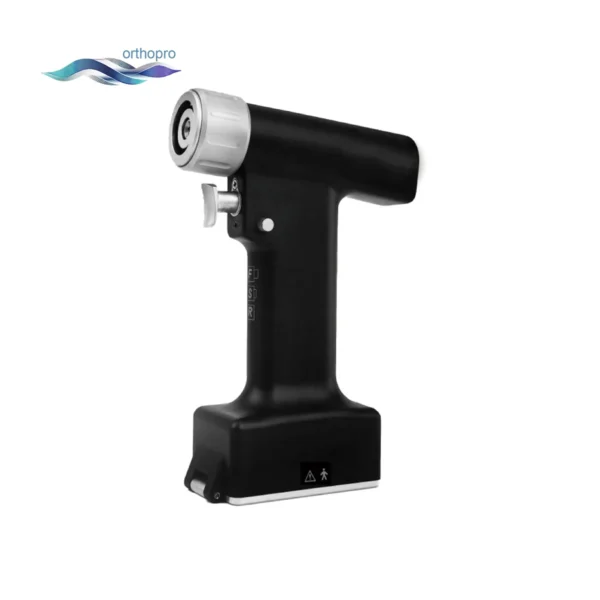
OrthoPro Brushless Mini Multifunctional Saw Drill System | High-Precision Lithium Battery Orthopedic Power Tool for Hand, Foot, and Small Joint Surgery | Wholesale Surgical Equipment
The OrthoPro Mini Multifunctional Saw Drill is a compact, brushless surgical power tool designed for precision in hand, foot, and small joint procedures. This high-performance mini multifunctional saw drill utilizes lithium battery technology to provide stable, long-lasting power for delicate orthopedic operations. Engineered for versatility, the brushless mini surgical drill ensures superior control and durability in complex clinical environments.
Other Key Regulations: FDA, Local Requirements, and Beyond
For the US market, even if the tool is made outside, the foreign manufacturer must register their establishment annually and list the device. Importers file entry declarations with Affirmation of Compliance codes so FDA knows what to check. Common issues? Missing 510(k) reference or labeling that doesn’t match the cleared version.
In many Latin American countries, you need local sanitary registrations that often reference CE or FDA as supporting evidence. Some require Spanish labeling or specific importer-of-record details. Tariffs and Section 232-type investigations on medical supplies add another layer – costs can jump if trade rules shift.
We’ve helped partners navigate mixed shipments where part goes to Europe (heavy on MDR) and part stays regional. The trick is having one set of core docs that supports multiple jurisdictions without starting from scratch every time.
Here’s a practical B2B checklist table pulled from what we actually use when onboarding new distributor partners:
| Checklist Item | Why It Matters | What to Ask Supplier | Red Flag if Missing |
|---|---|---|---|
| Valid ISO 13485 Certificate | Proves QMS for medical devices | Copy + audit date | Expired or only ISO 9001 |
| CE Certificate & Technical File Summary | Required for EU sales | Notified Body name + scope | Self-declared for Class II tools |
| FDA 510(k) Reference (if targeting US) | Shows substantial equivalence | Clearance letter or K number | No premarket submission |
| Full Material Traceability | Biocompatibility & recall readiness | CoC for metals, plastics, batteries | “Trust us” responses |
| Sterilization Validation (135°C) | Ensures safe reuse in OR | Cycle data & test reports | Only “autoclavable” claim without proof |
| Labeling & IFU in Target Languages | Avoids customs holds | Samples in English/Spanish/etc. | Only Chinese or missing warnings |
| Post-Market Surveillance Plan | Handles field complaints | PMS procedure document | None provided |
| UDI Implementation | Modern tracking requirement | UDI on device/packaging | Not assigned or implemented |
Print this or drop it into your next RFP. It saves hours of back-and-forth.
Real-World Importing Scenarios We’ve Seen
One mid-sized distributor in Mexico brought in a container of mini drills from an uncertified shop to save on price. Customs flagged missing CE docs for the Europe portion of the split shipment. They paid demurrage for weeks and lost a hospital tender because the tools arrived late. After switching to OrthoPro’s compliant surgical equipment line, their next orders cleared faster and they actually won more bids.
Another buyer focused on foot and ankle specialists needed tools quiet enough for long cases (our units stay under 60 dB). The previous supplier’s louder pneumatic versions caused complaints. With our battery-powered, CE certified surgical tools, surgeon feedback improved and repeat orders followed. Consistency in regulatory paperwork meant they could promote the tools confidently across borders.
Controversial opinion maybe, but I think some importers still chase the absolute lowest price and treat compliance as an afterthought. In 2026, with tighter global scrutiny and hospitals demanding proof, that approach feels like playing roulette with your margin and reputation. Pay for proper ISO 13485 bone drill standards upfront and you avoid the expensive surprises later.
Building Your Import Process Step by Step
Start early: Classify the device correctly (most powered orthopedic tools aren’t low-risk Class I). Appoint a Person Responsible for Regulatory Compliance if selling into Europe. Gather or demand the full technical file from your manufacturer.
Work with a customs broker who knows medical devices – they catch the small affirmation codes that trip automated systems. Test a small pilot shipment if possible to iron out labeling or documentation quirks before the big order.
At OrthoPro we make this easier because our Mini Multifunctional Saw Drill already meets the core hurdles. Lightweight, versatile (drill/saw/ream in one handpiece), and backed by real compliance docs. Distributors use it as a flagship product when building their orthopedic catalog.
If you’re staring at a spreadsheet of potential suppliers and wondering which ones won’t cause headaches, reach out. We ship from a stable base and stand behind the paperwork. Visit https://orthopro.mx/ to see the full line or head to the contact page for a no-pressure discussion. Email us at info@orthopro.mx and tell us your target markets – we’ll pull together the relevant certs and specs fast. Whether you need a few units for testing or container loads for distribution, we can help make the import side less painful.
Don’t let regulatory surprises derail your next orthopedic power tools order. Get the compliant surgical equipment that lets you focus on selling and supporting your customers instead of fighting customs.
Q: Do all orthopedic power tools need a Notified Body for CE certified surgical tools?
Class IIa and IIb powered instruments like bone drills and saws. Self-certification usually only works for basic non-sterile Class I items. Check your exact classification early.
Q: How does ISO 13485 for bone drill production help with medical device importing regulations?
proves the manufacturer has controlled processes for quality, traceability, and risk. Many countries accept or reference it as part of their local registration, making customs clearance smoother.
Q: What’s the biggest delay we see when importing compliant surgical equipment?
A: Incomplete technical documentation or missing language-specific labeling. Suppliers who skimp here cause the most hold-ups. Always request samples of the full IFU and labels before ordering big.
Q: Can OrthoPro support importers targeting multiple countries with the Mini Multifunctional Saw Drill?
A: Yes – we provide the core CE and ISO docs plus help tailoring for regional needs. Many distributors use our tools as the compliant base for their private label or direct hospital sales.
Ready to simplify your next import of CE certified surgical tools? OrthoPro stands ready with ISO 13485 bone drill standards and real experience in medical device importing regulations. Drop us a line at info@orthopro.mx or use the contact form – let’s get your compliant surgical equipment moving without the usual headaches.