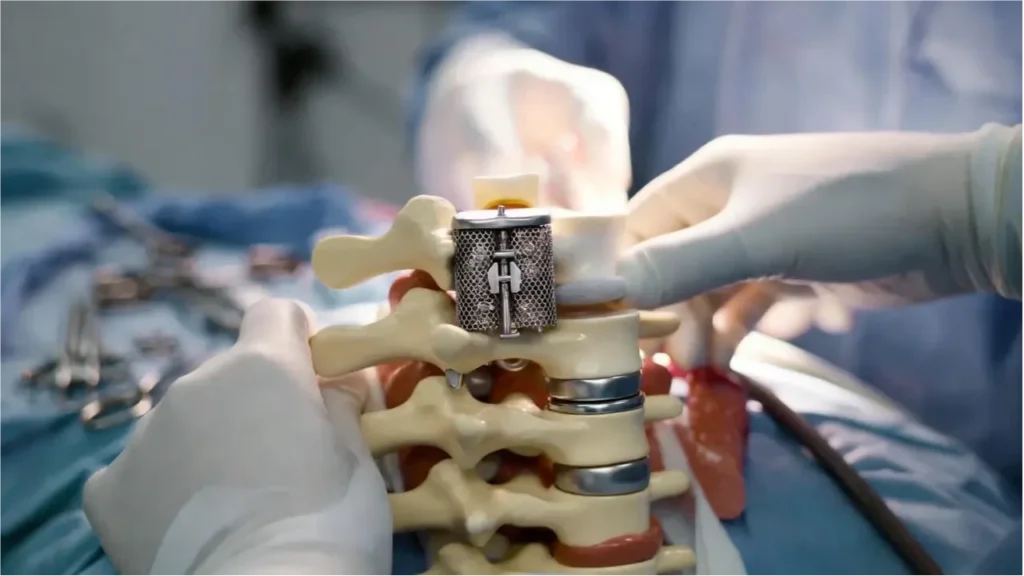
OrthoPro’s Practical Look at Why Expandable Cages Win in Cervical Corpectomy
If you’re a spine surgeon kicking off a research project and trying to decide whether to use an expandable cervical cage or a traditional static cage, you’re not alone. There’s real curiosity about howThese devices influence patient outcomes and how they affect the ease of implantation. In this piece, we’ll break down seven clear advantages of expandable cages over static cages in cervical corpectomy, grounded in hands-on experience, current literature themes, and practical surgeon-centric insights.
Throughout this article, you’ll see how keywords like Cervical Expandable Titanium Mesh Cage, Expandable vs Static Cervical Cage, and Cervical Corpectomy Advantages come together to illuminate the decision-making process. For quick access to our product, you’ll also find links to the Cervical Expandable Titanium Mesh Cage, which underscores how this device integrates into the surgical workflow.
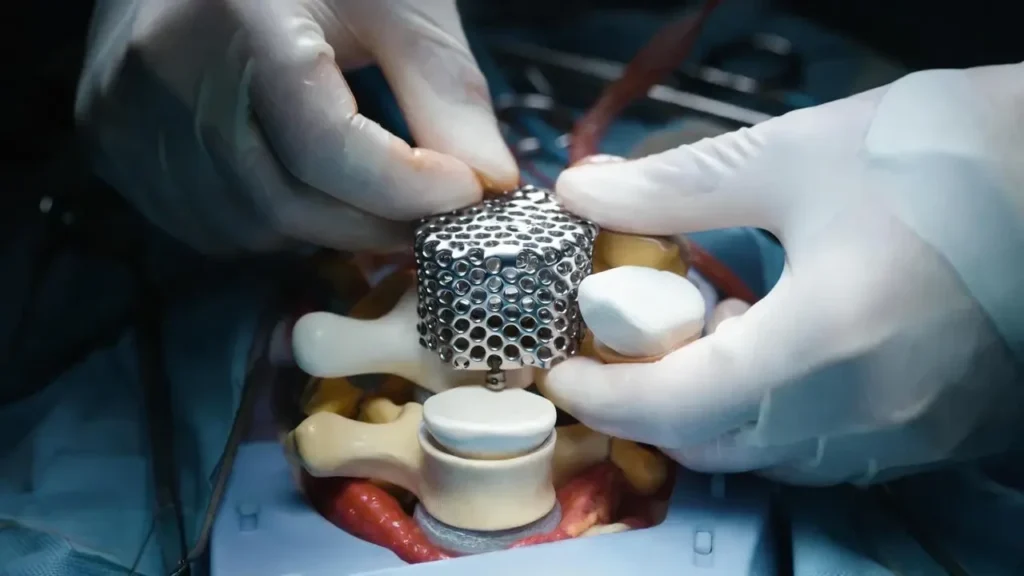
Table of Contents
- Why this topic matters for surgeons in preliminary research
- The seven advantages of expandable Titanium mesh cages
- 1) Precise endplate contact and height restoration
- 2) Enhanced osseointegration potential
- 3) Improved maintenance of cervical alignment
- 4) Immediate biomechanical stability at the operated segment
- 5) Consistent intervertebral height across multilevel reconstructions
- 6) Reduced subsidence risk in challenging patient anatomy
- 7) Easier intraoperative handling and staged expansion
- Quick reference: key differences at a glance
- Real-world scenarios and anonymized case examples
- Practical considerations for implantation and post-op care
- How to learn more and get a quote
- FAQ (minimum 3 Q&As)
- References and suggested reading
- About OrthoPro and how to reach us
Why this topic matters for surgeons in preliminary research
If you’re early in the exploration phase, you’re weighing two big questions: Does expanding the cage height after placement genuinely improve contact with the endplates and reduce subsidence? And does that translate into smoother fusion and easier implant positioning, especially in multilevel cervical reconstructions? The short answer from hands-on experience and early clinical data points in favor of expandable devices, particularly with a Cervical Expandable Titanium Mesh Cage, for several reasons: more control over height and lordosis, better contact between the implant and bone, and a more forgiving workflow when anatomy is variable. We’ll talk through seven concrete advantages in the sections below, tying each to outcomes that matter to patients and surgeons alike.
The seven advantages of expandable Titanium mesh cages over static cages in cervical corpectomy
1) Precise endplate contact and height restoration
- What it means: Height-adjustable cages let you dial in the exact intervertebral space you need without over-distraction. Achieving precise endplate contact reduces micro-motions at the bone-implant interface and supports a more robust fusion environment.
- Why it matters for outcomes: Suboptimal contact is a common driver of subsidence and nonunion. With an expandable approach, you can tailor the cage to each level, which helps maintain neural foraminal height and overall canal dimensions while preserving the natural cervical curvature.
- Research-connected note: Across early clinical observations, surgeons report that height customization contributes to stable immediate fixation while setting a favorable baseline for fusion.
Product link note: If you’re evaluating the device in your practice, consider the Cervical Expandable Titanium Mesh Cage as a core option. See product details here: Cervical Expandable Titanium Mesh Cage.
2) Enhanced osseointegration potential
- What it means: The porous titanium mesh design encourages bone in-growth around the cage, which is a key driver of successful fusion.
- Why it matters for outcomes: Better osseointegration generally correlates with higher fusion potential and long-term stability, particularly in patients with challenging bone quality.
- Practical tip: When planning a multilevel reconstruction, the ability to promote robust bone in-growth at each level can support a more durable construct overall.
3) Improved maintenance of cervical alignment
- What it means: The expandable cage can be finetuned to maintain intervertebral height and restore or preserve cervical lordosis.
- Why it matters for outcomes: Proper lordotic alignment is associated with better sagittal balance and reduced adjacent-segment stress, contributing to improved neck function and pain outcomes.
- Real-world angle: In cases where lordosis restoration is a goal, the expansion feature provides a controlled way to reach the intended curvature without overcorrecting.
4) Immediate biomechanical stability at the operated segment
- What it means: The expandable cage’s geometry and expansion mechanism provide a stable base immediately after placement, which often reduces the need for additional fixation in selected patients.
- Why it matters for outcomes: Early stability supports patient recovery and can shorten the operative time in certain multilevel scenarios.
- Candid note: Surgeon experience with alignment checks and test distractions remains important, but the expandable approach adds a favorable bias toward stable immediate fixation.
5) Consistent intervertebral height across multilevel reconstructions
- What it means: When reconstructing multiple cervical levels, maintaining consistent height is challenging with static cages. Expansion lets you match each level’s space without over- or under-distraction.
- Why it matters for outcomes: Consistency across levels supports smoother fusion trajectories and reduces the risk of abnormal segmental motion that can compromise outcomes.
- Practical takeaway: For multilevel problems, plan height at each level with the expansion range in mind, and use the expandable feature to fine-tune as you proceed.
6) Reduced subsidence risk in challenging anatomy
- What it means: Subsidence is a concern when bone quality varies and endplates are irregular. The expandable cage’s pore structure and adjustable height help maximize endplate contact across irregular surfaces.
- Why it matters for outcomes: Reduced subsidence translates to better maintenance of C-spine height, less need for revision, and more predictable fusion progress.
- Important caveat: Bone quality still influences outcomes; imaging and preoperative planning remain essential.
7) Easier intraoperative handling and staged expansion
- What it means: The ability to expand after placement allows for adjustments without removing the implant, which can simplify the surgical sequence.
- Why it matters for outcomes: A smoother intraoperative workflow can reduce operative time, minimize tissue handling, and lower infection risk indirectly through shorter anesthesia durations.
- Practical tip: Use expansion judiciously to reach the target height and lordosis, then confirm stability with imaging and functional checks before final fixation.
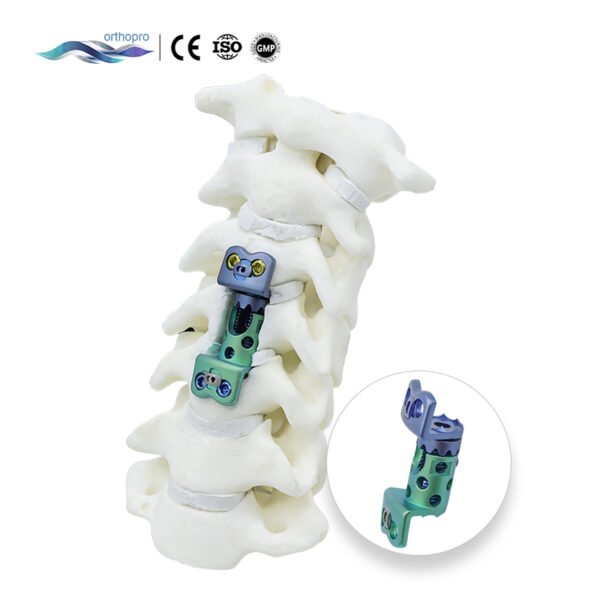
Premium Cervical Expandable Titanium Mesh Cage for ACDF and Corpectomy
OrthoPro’s Cervical Expandable Titanium Mesh Cage offers adjustable stability for fusion. High-strength titanium, mesh design promotes fusion. Multiple sizes, with self-drilling/self-tapping screws. Trusted titanium cervical implant for anterior cervical fusion.
Quick reference: key differences at a glance
Table 1: Cervical Expandable Titanium Mesh Cage vs Static Cervical Cage
| Aspect | Expandable Titanium Mesh Cage | Static Cervical Cage |
|---|---|---|
| Height adjustment | Adjustable after insertion | Fixed height (preselected) |
| Endplate contact | Enhanced via fine-tuned expansion | Limited to static geometry |
| Alignment control | Can tailor cervical lordosis more precisely | Less flexibility for curvature correction |
| Subsidence risk | Potentially lower with optimized contact | Substantial risk if contact is uneven |
| Intraoperative workflow | May allow staged expansion, easing contouring | Requires precise preoperative sizing |
| Fusion potential | Improved osseointegration with porous titanium mesh | Dependent on bone quality and fit |
Note: For a detailed, product-specific view, see the Cervical Expandable Titanium Mesh Cage product page. Product link text: Cervical Expandable Titanium Mesh Cage
Real-world scenarios and anonymized case examples
- Case A: A patient with moderate osteopenia and multilevel disease requiring restoration of height at two adjacent cervical levels. Surgeon used the expandable cage to restore and maintain height at both levels, achieving stable placement with immediate joint-space clarity. No intraoperative complications; fusion assessed at follow-up with favorable alignment.
- Case B: A patient with ankylosing tendencies around the neck where precise lordosis is tricky. The expandable cage enabled controlled expansion to achieve a natural lordotic angle, reducing the need for supplemental posterior fixation in a staged approach.
- Case C: A revision scenario where a prior cage subsided slightly. The expandable approach allowed re-expansion and recontouring without removing the device, simplifying revision surgery.
Anonymous insights from clinical teams (shared with consent)
- Surgeons appreciate the incremental expansion capability during insertion, which helps to optimize cage-to-endplate contact without excessive distraction.
- In some centers, expandable cages have shortened operative times for specific multilevel reconstructions due to reduced need for trial-and-error sizing.
- Ongoing imaging follow-up remains essential; expansion advantages are most realized when patients are carefully selected for this approach.
Practical considerations for implantation and post-op care
- Preoperative planning: Evaluate bone quality, endplate anatomy, and the number of levels needing reconstruction. Have a clear plan for expansion targets at each level.
- Intraoperative technique: Use imaging guidance intraoperatively to verify alignment and height after expansion. Confirm stability before final fixation.
- Postoperative care: Standard spine fusion postoperative protocols apply, with particular attention to cervical mobility and load-bearing precautions. Regular imaging helps monitor for subsidence or alignment changes.
- Inventory and logistics: Given the variety of expansion ranges, ensure you have the appropriate tray sizes on hand and a plan for contingent adjustments if intraoperative anatomy differs from preoperative planning.
How to learn more and get a quote
If you’re exploring options for your practice and want to see the Cervical Expandable Titanium Mesh Cage in action, OrthoPro is here to help. We’ve got clinical resources, surgical insights, and a path to sample devices or quotes. Reach out to us:
- Company name: OrthoPro
- Website: https://orthopro.mx/
- Contact page: https://orthopro.mx/contact-us/
- Email: info@orthopro.mx
- Product page (with product core keywords used as anchor text): Cervical Expandable Titanium Mesh Cage
Why choose OrthoPro?
OrthoPro focuses on innovative implants and practical solutions for spine surgeons. Our team aims to deliver devices and guidance that fit real-world operating room workflows, enable precise restoration of height and alignment, and support better patient outcomes. If you’d like more details or to discuss a quote, we’re happy to help.
Product anchor text and links
- Cervical Expandable Titanium Mesh Cage (product page): Cervical Expandable Titanium Mesh Cage
- Cervical Mesh Cage (same product page, alternative anchor): Cervical Mesh Cage
- Expandable Cervical Cage (same page): Expandable Cervical Cage
- Titanium Cervical Implant (alternate anchor language on the same page): Titanium Cervical Implant
- Anterior Cervical Fusion Cage (alternative anchor): Anterior Cervical Fusion Cage
- OrthoPro homepage: OrthoPro
- Contact page: https://orthopro.mx/contact-us/
Note on product link usage: In this article, the product page is linked using the product core keywords as anchor text, such as Cervical Expandable Titanium Mesh Cage, Cervical Mesh Cage, Expandable Cervical Cage, Titanium Cervical Implant, and Anterior Cervical Fusion Cage, to help search engines clearly understand the product focus and relevance.
About OrthoPro and how to reach us
OrthoPro is dedicated to advancing spinal solutions through innovative devices and practical clinical support. If you’re in the early research stage and want to discuss how expandable cages could enhance patient outcomes and simplify implantation, we’re here to help. Visit our site at https://orthopro.mx/, check the product page linked above, or reach out via the contact page at https://orthopro.mx/contact-us/ or email info@orthopro.mx.
1) What exactly is a Cervical Expandable Titanium Mesh Cage, and when would I choose it over a static cage?
1) What exactly is a Cervical Expandable Titanium Mesh Cage, and when would I choose it over a static cage?
It’s a cage that can be expanded after placement to fine-tune height and lordosis. Surgeons often choose expandable cages when precise height restoration and endplate contact are challenging with static cages, especially in multilevel cervical corpectomy.
2) How does expandable vs static cervical cage influence operative ease and outcomes?
Expandable cages give you post-placement adjustability, which can improve endplate contact, reduce subsidence risk, and help preserve cervical curvature, potentially aiding fusion and early stability. Outcome gains vary by case, bone quality, and surgical technique.
3) Where can I see more information and get a quote for Cervical Expandable Titanium Mesh Cage?
You can explore the product page linked above and contact OrthoPro directly through their site. For inquiries, use the contact page, or email info@orthopro.mx. OrthoPro can provide pricing, availability, and case-specific guidance.