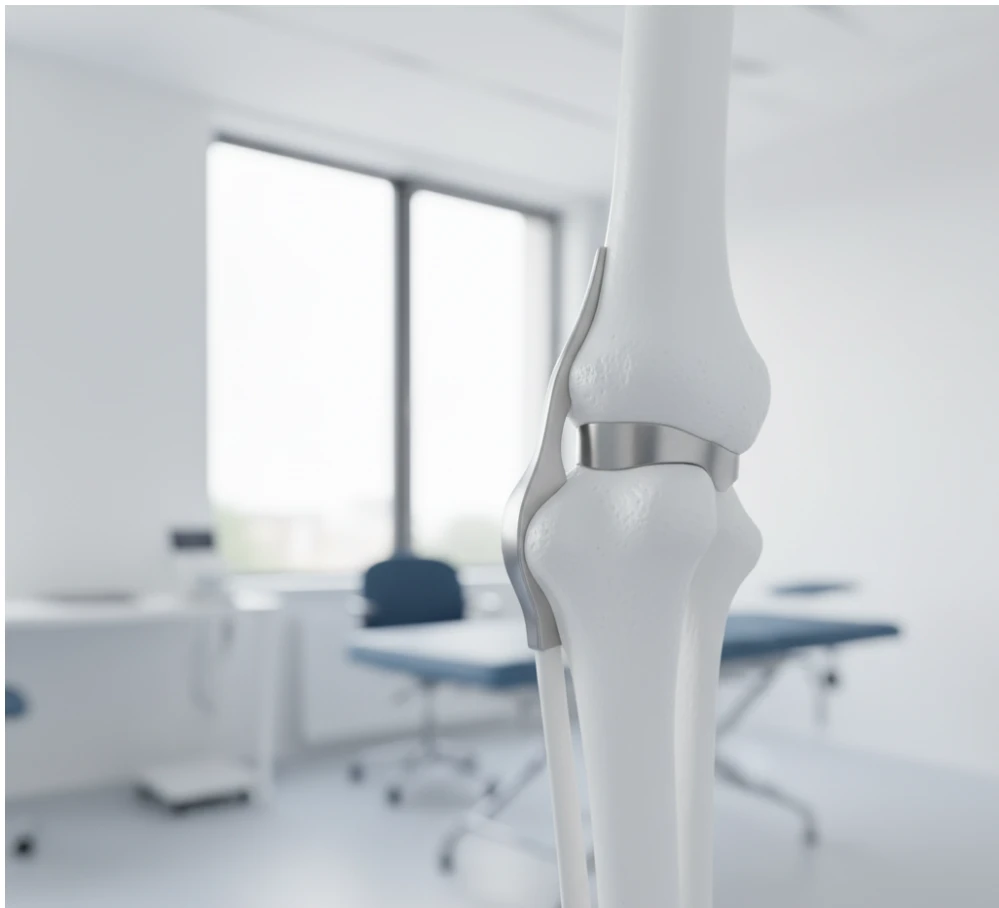
If you are a medical device distributor or an agent working with orthopedic surgeons, you’ve probably had this conversation. A surgeon calls you up, they’ve got a patient with a nasty valgus deformity (basically, knock-knees), and they are debating the surgical approach. They ask you: “Should I go with a medial opening wedge or a lateral closing wedge?”
Your answer matters. It’s not just about selling a piece of metal; it’s about understanding the clinical nuances of femoral realignment surgery. If you provide the wrong plate or don’t understand why a surgeon might prefer the distal lateral femoral plate over an MDFO plate, you lose credibility.
I’ve spent years looking at these cases, and honestly, the “medial vs. lateral” debate is one of the most misunderstood areas in trauma and limb reconstruction. Let’s break it down in plain English, skip the marketing fluff, and get into the real clinical criteria.
What Are We Trying to Fix? The Basics of Realignment
Before we look at the hardware, we have to look at the bone. Most distal femoral osteotomies are done to treat a valgus deformity. When the femur angles inward, the weight-bearing axis of the leg shifts to the lateral (outer) compartment of the knee. Over time, this grinds down the cartilage, leading to arthritis.
The goal of femoral realignment surgery is to shift that weight back to the center or slightly to the medial (inner) side.
There are two main ways to do this:
- Medial Opening Wedge Osteotomy: You cut the bone on the inside (medial) and pry it open. You need an MDFO plate to hold that gap.
- Lateral Closing Wedge Osteotomy: You cut a wedge of bone out from the outside (lateral) and zip it shut. You usually use a lateral plate for this.
MDFO vs DFO: The Medial Approach
The Distal Medial Femoral Osteotomy Locking Plate (MDFO) is the go-to for opening wedge procedures. At OrthoPro, we’ve seen a massive shift toward this approach in the last decade.
Why Surgeons Like the Medial Opening Wedge
Most surgeons prefer this because you only have to make one cut. You don’t have to calculate and remove a precise wedge of bone, which is honestly harder than it looks. You just open the cut until the leg looks straight on the X-ray.
Key Indications for Medial Plates:
- Valgus Deformity Correction: This is the big one.
- Patellar Maltracking: If the kneecap isn’t sitting right because of the femur’s angle.
- Revision Surgery: When a previous lateral surgery didn’t quite hit the mark.
Something to Keep in Mind: The “Gap” Issue
When you do an opening wedge, you’re creating a hole in the bone. For gaps larger than 10mm, many surgeons feel they need to use a bone graft or a bone substitute. This adds cost and complexity. If the patient has poor bone quality, that medial plate has to work extra hard to prevent the bone from collapsing.
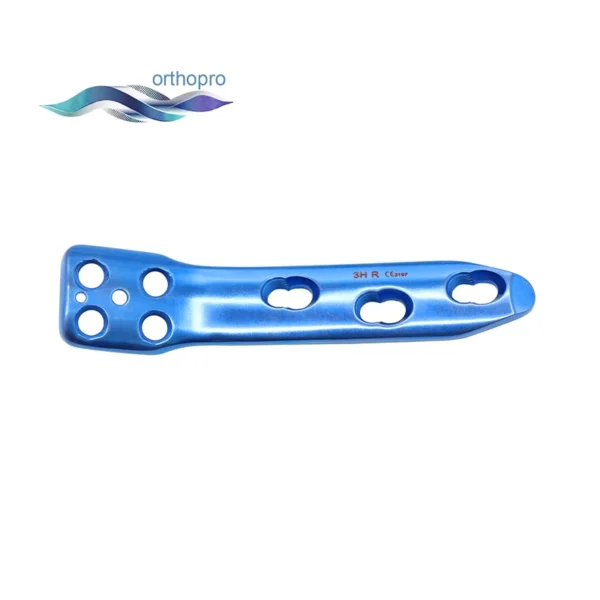
Distal Medial Femoral Osteotomy Locking Plate | Titanium MDFO Plate for Varus Deformity Correction & Knee Realignment Surgery
The Distal Medial Femoral Osteotomy Locking Plate is precision-engineered for varus deformity correction and knee realignment procedures. This high-performance MDFO locking plate provides rigid internal fixation for medial distal femur osteotomy cases. OrthoPro’s distal medial femoral plate features a low-profile design to ensure superior surgical outcomes and minimal soft tissue irritation.
The Lateral Approach: Using the Distal Lateral Femoral Plate
Now, let’s talk about the distal lateral femoral plate. While often used for fractures, it’s also the backbone of lateral closing wedge osteotomies.
Why Some Surgeons Stick to Lateral Closing Wedges
Some old-school (and very talented new-school) surgeons argue that closing a wedge is safer. Why? Because you have bone-on-bone contact immediately. Bone heals faster when it’s squeezed together than when it’s trying to fill a gap.
Key Indications for Lateral Approach:
- Large Deformities: If you need to correct more than 12-15 degrees, an opening wedge might be too unstable.
- Smokers or Diabetic Patients: Patients with slow healing rates often do better with a closing wedge because of that bone-on-bone contact.
- Existing Lateral Hardware: If the patient already has a lateral plate from a previous fracture, the surgeon might stay on that side.
The Selection Criteria: How to Advise Your Surgeons
When you’re standing in the scrub room or talking to the head of procurement, you need to be able to compare these options head-to-head. Here’s a quick reference table you can keep on your phone.
Comparison Table: Medial vs. Lateral Osteotomy
| Feature | Medial Opening Wedge (MDFO) | Lateral Closing Wedge (DFO) |
| Primary Plate | OrthoPro MDFO Plate | Distal Lateral Femoral Plate |
| Surgical Difficulty | Lower (one cut, adjustable) | Higher (two precise cuts needed) |
| Bone Grafting | Often required for large gaps | Rarely required |
| Weight Bearing | Delayed (waiting for gap to fill) | Early (bone-on-bone contact) |
| Risk of Nerve Injury | Lower risk to peroneal nerve | Slightly higher risk if retracting |
| Anatomical Fit | Medial flare is tricky | Lateral flare is wider/easier |
The “Math” of Realignment (Without the LaTeX Headache)
Surgeons use some pretty specific formulas to decide how big of a wedge to open or close. As an agent, you don’t need to do the math for them, but you should understand the variables. One of the most common methods is the Osten method.
The formula for the wedge height (H) in an opening wedge is roughly:
H = W * tan(Angle)
Where:
- H is the height of the wedge you need to open (in millimeters).
- W is the width of the bone at the osteotomy site.
- Angle is the degrees of correction needed.
For example, if the bone is 60mm wide and you need a 10-degree correction:
- Tan(10 degrees) is roughly 0.176.
- H = 60 * 0.176 = 10.56mm.
If a surgeon tells you they need a 10mm correction, you better make sure your MDFO plate has enough screw holes and stability to handle a 10.5mm gap!
Clinical Outcomes: What Does the Data Say?
We shouldn’t just guess. Real studies give us the truth. A study published in the Journal of Bone and Joint Surgery (JBJS) found that both medial opening and lateral closing wedges have success rates over 85% at the 5-year mark.
However, there’s a slight catch. The medial approach has a higher rate of “hardware irritation.” Since the skin and muscle on the inside of the knee are thinner, some patients can feel the MDFO plate. This is why OrthoPro designs our plates with a “low-profile” finish—to keep that irritation to a minimum.
Wait, I should mention—I’ve seen some budget plates that are so thick they look like they belong on a bridge, not a human femur. Don’t sell those. Your surgeons will hate the follow-up visits when the patient complains about a lump on their knee.
Why Quality Standards Matter for Distributors
You’re putting your reputation on the line with every implant. This is where ISO 13485 and CE certification come in. If a plate snaps because of a manufacturing flaw (like a “stress riser” in the screw hole), the hospital isn’t going to blame the manufacturer—they’re going to blame the person who sold it to them.
At OrthoPro, we focus heavily on the fatigue strength of our titanium. Femoral realignment is a “dynamic load” scenario. That plate is getting flexed every time the patient takes a step for months.
I’ve heard stories of cheap stainless steel plates “cold welding” or, worse, snapping during the “callus formation” phase. It’s a nightmare. Stick to high-grade Titanium Grade 5 (Ti-6Al-4V) whenever possible for these high-load osteotomies.
Case Study: The 45-Year-Old Athlete
Let’s look at an anonymous case. We had an agent working with a 45-year-old male who was an avid hiker but had severe valgus-induced lateral pain. The surgeon was torn. The patient wanted to get back to hiking fast (suggesting a lateral closing wedge for early weight-bearing), but the surgeon wanted the precision of an opening wedge.
They chose an OrthoPro medial opening wedge plate. Why? Because the precision of the correction was more important than saving two weeks of recovery. By using a high-stability locking plate, the surgeon felt comfortable letting the patient start “toe-touch” weight-bearing much earlier than usual. Six months later, the guy was back on the trails.
This is the kind of story you want to be part of. It happens when the agent (you) and the hardware (us) meet the surgeon’s needs perfectly.
Navigating the Hospital Tender Process
I know that for many of you, the clinical stuff is only half the battle. You also have to deal with the procurement department. They often look at the distal lateral femoral plate and the MDFO plate and just see “Bone Plate A” and “Bone Plate B.”
You need to argue for the system. A good osteotomy system isn’t just the plate; it’s the instrumentation.
- Are the drill bits sharp?
- Is there a specific “opening jack” or spreader?
- Does the plate have a built-in “offset” to account for the femur’s natural shape?
When you talk to procurement, emphasize that a specialized plate reduces OR time. And as we all know, one minute in the OR can cost upwards of $60 to $100. If a pre-contoured MDFO plate saves 15 minutes of bending time, it just paid for itself.
The Controversy: To Graft or Not to Graft?
Here is a bit of a hot take: Some surgeons are moving away from bone grafts in medial opening wedges if the gap is under 10mm, relying entirely on the locking plate’s strength.
Is it risky? Maybe. But it shows how much trust is being placed in the hardware. If you are selling a plate for a “no-graft” procedure, that plate better be the best in the market. The fatigue limit of the metal becomes the only thing preventing a failure.
We’ve tested our plates to millions of cycles, but I always tell agents: “Be honest with your surgeons.” If the patient is 120kg and the gap is 12mm, tell them to use a graft. Honesty builds long-term B2B relationships.
Key Takeaways for the Orthopedic Agent
- Know the Deformity: Valgus usually means MDFO (Medial). Varus (less common in the femur) or specific lateral closing needs mean Lateral Plate.
- Material is King: Titanium Grade 5 is your best friend for fatigue resistance in realignment.
- Low Profile is Crucial: The medial side of the knee is sensitive. Thinner, smoother plates equal happier patients.
- Instrument Support: Don’t just sell the implant; sell the surgical technique.
How to Get Started with OrthoPro
We aren’t just a warehouse; we are a partner in femoral realignment surgery. If you are looking to expand your catalog and want to offer your hospitals something that competes with the big global brands but with better service and better margins, we should talk.
Check out our full range on the OrthoPro website and take a look at the technical specs for our MDFO locking plates.
We offer:
- Competitive B2B pricing for international distributors.
- Full technical documentation (ISO, CE).
- Surgical technique guides to help you train your surgeons.
If you have a case coming up and you aren’t sure which plate configuration is best, send us an email at info@orthopro.mx. Our technical team loves nerd out on X-rays and help you pick the right gear.
FAQ: Questions You’ll Get From Surgeons
Q1: Can I use a standard distal lateral fracture plate for an osteotomy?
Technically, yes, many surgeons do. But a dedicated osteotomy plate often has different hole spacing and a different “flare” to account for the wedge. Using a plate specifically designed for realignment usually leads to a better anatomical fit and less “fighting the bone” in the OR.
Q2: What’s the weight-bearing protocol for the OrthoPro MDFO plate?
Every surgeon is different, but generally, with a locking plate, patients can start partial weight-bearing (20-30%) around week 4, moving to full weight-bearing by week 8-10, depending on X-ray evidence of bone healing.
Q3: Does the plate come in different “offsets”?
Yes. Since femurs aren’t all the same size, we offer different lengths and slight variations in contouring. This is why having a full set on-site is better than just ordering one plate.
Ready to elevate your orthopedic business?
Don’t let your surgeons settle for “good enough” hardware. Give them the precision of OrthoPro.
- Want a Price List? Request a Quote
- Have Technical Questions? Email us: info@orthopro.mx
- Visit Our Contact Page: https://orthopro.mx/contact-us/
Let’s make femoral realignment surgery safer and more predictable together. Whether you are in Mexico, Europe, or SE Asia, we are ready to ship. Reach out today!