Look, getting medical hardware across international borders right now is an absolute trainwreck. Anyone who tells you otherwise is probably a consultant trying to sell you a wildly overpriced advisory package that just tells you to “fill out the forms.” You’ve got a massive shipment of trauma implants sitting in a customs warehouse, the hospital procurement director is screaming for inventory, and some border agent is holding everything up because of a missing stamp on page 42 of your compliance dossier.
It’s enough to make you want to throw your laptop out a window.
As someone who has been in the trenches of global medical device sourcing for years, I can tell you that importing orthopedic implants isn’t just about finding a good manufacturer anymore. It’s about surviving a regulatory minefield that seems specifically designed to bankrupt you with port demurrage fees.
The global medtech supply chain is currently an absolute mess. Between shifting geopolitical tensions, insane tariff hikes, and regulatory bodies completely overhauling their rules (looking at you, Europe), B2B buyers are getting squeezed from every direction. If you don’t have your paperwork completely dialed in, your products aren’t moving. Period.
Let’s cut through the bureaucratic garbage. Today, I am going to break down exactly what it actually takes to get your orthopedic shipments cleared through customs without losing your mind—or your profit margins.
The Brutal Reality of Medical Device Import Regulations
You cant just throw a box of titanium plates on a cargo ship and hope for the best. Medical device import regulations are ruthlessly strict, and honestly, they should be—these things go inside human bodies. But the enforcement of these rules lately often borders on the absurd.
Lately, we’ve been seeing a massive spike in border delays purely driven by aggressive trade policies and understaffed customs agencies. For example, in the US, the FDA uses a predictive screening algorithm called PREDICT. It assigns a risk score to every single incoming shipment based on the manufacturer’s history, the importer’s history, and the specific product code. If your factory in Asia had a warning letter three years ago, your current shipment is almost guaranteed to get flagged for manual review.
And manual review means sitting in a warehouse. This is where the hidden costs of importing literally destroy businesses.
When your shipment gets flagged, you start bleeding money through warehousing fees at the port. I use a very blunt plain-text formula to explain the real financial risk of getting your goods stuck to our purchasing teams:
True Landed Cost = (Supplier Unit Price + Freight Cost + Insurance) * (1 + Import Tariff Percentage) + (Daily Customs Demurrage Fees * Days Delayed) + Emergency Compliance Audit Costs + Expedited Shipping to Hospital
If you don’t calculate that Daily Customs Demurrage Fees variable, you are going to get a massive shock when your freight forwarder hands you the final bill. Port storage fees compound quickly. I’ve seen mid-sized distributors wipe out their entire quarterly profit on a single container because they didn’t realize their biocompatibility report was expired, causing a three-week hold at the port of Los Angeles.
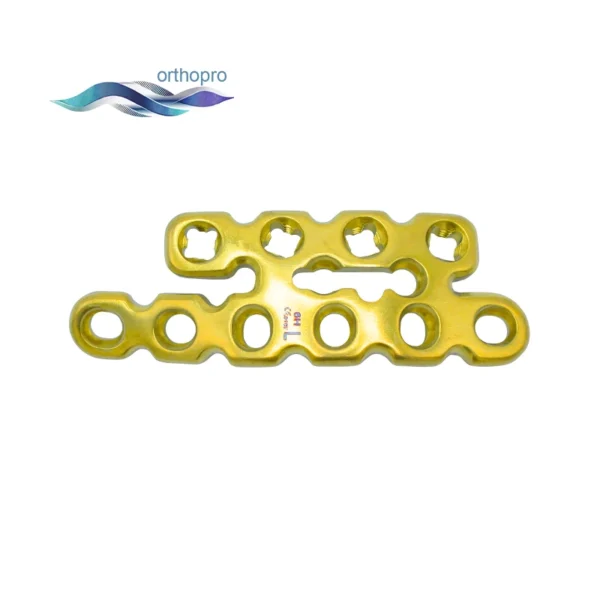
Posterior Pelvic Plate System – Titanium Locking Implant for Pelvic Ring Fracture Fixation
The Posterior Pelvic Plate by OrthoPro is engineered to provide rigid stabilization for complex posterior pelvic ring disruptions. Designed for high-energy trauma cases, this Posterior Pelvic Plate features a low-profile construction that minimizes soft tissue irritation while ensuring superior biomechanical strength. Our locking system offers optimal compression and fixation for sacral and iliac fractures.
Why Customs Clearance Orthopedics Is a Rigged Game
Orthopedic implants—like screws, plates, and joint replacements—usually fall under Class II or Class III medical devices depending on your jurisdiction. Because they are implantable and load-bearing, they are heavily scrutinized by border agents.
One of the biggest friction points in customs clearance orthopedics is misclassification. Customs agents aren’t medical professionals. They are paper pushers. They look at a titanium bone screw and might try to classify it under general industrial fasteners if your documentation is sloppy. Or worse, your supplier tries to classify an implantable device under a lower tariff code to save a few bucks.
That sounds great in the short term, until CBP (Customs and Border Protection) audits you six months later and hits you with massive federal fines for customs fraud.
To give you an idea of how specific you need to be, here’s a quick breakdown of how different trauma products get handled at the border.
| Orthopedic Product Type | Typical Risk Classification (US/EU) | Customs Scrutiny Level | Common Paperwork Hold-Ups |
| Titanium Bone Screws | Class II / Class IIb | High | Missing exact material grade certification (e.g., Ti-6Al-4V ELI) |
| Posterior Pelvic Plates | Class II / Class IIb | Very High | Incomplete FDA 510(k) proof or missing CE DoC |
| Custom 3D Printed Implants | Class III (often) | Extreme | Proof of custom-made device exemption / Patient specific data |
| External Fixators | Class II / Class IIa | Medium | Sterilization validation records for the pins |
| Surgical Instruments | Class I | Low-Medium | Incorrect Harmonized System (HS) codes |
You definitly need to make sure your Harmonized System (HS) codes perfectly match your commercial invoice, your packing list, and your regulatory filings. For instance, the US and EU use specific codes like 9021.10 for orthopedic or fracture appliances. If the FDA database says one thing and your commercial invoice says another, the shipment is getting flagged automatically. There’s no human common sense applied here; it’s just computers matching data fields, and if a single letter is off, you are stuck in secondary screening.
Surviving the FDA 510(k) Waiting Game
If you’re bringing product into the United States, you are at the mercy of the Food and Drug Administration. Let me give you some unfiltered truth about the current state of FDA reviews because this directly impacts when you can actually import your goods.
It is incredibly slow right now.
You’ll read official PR saying the FDA targets a 90-day turnaround for a 510(k) clearance. That is a total joke. Real-world statistics from recent years show that the average review time for a traditional FDA 510(k) submission is actually hovering closer to 140 to 180 days. Roughly 70% to 80% of all submissions are blowing past that 90-day target timeframe.
Why is it so bad? The FDA’s Center for Devices and Radiological Health (CDRH) processes tens of thousands of submissions a year, and the reviewers are buried.
When you or your manufacturer submits an application, the biggest things that will trigger an RTA (Refuse to Accept) or cause massive AI (Additional Information) requests are:
- Poor biocompatibility justification: This alone adds weeks to your wait time. You cant just say “it’s titanium, trust us.” You need the specific ISO 10993 testing data, and if the device has color anodization, they want to see cytotoxicity data on the finished colored device, not just the raw bar stock.
- Missing predicate comparison tables: You have to prove your device is substantially equivalent to something already on the market legally. If you half-ass this table and leave out dimensional comparisons, the reviewer will kick it back.
- Mechanical testing gaps: For trauma plates, you need four-point bending tests per ASTM F382. If your supplier submits a report that doesn’t explicitly state the testing parameters or uses a rigged setup to make their plate look stronger, the FDA will catch it.
My advice? Stop trying to game the system and make sure your supplier uses the FDA’s eSTAR template. It forces them to fill out every single required field before they can even generate the submission file. It’s tedious as hell, but it drastically reduces the chances of the application getting kicked back for stupid administrative errors.
The Absolute Disaster of CE Mark Documentation & EU MDR
If you think the FDA is slow, wait until you deal with Europe. The transition from the old Medical Device Directive (MDD) to the new Medical Device Regulation (EU MDR) has been an unmitigated disaster for the orthopedic industry. The European Commission severely underestimated how many Notified Bodies (the independent organizations that actually issue the CE marks) they would need to process the new rules.
Because of the massive backlog, they had to panic and extend the transition deadlines. As it stands now, high-risk devices have until late 2027 to fully comply, and medium/low-risk devices got pushed to 2028.
But here is my highly controversial opinion on this: the MDR extension is a massive trap.
I see so many B2B distributors and importers relaxing because they think they have years to figure out their CE mark documentation. What they don’t realize is that Notified Bodies are heavily backlogged. Right now, they are scheduling technical file reviews 18 to 24 months out. If you wait until 2026 to start your paperwork, your legacy certificate will expire, your products will become illegal to sell, and you will be completely locked out of the European market.
On top of the time delay, the cost is insane. Regulatory submission fees to Notified Bodies for EU MDR can run anywhere from €30,000 to over €100,000, and the total cost of compliance (including mandatory Post-Market Clinical Follow-up) is hitting massive numbers per device family. This regulatory burden is a huge reason why a lot of cheap suppliers are simply abandoning the EU market, leaving distributors high and dry.
Let me share a quick story. I know a mid-sized orthopedic distributor in Germany who relied on a budget supplier in Asia for locking plates. The supplier kept promising their MDR paperwork was “almost done.” The distributor ordered a massive container of inventory. While the container was on the water, the supplier’s old MDD certificate officially expired. Because they hadn’t formally locked in a written contract with a Notified Body to transition to MDR prior to the cutoff dates, the extension didn’t apply to them.
The shipment arrived in Hamburg. Customs asked for the valid CE certificate. The distributor couldn’t produce an MDR-compliant one, and the MDD one was dead. The entire container was impounded. After three months of paying insane port storage fees, the distributor had to pay to have the entire shipment destroyed. It nearly put them out of business.
The lesson here is simple. Do not trust suppliers who are vague about their regulatory status. Ask for hard proof. Ask for the signed Notified Body agreement. If they cant provide it, walk away immediately.
Bulletproof Your Import Paperwork: The Real SOP
If you want to actually get your trauma implants through the border without wanting to smash your keyboard, you need a militant approach to documentation. Customs officers are overworked and looking for reasons to reject your shipment so they can move on to the next one. Don’t give them an excuse.
Here is the exact checklist you need to staple to your forehead before authorizing any international shipment of orthopedic implants:
1. The Commercial Invoice (CI)
This isn’t just a receipt. It’s a legal declaration. It must clearly state the exact product name, the materials used (e.g., Titanium Alloy Ti-6Al-4V ELI), the intended medical use, and the correct HS code. If you are importing pelvic plates, don’t just write “Metal Plates.” Write “Orthopedic Bone Plates for Surgical Implantation – Posterior Pelvic Fixation.”
2. The Packing List
This needs to match the CI exactly. If the CI says 500 units and the packing list says 50 boxes of 10, make sure the math is painfully obvious. Seperate the line items clearly. If customs opens a box and finds 11 units instead of 10, they will quarantine the whole container for an intensive exam.
3. Declaration of Conformity (DoC)
If you are importing into Europe, this document is non-negotiable. It’s a formal declaration by the manufacturer that the device meets all relevant regulatory requirements. It must list the specific directives or regulations (like EU 2017/745), the Notified Body number, and the exact classification of the device.
4. FDA Establishment Registration and Device Listing
For US imports, both the foreign manufacturer AND the importer must be registered with the FDA. You also need the Device Listing Number and the 510(k) Premarket Notification Number clearly printed on the entry documents. Make sure the names on the invoice match the FDA database perfectly. If you mispell the manufacturer’s name on the customs form so it doesn’t align with the official FDA registry, the shipment gets held.
5. Certificate of Origin
With all the crazy tariffs going around right now, proving exactly where your product was manufactured is critical. And don’t try to transship Chinese-made implants through a third country to avoid Section 301 tariffs. Customs is cracking down hard on this, and the fines for transshipment fraud will end your business overnight.
6. Sterilization Certificates (If Applicable)
If you are importing sterile implants, customs will frequently ask for proof that the sterilization process is valid. Have your Gamma irradiation or EtO sterilization certificates ready to go. If the implants are shipped non-sterile, state “NON-STERILE – FOR STERILIZATION BY END USER” clearly on the packaging and invoice to avoid confusion. Border agents hate ambiguity.
7. Importer of Record (IOR) Alignment
Make sure your freight forwarder knows exactly who the Importer of Record is. The IOR is legally responsible for ensuring the goods comply with local laws. If there is confusion between the distributor, the hospital, and the logistics company over who is holding the IOR bag, the goods will just sit at the border gathering dust.
The Problem with “Cheap” Suppliers
A lot of purchasing managers sort Alibaba or medical sourcing platforms by price and just pick the lowest bidder. That is a fatal error in orthopedics.
A factory might be able to machine a piece of titanium for $15, but if they don’t have a dedicated Quality Assurance / Regulatory Affairs (QA/RA) team backing up that piece of metal with valid 510(k) clearances, CE mark documentation, and ISO 13485 audits, you aren’t buying a medical device. You are buying a very expensive paperweight that you legally cannot sell to a hospital.
The cost of compliance is baked into the price of a legitimate implant. When you buy from a verified manufacturer, you are paying for the engineering, the mechanical testing, the clinical evaluations, and the guarantee that when the goods hit your port, they will actually clear customs.
For example, when dealing with complex trauma like pelvic fractures, the stakes are incredibly high. The implants are large, load-bearing, and mechanically complex. If you are importing something like a Posterior Pelvic Plate, you need absolute certainty that the device conforms perfectly to the anatomical models and that the regulatory file is bulletproof. The last thing a trauma surgeon wants to hear is that their pelvic plates are stuck in a port warehouse because the supplier didn’t renew their FDA registration.
Stop Fighting the Supply Chain Alone
Look, handling international logistics for Class II and Class III trauma implants is a brutal game right now. You are fighting against global shipping delays, skyrocketing manufacturing costs, bureaucratic regulators who are completely understaffed, and customs agencies that treat every box of medical screws like a national security threat.
You need to stop working with unverified suppliers who throw a box of implants on a DHL plane and leave you to handle the regulatory mess on your own. You need an actual partner who understands the backend of this business.
At OrthoPro, we understand that the quality of the implant is only half the battle. The other half is actually getting the product into your warehouse legally and efficiently without unexpected fees destroying your margins. We don’t just manufacture premium orthopedic trauma products; we ensure that our regulatory documentation is airtight.
Whether you need comprehensive testing data to support your local Ministry of Health registration or exact packing specifications to keep customs happy, we actually know what we’re doing. We handle the compliance so you can focus on selling to your hospital networks.
When you source products like our Posterior Pelvic Plate, you are getting a product designed for clinical excellence and backed by the specific paperwork required to move it across borders. We build long-term relationships with B2B buyers who are tired of supply chain surprises and regulatory nightmares.
Stop letting customs delays eat your margins. If you’re dealing with clearance headaches, getting crushed by demurrage fees, or just need a supplier who actually understands global medical device compliance and pricing transparency, reach out to us today.
Head over to our contact page or shoot us a direct email at info@orthopro.mx. Tell us what you’re currently struggling to import, and let’s fix your supply chain together.
FAQ: Importing Orthopedic Implants
Q: Do I need my own FDA 510(k) to import implants, or can I use the manufacturer’s?
A: You generally do not need your own 510(k) if you are just acting as a distributor/importer for a foreign manufacturer, PROVIDED the manufacturer has a valid 510(k) for that exact device and has designated a US Agent. However, you MUST register your facility as an Initial Importer with the FDA and pay the annual establishment registration fee. You will use their 510(k) number on your import declarations.
Q: What is the most common reason trauma implants get stuck in customs?
A: Data mismatch. Usually, the Harmonized System (HS) code on the commercial invoice doesn’t align with the exact product description, or the importer fails to provide the FDA Device Listing Number / CE Declaration of Conformity at the exact time of entry. Another huge issue is mislabeling sterile vs. non-sterile components, which triggers an automatic hold for health and safety reviews by local authorities.
Q: Can I import medical device components with just a standard manufacturing license?
A: Not always, and this is becoming a massive issue globally. In many countries, standard manufacturing licenses do not cover the import of finished medical devices or critical sub-assemblies. You usually need a specific importer license registered with the local health authority (like the FDA, EMA, or Anvisa). Relying on your logistics provider to act as the Importer of Record without setting up the proper legal agreements beforehand is a fast way to get your goods impounded.
Q: What happens if I miss the EU MDR transition deadline for my legacy devices?
A: Your products instantly become illegal to place on the European market. Even though deadlines were extended to 2027 and 2028 depending on risk class, you had to have a formal agreement signed with a Notified Body to qualify for that extension. If you didn’t do that, or if you wait too long and your legacy certificate expires before the MDR review is finished, your goods will be stopped at the EU border and likely seized or destroyed. Don’t risk it.