Man, if you saw that epic century equalizer in the Liga MX last weekend, you know exactly how wild Latin American soccer gets. The stadium was absolutely vibrating. The passion, the aggression, the sheer speed of the game down here is unmatched. But right before that final free-kick, there was a midfield collision that made my stomach drop. A sliding defender caught a striker’s planted leg at full sprint.
As a guy who has spent over a decade in the medical device distribution trenches, I don’t just see a foul when that happens. I see the biomechanics of a catastrophic bone failure. I know exactly what a metal cleat doing 20mph does to a human tibia. It’s not pretty.
When you operate an orthopedic supply business in Mexico, Colombia, or anywhere in the Americas, weekend soccer injuries are the absolute bread and butter of your trauma revenue. But treating these high-energy, Liga MX-style fractures requires serious hardware. The clinics and trauma centers you sell to can’t fix a pulverized femur with cheap, generic plates. They need advanced intramedullary (IM) nail systems.
If your warehouse is running low on premium stock, or if your surgeons are complaining about stripped screws and jammed guide wires, we need to talk about your supply chain. Let’s break down the reality of soccer trauma, the surgical mechanics, and why aligning with a world-class Intramedullary nail supplier is the only way to dominate your regional market.
The Brutal Physics of a Slide Tackle
Let’s get completely real for a second. Alot of people outside the medical field think of soccer players as dramatic guys who roll around on the grass for no reason. Sure, that happens. But when a real injury hits, the physical forces involved are actually terrifying.
Consider a 80kg (176 lb) defender sprinting at roughly 8 meters per second. When he launches into a slide tackle, he becomes a human missile. Let’s look at the raw kinetic energy involved. I won’t use fancy formatting, just simple math you can punch into your phone:
Kinetic Energy = 0.5 * Mass * Velocity^2Energy = 0.5 * 80 * (8 * 8)Energy = 2,560 Joules
When all 2,560 Joules of that energy crash directly into the mid-shaft of a planted tibia, the bone has to absorb that load. Long bones like the tibia and femur are incredible at handling vertical compression (like jumping), but they are notoriously weak against horizontal shear and bending moments.
The stress on the bone is calculated like this:Bending Stress = (Force of Impact * Distance to the joint) / Area Moment of Inertia of the bone
When that bending stress exceeds the cortical bone’s ultimate yield strength (usually around 130 to 150 MPa), it literally explodes. You don’t just get a clean, straight crack. The twisting motion of the player trying to turn away from the tackle creates a massive torsional load, resulting in nasty spiral fractures or highly comminuted (shattered) butterfly fragments.
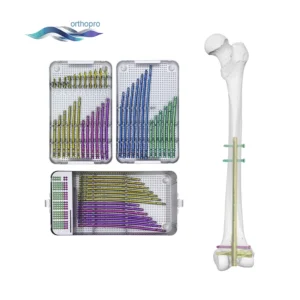


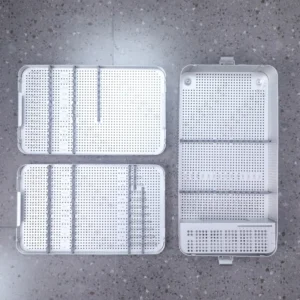
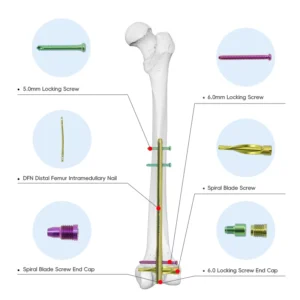

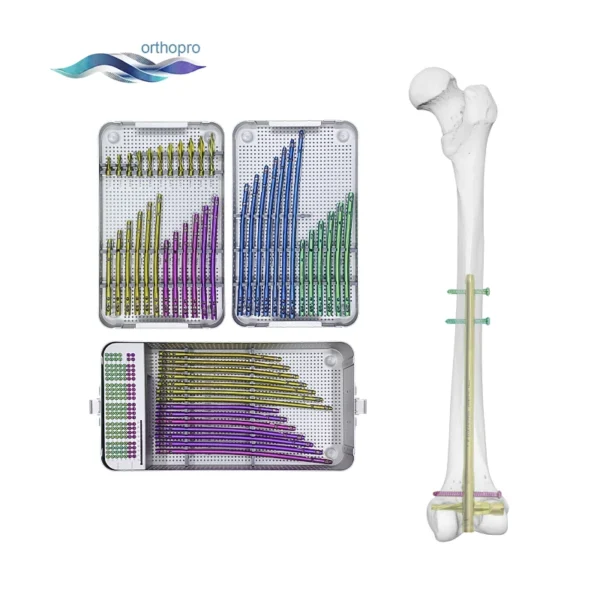
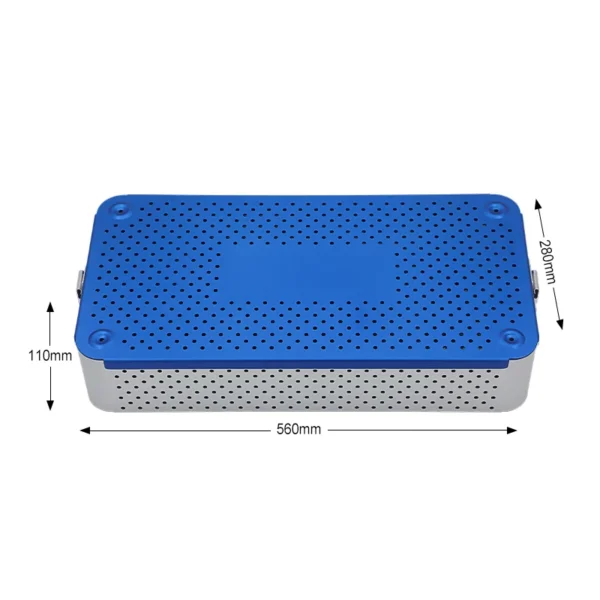
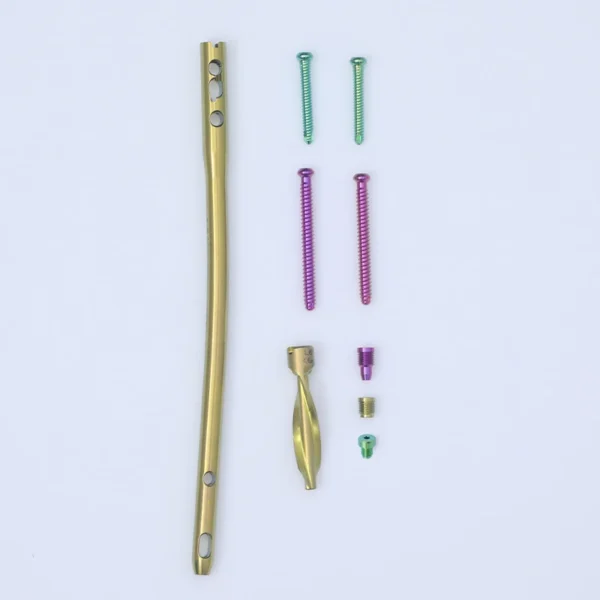
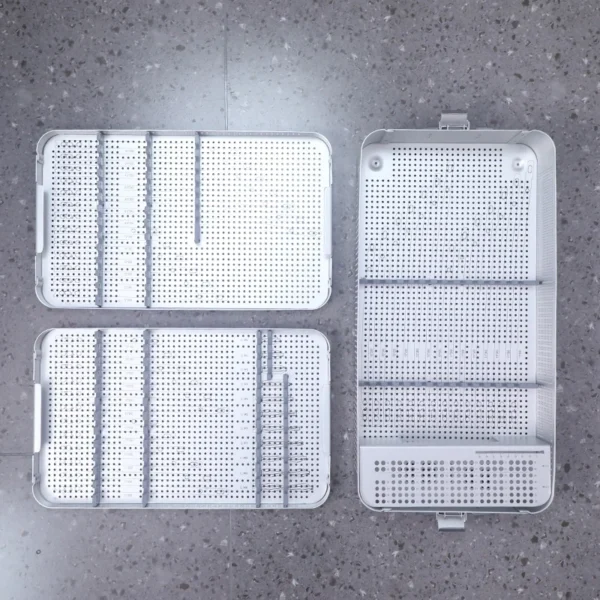
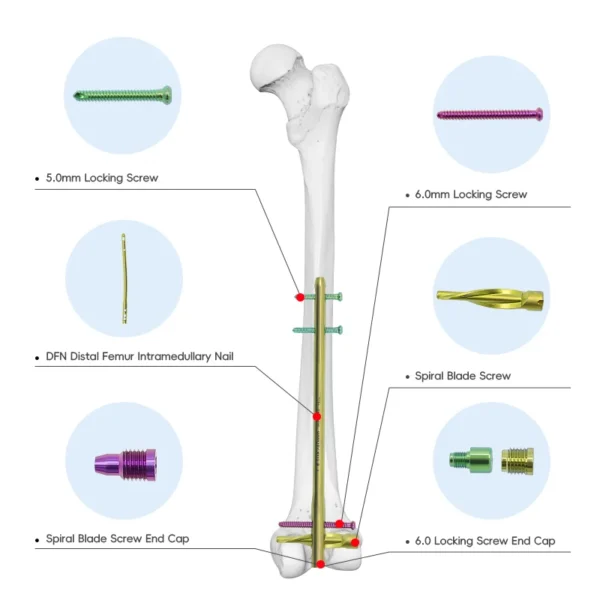

DFN Intramedullary Nail Box | Aluminum Sterilization Case for Distal Femur Implants
The DFN Intramedullary Nail Box is a premium storage and sterilization solution designed specifically for organizing distal femur nails and locking screws. Crafted from durable anodized aluminum, this DFN Intramedullary Nail Box features a graphic layout for easy implant identification and inventory management. Our DFN nail box ensures secure fixation of implants during autoclaving, streamlining surgical preparation for orthopedic trauma teams.
Why Standard Plates Are Garbage for Soccer Shaft Fractures
Here is my controversial opinion for the day: if a surgeon is still trying to fix a mid-shaft tibia or femur fracture on a young, athletic soccer player using a standard compression plate, they are doing that patient a massive disservice.
Plates sit on the outside of the bone. They require large incisions, which totally strips the periosteum (the outer membrane that supplies blood to the healing bone). Worse, plates are load-bearing devices. Because a thick steel plate is much stiffer than human bone, the plate takes all the physical stress when the athlete tries to walk. The bone underneath gets lazy because it isn’t feeling any weight, leading to “stress shielding.” The bone literally thins out and becomes weaker.
For an athlete who desperately wants to get back on the pitch within 6 to 9 months, you need a load-sharing device. This is where the IM nail comes in.
An intramedullary nail is a titanium or steel rod inserted directly down the hollow center (medullary canal) of the bone. Because it sits inside the mechanical axis of the leg, it shares the physical load with the bone itself. The micromotion actually stimulates bone callus formation. It’s like an internal scaffold. Plus, the surgery is minimally invasive—just a small incision at the knee or hip to slide the rod in.
If you are a local distributor, you definetly need a highly reliable source for tibia fracture implants wholesale. The demand in Latin American trauma centers for these specific implants peaks every single Monday morning after the weekend amateur leagues finish playing.
Inside the OR: The Nailing Procedure (And Why Bad Implants Fail)
If you’ve never scrubbed in or stood in the corner of a freezing cold OR during a nailing case, let me paint the picture for you. It’s basically high-end medical carpentry.
For a tibia, the surgeon flexes the knee and finds the entry point, usually right behind the patellar tendon (though the suprapatellar approach is gaining huge popularity—more on that later). They use a sharp awl to punch through the bone cortex. Then, they drop a long, flexible ball-tipped guide wire down the center of the bone, maneuvering it past the shattered fracture site to the ankle.
Next comes the reaming. They pass flexible drill bits over the wire to hollow out the canal so the nail can fit. Finally, they hammer the nail down the canal and use a targeting jig to drill screws crossways through the bone and the nail to lock it in place.
It sounds straightforward, but here is where low-quality implants completely destroy a surgery:
- Mismatched Targeting Jigs: Cheap nails from generic factories often warp slightly during the sterilization/manufacturing process. When the surgeon attaches the external targeting jig to drill the distal locking screws, the holes don’t line up. The surgeon ends up drilling blindly using the X-ray machine (C-arm), exposing their hands to massive amounts of radiation and wasting 45 minutes.
- Weak Cannulation: The nail is hollow (cannulated) so it can slide over the guide wire. On cheap implants, the inside of that hollow tube is rough. The guide wire gets stuck. I’ve literally seen surgeons sweating bullets trying to yank a jammed wire out of a patient’s leg.
- Stripped Locking Screws: If the titanium alloy isn’t top-tier, the hex head of the locking screw strips when the surgeon applies torque.
This is exactly why you cannot mess around with unverified suppliers. You need to partner directly with a specialized orthopedic trauma manufacturer that actually understands machining tolerances.
The Debate: Reamed vs. Unreamed Nails
You’ll hear older trauma guys argue about this constantly. Back in the day, there was a big fear that reaming (drilling out the inside of the bone) would destroy the internal blood supply (the endosteal circulation). So, they pushed for narrow, solid “unreamed” nails.
Honestly, the clinical data over the last decade has completely settled this. Reaming is vastly superior. Yes, it temporarily damages the internal blood supply, but the body regenerates it incredibly fast. More importantly, the bone dust created by the reamer acts as a natural autograft—it gets pushed right into the fracture site and supercharges the healing process.
Plus, reaming allows the surgeon to fit a thicker, stronger nail. A 10mm or 11mm nail has significantly higher fatigue strength than a flimsy 8mm unreamed nail. When a heavy striker starts doing aggressive rehab and putting weight on that leg, you don’t want a thin nail bending inside them. Make sure your supplier catalog heavily features cannulated, reamable options.
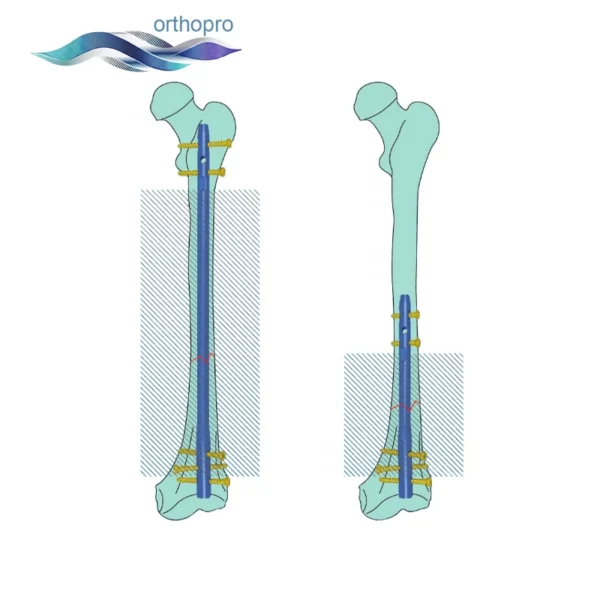
Femoral Intertan Nail | Titanium Reversed Intramedullary System | OrthoPro
The Femoral Intertan Nail is a specialized intramedullary system engineered for the fixation of complex femur fractures. This advanced Femoral Intertan Nail features a unique integrated screw design that enhances rotational stability and prevents varus collapse. Manufactured for high-stress trauma cases, our intertan nail ensures reliable biomechanical fixation and optimal bone healing for orthopedic patients
The Proximal Femur Problem: Enter the Interlocking Nail
While the tibia takes the brunt of direct kicks, the femur breaks in those horrific high-speed collisions—like when two players jump for a header and one gets flipped mid-air, landing awkwardly on one leg.
A femur fracture is a life-threatening emergency because the thigh holds massive blood vessels. You can bleed out internally into your thigh in a matter of hours.
Fixing a femur requires a specialized femur interlocking nail. Why “interlocking”? Because the femur has massive muscle groups (the quads and hamstrings) constantly pulling and twisting the bone fragments. If you just slide a smooth rod down the femur, the top half of the bone would literally rotate independently from the bottom half. The patient’s foot would flop sideways.
Interlocking nails have precisely engineered holes at the top (proximal) and bottom (distal) ends. The surgeon inserts strong cortical screws through the bone, through the nail, and out the other side of the bone. This “locks” the rotation.
A premium femur nail also features dynamization slots. These are oval-shaped holes instead of perfectly round ones. Why? Because after a few months, if the bone isn’t healing fast enough, the surgeon can remove one static screw, allowing the nail to slide down that oval slot by a millimeter or two when the patient walks. This microscopic compression at the fracture site tricks the body into accelerating bone growth. It’s an absolute game changer for athletes.
Distributor Sourcing: The Realities of the LATAM Market
Let’s talk business strategy. If you are importing medical devices into Mexico, Brazil, or Argentina, you already know the regulatory enviroment is a massive headache. Dealing with COFEPRIS or ANVISA requires mountains of perfectly translated documentation.
If you are buying from a factory that only provides half-baked CE certificates or incomplete testing reports, your entire shipment will get seized at customs. I’ve seen smaller distributors go completely bankrupt because half a million dollars of inventory got locked in a port warehouse for six months.
You need a manufacturing partner that has their regulatory affairs dialed in completely.
But beyond the paperwork, there is the inventory issue. Trauma is unpredictable. You might go two weeks without a single femur case, and then a massive local soccer tournament happens and you get hit with four femur fractures in a single weekend.
Many successful B2B orthopedic distributors operate on a consignment model with their local hospitals. You place the sterile nail sets and the instrument trays inside the hospital’s supply room for free. The hospital only cuts you a PO when they actually crack the box and implant the nail.
To survive the cash flow drain of the consignment model, your buy-in price from the manufacturer needs to be incredibly aggressive, without sacrificing a single ounce of clinical quality.
Head-to-Head: Premium vs. Generic IM Nails
If you are trying to convince a hospital purchasing manager to switch to your new brand, use a breakdown like this. It highlights exactly what goes wrong with generic implants.
| Feature / Component | Cheap Generic Factory Import | High-End B2B Manufacturer Partner | Clinical Impact for the Athlete |
|---|---|---|---|
| Material Quality | Lower grade 316L Stainless Steel | Medical Grade Ti-6Al-4V (Titanium Alloy) | Titanium bends naturally with the bone, preventing severe knee pain during athletic rehab. |
| Cannulation (Inner Tube) | Rough, uneven internal machining | Mirror-smooth inner polishing | Guide wire slides out effortlessly. Zero surgical delays. |
| Herzog Bend | Inaccurate anatomical angle | Precisely engineered 10° to 11° proximal bend | Perfectly matches the natural curve of the human tibia. Prevents the nail from bursting through the back of the knee cortex. |
| Distal Targeting | Warps easily; holes misalign by 2-3mm | Rigid, carbon-fiber or reinforced jigs | Surgeon hits the locking holes on the first try. Less X-ray radiation, faster OR time. |
The Anonymized Case Study: Winning Guadalajara
I want to share a quick story about a mid-sized distributor we consult with down in Guadalajara. For years, they were getting crushed by the big multi-national orthopedic brands. The major trauma centers wouldn’t touch their stuff because they were importing really clunky, outdated nails that took surgeons forever to implant.
They finally decided to pivot. They audited their supply chain and partnered with a top-tier B2B manufacturer that actually focused on the surgeon’s experience. They brought in a highly refined titanium nailing system with an incredibly intuitive, color-coded instrument tray.
They didn’t try to pitch the hospital administrators first. Instead, they took the instrument tray directly to the younger sports medicine surgeons. They let the surgeons feel the weight of the targeting jig and test the bite of the locking screws on a plastic bone model.
The surgeons realized the new system would shave 20 minutes off every surgery. In a busy public hospital where OR time is heavily rationed, 20 minutes is gold. The surgeons basically forced the hospital administration to award the supply contract to this distributor. Within 14 months, they cornered the local sports trauma market and expanded into three neighboring states.
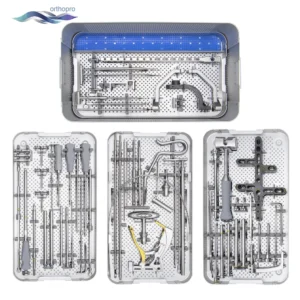
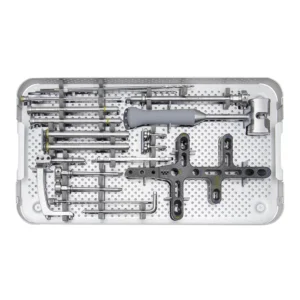
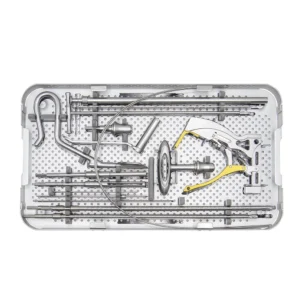
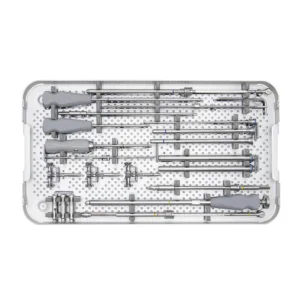
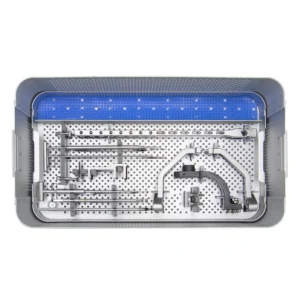

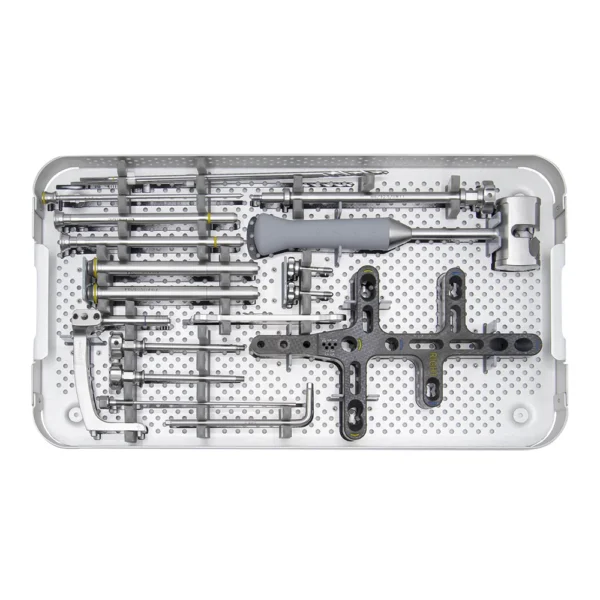
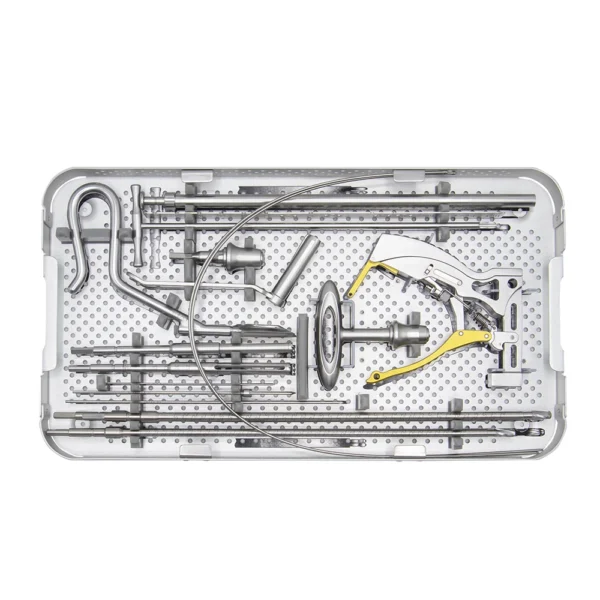

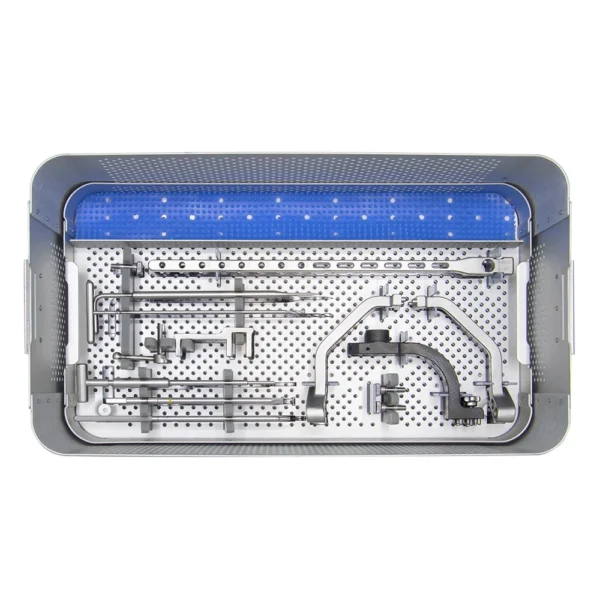
Multi-lock Humeral Intramedullary Nail Instrument Set | Proximal Humerus Fracture Fixation Kit
The Multi-lock Humeral Intramedullary Nail Instrument Set is expertly engineered for the precise implantation of straight and bent nails in complex humeral fractures. Featuring a radiolucent aiming guide and multi-planar locking capabilities, this Multi-lock Humeral Intramedullary Nail Instrument Set ensures superior stability and rotational control for proximal humerus and shaft fixation.
Upgrading Your Business with OrthoPro
If you are tired of losing local hospital bids to the big guys, or if you are fed up with overseas suppliers who ghost you when you have a technical question, it’s time to level up your vendor list.
This is exactly why you need to look at OrthoPro. They aren’t just another faceless factory pushing metal. They are a dedicated brand deeply rooted in orthopedic excellence, and they understand the specific demands of the North and Latin American trauma markets.
Their intramedullary nail systems are engineered to handle the massive biomechanical loads of extreme sports injuries. Whether your surgeons prefer the classic infrapatellar approach or the modern suprapatellar entry (which is fantastic because the patient’s leg can lie completely flat on the table, making X-rays a breeze), their instrumentation supports it seamlessly.
When you source your inventory through them, you are getting the rigorous ISO-certified quality and flawless machining tolerances that your surgeons demand, but with a B2B pricing structure that actually allows you to grow your consignment footprint. They give you the margins you need to fight the big corporate brands and win.
Don’t let another intense Liga MX weekend drain your inventory of subpar implants. Equip your local trauma centers with the absolute best.
Reach out to their team today. You can fill out the form directly on their contact page to request a full technical catalog, or just bypass the form and send an email straight to info@orthopro.mx. They know the distribution game inside and out, and they can help you model out your wholesale orders to maximize your territory’s profitability.
Frequently Asked Questions (FAQ)
1. Why are surgeons moving away from stainless steel to titanium for IM nails?
Honestly, it comes down to stiffness and MRI compatibility. Stainless steel is incredibly strong, but it is super rigid. When a soccer player runs, the bone naturally flexes. If there is a stiff steel rod inside, it takes all the stress and causes deep, aching pain at the ends of the nail (often in the knee or hip). Titanium alloy (Ti-6Al-4V) has a modulus of elasticity much closer to human bone. It bends with the athlete. Also, titanium creates significantly less artifact (distortion) if the player ever needs an MRI on their knee or ankle later in their career.
2. What is the “Herzog Bend” and why does it matter for tibia wholesale implants?
If you look at an X-ray of a human tibia from the side, it is not a perfectly straight pipe. The top part near the knee has a distinct backward curve. A premium tibia nail is manufactured with a 10 to 11-degree bend at the top (named after the surgeon who pioneered it, Herzog) to match that natural anatomy. If you buy cheap, straight nails from a bad supplier, the nail will literally smash into the back wall of the patient’s bone during insertion, potentially shattering the posterior cortex.
3. How do I convince a hospital to switch from an expensive, name-brand nail to the system I distribute?
Surgeons are creatures of habit. They hate learning new instrument sets. You don’t win them over on the implant itself; you win them over on the instrumentation. High-end manufacturers design trays where every drill bit, sleeve, and screwdriver flows logically. If you can show a surgeon that your targeting jig is stiffer, your reamers are sharper, and your tray requires fewer steps to get the nail seated, they will switch. Time in the OR is everything.
4. Are these intramedullary nails meant to be taken out after the soccer player heals?
Most of the time, no. Once the titanium nail is in, it stays in for life. Taking it out requires another surgery, another risk of infection, and another few weeks of missed playing time. However, if an athlete develops chronic knee pain right at the insertion site, or if the locking screws start backing out and irritating the soft tissue, a surgeon might opt to remove the hardware after 18 to 24 months once the fracture is 100% solidly healed. Because premium titanium resists “cold welding” better than cheap steel, removing a high-quality nail years later is much easier.