
Man, if you’re exporting orthopedic implants these days, regulatory compliance isn’t some side quest — it’s the whole game. One missing stamp or half-baked clinical file and your shipment sits in customs while your competitor’s stuff is already in the OR. I’ve watched distributors and manufacturers lose serious money over paperwork that looked fine on paper but fell apart under a notified body’s microscope.
The global orthopedic implants market is sitting around USD 50 billion in 2025 and heading toward 80+ billion by 2034 with roughly 5.3-5.5% CAGR depending on who’s counting. That’s a lot of plates, screws, and nails crossing borders. But the rules for crossing those borders keep getting tighter, especially in Europe with the MDR and in the US with FDA pathways that are slowly aligning toward ISO 13485.
This guide pulls together the stuff that actually matters when you’re trying to sell orthopedic implants internationally. No corporate jargon, just real talk from someone who’s seen the headaches up close. We’ll cover what the big regulations demand, how to actually stay compliant without going broke, and why a solid partner makes all the difference.
Why Regulatory Compliance Keeps Distributors Up at Night
Let’s be honest — most buyers don’t wake up thinking about CE marking or 510(k) predicates. They want implants that work, arrive on time, and won’t get their hospital sued. But behind every reliable shipment is a mountain of medical device regulations that prove your product is safe and consistent.
Get it wrong and you face recalls (orthopedics made up a big chunk of FDA recalls in recent years), delayed shipments, or outright bans in key markets. Get it right and you open doors to Europe, North America, Latin America, and beyond without constantly rewriting technical files.
The shift from old directives to the full EU MDR has been brutal for a lot of smaller manufacturers. More clinical data, stricter post-market surveillance, and notified bodies that actually dig deep. On the US side, FDA is harmonizing its Quality System Regulation with ISO 13485:2016 — meaning that certification you got for Europe is now even more valuable stateside.
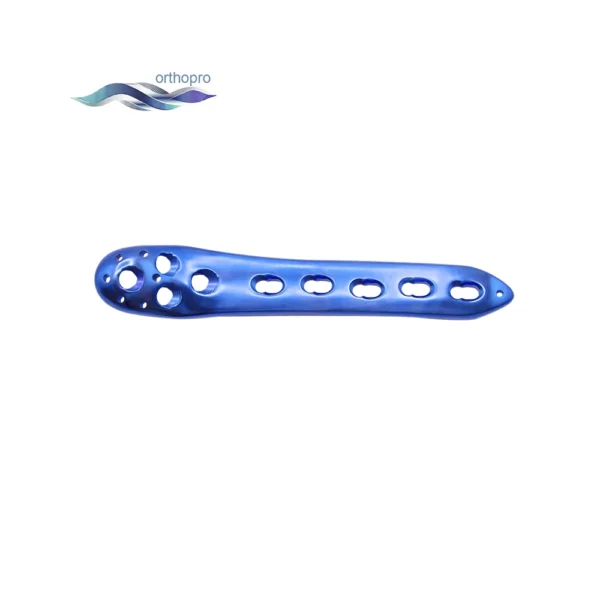
Anatomical Proximal Femoral Locking Plate II for Trochanteric and Subtrochanteric Fractures – High-Performance Orthopedic Trauma Fixation System
The Proximal Femoral Locking Plate II is a premier orthopedic trauma implant specifically designed for the stable internal fixation of complex proximal femur fractures. This Proximal Femoral Locking Plate II offers superior anatomical contouring and fixed-angle stability for trochanteric and subtrochanteric injuries. As a trusted proximal femoral locking plate system, it ensures reliable clinical results for medical distributors and trauma centers worldwide.
Breaking Down the Major Medical Device Regulations You Need to Know
If you’re exporting orthopedic implants like locking plates or trauma systems, these are the big ones that keep coming up:
- EU MDR (Medical Device Regulation 2017/745): Replaces the old MDD. Orthopedic implants usually fall into Class IIb or III. You need a Notified Body review, solid clinical evaluation, and ongoing post-market clinical follow-up. No more self-certification for higher-risk devices.
- US FDA Pathways: Most non-high-risk orthopedic implants go through 510(k) clearance by showing substantial equivalence to a predicate device. Higher-risk stuff needs PMA with original clinical data. Labeling, QSR (now heading toward ISO 13485), and establishment registration are non-negotiable.
- ISO 13485:2016: The international quality management standard for medical devices. It covers everything from design controls and risk management to supplier oversight and traceability — especially strict for implantable devices. Many countries treat this as table stakes.
Other markets (Brazil ANVISA, Australia TGA, Canada Health Canada, etc.) often piggyback on CE or FDA evidence, but they still want their own local registrations and sometimes additional testing.
Here’s a quick comparison table that distributors actually use when mapping target countries:
| Regulation / Market | Risk Classification (typical for proximal femoral plates) | Key Requirements | Typical Timeline | Biggest Headache |
|---|---|---|---|---|
| EU MDR | Class IIb | Notified Body audit, clinical evaluation, PMS/PMCF | 12-24+ months | Clinical data volume |
| US FDA 510(k) | Class II | Substantial equivalence, QSR compliance | 3-12 months | Predicate device availability |
| ISO 13485 | Applies across all | Full QMS including risk management & traceability | 6-12 months for certification | Ongoing audits |
| Other (LATAM, Asia) | Varies | Local registration + CE/FDA leverage | 3-18 months | Country-specific language & fees |
The table isn’t perfect — every product has nuances — but it shows why planning ahead beats scrambling later.
Practical Steps to Build and Maintain Orthopedic Supply Chain Compliance
From my experience, the companies that stay out of trouble treat compliance like part of product design, not an afterthought. Here’s what actually works:
- Start with a robust QMS built on ISO 13485 — Design controls, risk management per ISO 14971, supplier qualification, and full traceability for every implant batch. For implantable devices, you need extra records on distribution and personnel involved in inspection/testing.
- Gather the right technical documentation early — Device description, intended use, risk analysis, biocompatibility testing (ISO 10993), mechanical/fatigue testing, clinical evaluation report, and labeling that meets ISO 15223-1 symbols.
- Choose the right conformity assessment route — For Europe, work with a reputable Notified Body. For the US, pick predicates carefully — old ones can sink your 510(k).
- Plan post-market surveillance from day one — MDR demands proactive collection of real-world data. Ignoring this is how you end up with unexpected field safety notices.
- Labeling and UDI — Get this wrong and customs or hospitals reject the whole shipment. Use standardized symbols and make sure instructions for use are translated where required.
One anonymous distributor I know lost a big European tender because their supplier’s technical file lacked updated PMCF data after the MDR transition. They switched to a manufacturer with full compliance systems in place and haven’t looked back.
How OrthoPro Approaches Regulatory Compliance
Look, plenty of factories can machine a decent proximal femoral locking plate. Fewer can prove consistently that it’s made under proper controls and meets international medical device regulations.
OrthoPro holds ISO 13485:2016 certification and maintains CE marking for its trauma implants. The quality system covers full traceability, risk management, and supplier controls that satisfy both EU MDR and the direction FDA is heading. When you source from them, the documentation package is ready to support your own registrations in multiple markets.
Check out their Proximal Femoral Locking Plate II here: Proximal Femoral Locking Plate II. It’s a solid example of a trauma implant built with export compliance in mind — titanium alloy options, anatomical design, and the paperwork to back it up in regulated markets.
This isn’t just marketing. Their processes reduce the usual back-and-forth that delays shipments by months. For distributors focused on orthopedic supply chain compliance, that reliability turns into faster market entry and fewer sleepless nights.
Common Pitfalls That Trip Up Exporters
- Treating CE marking as a one-time checkbox instead of a living system.
- Underestimating the clinical data needed under MDR (many old MDD files don’t cut it anymore).
- Weak supplier controls — if your raw material or subcontractor isn’t qualified, your whole QMS falls apart during audit.
- Poor change control — even small design tweaks can trigger new submissions.
- Ignoring post-market obligations until a problem appears.
I’ve seen orthopedic implants stuck in warehouses for half a year because someone skipped a biocompatibility update. The cost of rushing compliance almost always exceeds doing it properly the first time.
Real Talk on Timelines and Costs
Expect 12-24 months and significant investment for full MDR compliance on a Class IIb implant. 510(k) can be faster but still requires solid testing and documentation. ISO 13485 certification typically takes 6-12 months depending on your starting point.
The good news? Once the system is solid, adding new markets or products gets easier because the foundation already exists.
FAQ – Regulatory Compliance for Orthopedic Implants
What is the biggest difference between CE marking and FDA clearance for orthopedic implants? CE under MDR is a broader conformity assessment with heavy emphasis on clinical evidence and ongoing surveillance across Europe. FDA 510(k) focuses on substantial equivalence to a predicate device and is US-specific. Many exporters aim for both, using data from one to support the other where possible.
Is ISO 13485 certification mandatory for selling orthopedic implants internationally? It’s not legally required everywhere, but it’s become the de facto standard. Most notified bodies, serious distributors, and many countries expect it. With FDA harmonizing toward it, skipping this now is risky.
How do I keep up with changing medical device regulations without a full regulatory team? Work with manufacturers who already maintain active compliance programs. Ask for their current technical file summaries, audit reports, and post-market data during supplier qualification. A reliable partner like OrthoPro handles a lot of the heavy lifting so you can focus on sales and distribution.
Can small changes to an implant design trigger new regulatory submissions? Yes, often. Design, material, or even labeling changes can require notification or full re-assessment under MDR and new 510(k) supplements under FDA. Strong change control procedures are essential.
What should distributors look for in an orthopedic implant supplier’s compliance package? Up-to-date ISO 13485 certificate, CE certificates or FDA clearance letters, sample technical documentation, risk management files, clinical evaluation reports, and evidence of post-market surveillance. If they hesitate to share redacted versions, that’s a red flag.
Ready to Simplify Your Compliance Journey?
Exporting orthopedic implants doesn’t have to feel like walking through a regulatory minefield. When you partner with a supplier that treats medical device regulations and orthopedic supply chain compliance as core strengths instead of afterthoughts, everything moves smoother — from first sample to repeat hospital orders.
OrthoPro has built their systems around exactly these requirements so distributors can focus on growing their business instead of chasing paperwork. Whether you’re expanding into new countries or just want more confidence in your current supply chain, their team can provide the documentation and support you need.
Reach out directly at info@orthopro.mx or visit the contact page: https://orthopro.mx/contact-us/. Mention this guide and ask about their regulatory documentation for trauma implants like the Proximal Femoral Locking Plate II.
They respond quickly and understand the real pressures distributors face in international markets.
Don’t let compliance issues hold back your next big opportunity. The rules aren’t getting simpler — but the right partner makes them a lot more manageable.