
Starting out as a medical device distributor, or even just expanding your current catalog, is basically a massive gamble if you don’t know what you’re doing. You have limited working capital. If you tie up half a million dollars in inventory that sits in a warehouse for two years, you are dead in the water.
I’ve been on both sides of the table—buying equiptment for massive hospital networks and helping smaller distributors figure out their supply chains. The biggest mistake I see new B2B buyers make is trying to be everything to everyone. They look at a manufacturer’s catalog and just order two of everything.
That is financial suicide.
You don’t need a hundred different SKUs to be profitable. You need a highly focused orthopedic power tools list that covers the absolute core procedures happening in hospitals every single day. Hospitals burn through these tools. They drop them, the nurses accidentally fry the batteries in the autoclave, or the motors just wear out after a thousand surgeries. That replacement cycle is where you make your money.
Let’s skip the marketing fluff and talk about the exact tools that actualy move the needle, bring in serious ROI, and get surgeons asking for you by name.
The Financial Reality of Orthopedic Distribution
Before we look at the specific tools, we need to talk numbers. Why orthopedics?
Look at the real data. According to a recent report by Grand View Research, the global orthopedic power tools market size was valued around USD 2.16 billion and is growing steadily. The American Academy of Orthopaedic Surgeons notes that hip and knee replacements alone account for over a million surgeries a year in the US.
As a distributor, you aren’t just selling a piece of metal. You are selling uptime to an operating room.
I always tell my distribution partners to calculate their True ROI before committing to a product line. You can use this simple text formula, no fancy spreadsheet needed:
True ROI % = [ (Hospital Contract Price – Total Landed Cost) / Total Landed Cost ] x 100
Note: Total Landed Cost = Factory Unit Price + Air Freight + Import Duties + Local Warehousing + (Defect Rate % x Replacement Cost)
If you buy cheap junk, that defect rate variable is going to eat your entire profit margin. This is exactly why you need to partner with a factory like OrthoPro, where the defect rate is heavily controlled before the shipment ever leaves the dock.
Now, let’s break down the 5 essential tools you need to stock.
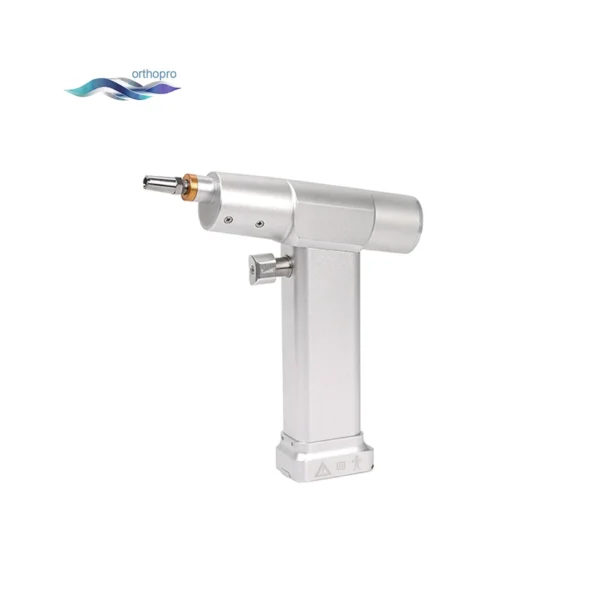
Medical Grade Orthopedic Reciprocating Saw for Joint Surgery & Bone Cutting | Premium Surgical Power Tool
The OrthoPro orthopedic reciprocating saw is a premium surgical power tool engineered for precise bone cutting in joint surgeries. This high-performance medical reciprocating saw ensures maximum efficiency and safety. Fully autoclavable and battery-operated, our surgical bone saw offers hospitals and B2B distributors unparalleled reliability.
1. The Workhorse: The Orthopedic Bone Drill
If you only have the budget to stock one single item, make it the orthopedic bone drill. This is the absolute bread and butter of any surgical ward.
Think about it. Almost every trauma surgery involves plates and screws. To put a screw in a bone, you need to drill a hole first. Whether it’s a fractured femur from a car crash or a simple ankle fixation, the bone drill is coming off the sterile tray.
Why it sells:
Hospitals always need backups. A busy Level 1 trauma center might run ten ORs simultaneously. They can’t wait an hour for a drill to go through the sterilization cycle. They need dozens of these on hand.
What you need to look for as a buyer:
Stop buying drills with brushed motors. Seriously. The carbon dust they create inside the housing is a nightmare, and they overheat way too fast. You need to source brushless DC motor drills.
Also, pay attention to the chuck mechanism. The most common standard is the Jacobs chuck (requires a key) or the AO quick coupling. If your local hospitals use AO standard drill bits, and you sell them a Jacobs chuck drill, you just created a massive headache for the surgical nurses. Know your local market standard before you order.
From a margin perspective, bone drills are incredible. You can source a high-quality OEM drill from a reliable factory, land it in your country, and easily see a 40% to 60% gross margin when selling into private clinic networks.
2. The Surgical Oscillating Saw
Coming in at a very close second is the surgical oscillating saw. You literally cannot perform a total knee arthroplasty (TKA) without one.
The blade of this saw oscillates (swings back and forth) at insanely high speeds, usually around 10,000 to 14,000 CPM (cycles per minute). This allows the surgeon to make extremely precise, flat cuts on the ends of the femur and tibia so the artificial joint implants fit perfectly.
The Consumable Trap (And Opportunity):
Here is a slightly controversial take: I actually love it when the saw blades are proprietary.
Some distributors fight for “universal” blades because it makes the initial sale easier. But from a pure business standpoint, if you sell a hospital a saw that only accepts your specific blades, you just secured a recurring revenue stream for the next five years. The hospital buys the saw once, but they buy the blades every single week.
When you are vetting a supplier for oscillating saws, ask them about their noise and vibration dampening. I once visited a hospital in Eastern Europe where the surgeons refused to use a specific brand of saw because it vibrated so violently their hands went numb after a two-hour procedure.
You want a saw that feels balanced in the hand. The center of gravity should sit right above the trigger, not heavily tilted forward.

Medical-Grade Orthopedic Oscillating Saw for Joint Replacement Surgery – High-Speed Surgical Bone Saw Power Tool for Large Bone Osteotomy and Arthroplasty
The OrthoPro Orthopedic Oscillating Saw is a high-performance surgical power tool engineered for precision bone cutting in joint replacements and osteotomy. This Orthopedic Oscillating Saw features an ergonomic design and variable speed control to ensure maximum surgical accuracy. As a leading medical instrument, our oscillating saw provides the reliability and power required for complex orthopedic procedures, making it the preferred choice for hospitals and surgical centers worldwide.
3. The Cannulated Drill
A lot of rookie distributors completely ignore the cannulated drill because they don’t understand what it does. They think a drill is just a drill.
Let me tell you a quick story about a distributor I worked with in Brazil. He bought 50 standard bone drills, thinking he was going to dominate the local trauma clinics. He lost a massive government tender to a competitor. Why? Because he didn’t realize that for complex fractures, surgeons use Kirschner wires (K-wires) to temporarily hold bone fragments together.
A cannulated drill has a hollow channel running straight through the center of the entire tool, from the back all the way through the chuck. This allows the surgeon to slide the drill right over a K-wire that is already stuck in the patient’s bone. The wire acts as a perfect guide path.
If you try to sell a standard solid drill to a trauma surgeon dealing with a shattered pelvis, they will laugh you out of the hospital.
Stocking cannulated drills instantly elevates your authority. It shows the procurement managers that you actualy understand surgical procedures, rather than just acting as a middleman flipping catalogs. They are slightly more expensive to manufacture because of the hollow drive shaft engineering, but hospitals are more than willing to pay the premium for that functionality.
4. Large Bone Power Tools
Now we are getting into the heavy hitters. Large bone power tools are the big, bulky systems used for major orthopedic reconstructions—hips, knees, shoulders.
These are not the delicate little pen-grip drills used for hand surgery. These are pistol-grip monsters designed for serious torque. When a surgeon is reaming out a hip socket (acetabulum) to fit an artificial cup, they need massive rotational force. If the tool lacks power, the reamer can get stuck in the bone, which is a nightmare scenario while the patient is open on the table.
The Margin Play:
Large bone systems are high-ticket items. While a small trauma drill might sell for a few thousand dollars, a complete large bone system (drill, reamer, oscillating saw, reciprocating saw, plus batteries and sterilization cases) can command a massive price tag.
Because the financial stakes are so high, hospitals are incredibly picky about these systems. They want to know about battery life.
Here is a quick reality check on batteries. They degrade. Every time a battery goes into an autoclave at 134°C, the internal chemistry takes a hit.
You can estimate the battery lifespan degradation with a basic model:
Effective Capacity = Original Capacity x (0.995 ^ Number of Autoclave Cycles)
Basically, a cheap battery might lose 50% of its runtime after just 100 cycles. A premium battery designed by a solid manufacturer will use specialized internal insulation and high-grade cells to last 300 to 500 cycles before noticeable degradation. When you pitch these large bone systems, lead with the battery durability. That is what wins contracts.
5. The Reciprocating Saw
Rounding out our top five is the reciprocating saw. Unlike the oscillating saw that swings side-to-side, the reciprocating saw blade punches straight in and out, like a sewing machine needle.
It’s an absolute necessity for procedures like sternotomies (cutting the chest open for heart surgery) or complex revision arthroplasties where the surgeon needs to cut out old cement or implants from deep inside a bone cavity.
The demand for these isn’t quite as high volume as the bone drill, but every major hospital requires at least a few in their sterile processing rotation. Adding this to your portfolio rounds out your offering, meaning a hospital doesn’t have to split their tender between you and a competitor. You become the one-stop shop.
Quick Demand & Margin Comparison
To make this super easy to digest, I put together a quick breakdown of how these tools stack up against each other based on typical market conditions.
| Tool Type | Surgery Volume/Demand | Consumable Pull-Through | Distributor ROI Potential |
|---|---|---|---|
| Orthopedic Bone Drill | Extremely High | Low (Drill bits last a while) | High |
| Cannulated Drill | High (Trauma specific) | Medium (K-wires) | High |
| Surgical Oscillating Saw | Very High (Joints) | Very High (Saw blades) | Very High |
| Large Bone Power Tools | Medium (Major joints) | Medium (Reamer heads) | Highest (Large ticket size) |
| Reciprocating Saw | Medium (Specialty cuts) | High (Blades) | Solid |
(Note: Margins always depend on your local import taxes and the specific pricing strategy of your hospital network).
Stop Buying White-Label Trash
I promised you a controversial opinion, so here it is.
Stop going on wholesale websites and buying the cheapest “white label” tools you can find just because they offer to laser-etch your logo on the side.
Those trading companies don’t care about you, and they definately don’t care about the patient on the operating table. They buy rejected B-stock parts, assemble them in a dusty warehouse, and ship them overseas. When the tool fails in the middle of a surgery, and the surgeon threatens to sue the hospital, the hospital is going to come after you, the distributor. The overseas trading company will just ghost your emails and change their name.
You need a direct relationship with a factory that actualy machines their own metal. A factory with an R&D department. A factory that pressure-tests every single motor seal before it ships.
That is the difference between running a sustainable medical supply business and playing Russian roulette with your company’s reputation.
Frequently Asked Questions (FAQ)
Over my time doing this, distributors always ask me the same handful of questions when they are planning their inventory.
1. Should I stock electric (battery) or pneumatic (air-driven) tools?
Honestly, the market has heavily shifted toward battery-powered tools over the last decade. Pneumatic tools are incredibly powerful and durable, but dragging heavy air hoses across a sterile operating room is a tripping hazard and limits the surgeon’s mobility. Unless a specific hospital explicitly demands pneumatic for a legacy setup, put your money into high-quality, brushless, battery-operated tools.
2. How many backup batteries should I supply with each tool?
Never sell a power tool with just one battery. It’s a recipe for disaster. A standard OR kit should include the tool handpiece, two batteries, and a sterile transfer funnel (so the non-sterile circulating nurse can drop the battery into the sterile housing). If a surgery runs exceptionally long, one battery can be charging while the other is in use.
3. Do I need to provide local repair services?
Yes, absolutely. If you want to dominate your local market, you can’t ship a drill back to the manufacturer every time it needs a minor calibration. Partner with a manufacturer like OrthoPro that provides you with technical schematics, spare parts, and video training. If you can fix a hospital’s drill locally in 48 hours while your competitor takes 3 weeks to ship it internationally, you win the account for life.
Ready to Dominate Your Local Market?
Look, picking the right products doesn’t have to be a massive headache. You just need to focus on the high-volume, high-necessity items that hospitals literally cannot function without.
If you are a medical distributor tired of dealing with flaky suppliers, inconsistent quality, and razor-thin margins, it’s time to upgrade your supply chain.
At OrthoPro, we manufacture rugged, precision-engineered orthopedic power tools designed specifically for the heavy demands of modern surgical suites. We don’t just sell you boxes; we partner with you to ensure you have the right technical specs, the right pricing structure, and the reliability to win major hospital tenders.
Stop leaving money on the table and letting your competitors take the easy wins.
Take action today.
Head over to our contact page or shoot an email straight toinfo@orthopro.mx. Tell us what market you are selling into, and we’ll help you build a custom catalog that actually generates serious ROI. Let’s get to work.
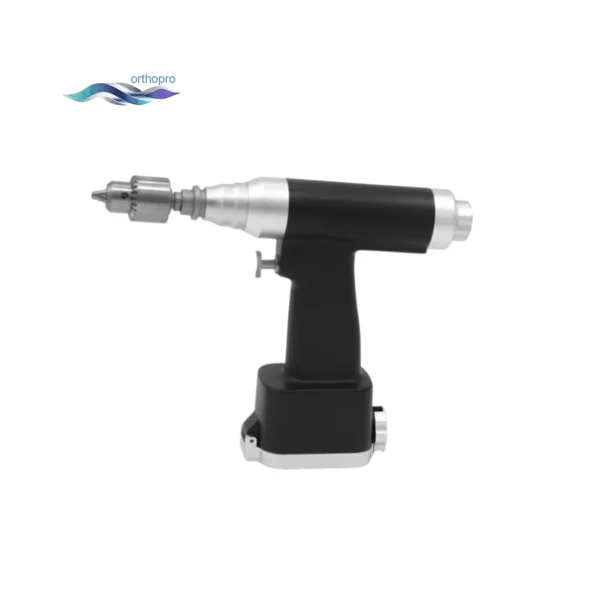
Medical Grade Orthopedic Large Torque Drill for Acetabular Reaming & Joint Surgery | High Performance Surgical Bone Drill
The OrthoPro orthopedic large torque drill is a heavy-duty surgical tool designed for acetabular reaming and joint replacement. This orthopedic large torque drill provides superior power and precision for complex bone surgeries. Featuring high-torque output and stepless speed regulation, this medical bone drill ensures stability and safety for B2B clinical procurement.