
Picking the right orthopedic tool manufacturer for your OEM or ODM needs in 2026 feels a bit like dating – you want someone reliable who won’t ghost you when things get complicated. I’ve been on the manufacturing side with OrthoPro for over a decade now, helping distributors and brands turn ideas into actual tools that surgeons use every day. We’ve handled everything from small private-label runs to bigger wholesale surgical drills orders that ship across Latin America and beyond.
The orthopedic power tools market sits around USD 1.8 billion to 1.9 billion in 2026 and keeps climbing at roughly 4-5% CAGR depending on whose report you read. Hospitals and clinics keep doing more minimally invasive cases, and that means steady demand for good mini drills, saws, and reamers. But here’s the catch most international distributors run into: not every factory that says they can make orthopedic tools actually delivers consistent quality once the first batch leaves the dock.
I’ve seen distributors burn time and money on suppliers who looked perfect on paper but couldn’t keep tolerances tight or hit delivery dates. That’s why I’m laying out the real factors that matter when you’re sourcing from an orthopedic tool manufacturer in 2026. No fluff, just the stuff I wish someone had told me early on. We’ll cover what to check, red flags to watch for, and even a no-nonsense comparison table you can steal for your next supplier shortlist. Plus I’ll share bits from our own Mini Multifunctional Saw Drill because it’s the kind of product we build when someone comes to us for custom work.
Why OEM/ODM Matters More Than Ever for Wholesale Surgical Drills
If you’re an international distributor trying to build your own brand or scale without reinventing the wheel, OEM (they make it to your spec) or ODM (they design and you brand it) is often the smartest play. You get access to proven designs, established production lines, and regulatory know-how without sinking millions into your own factory.
But the market’s getting crowded. Cheap factories pop up promising rock-bottom prices on wholesale surgical drills, only for buyers to discover later that the motors burn out fast or the autoclave cycles don’t hold up. I’ve had distributors tell me horror stories about batches arriving with inconsistent torque or missing traceability on materials. That kind of mess kills your margins and your reputation with hospital buyers.
At OrthoPro we focus on being that steady orthopedic tool manufacturer partners actually stick with. We hold ISO 13485 certification, which basically means our whole quality system is built around making sure medical devices come out safe and repeatable. It’s not just a sticker on the wall – it drives how we document every process, track materials, and handle changes. For distributors eyeing Europe or stricter markets, that foundation also smooths the path to CE marking.
Factor 1: Real Manufacturing Experience and Technical Capability
Don’t just ask if they’ve made orthopedic tools before. Dig into specifics. How many years have they been producing powered instruments? What’s their track record with battery-powered drills versus pneumatic ones? Can they handle brushless motors, quick-change attachments, and the kind of precision needed for small-bone work?
We designed our Mini Multifunctional Saw Drill with exactly those pain points in mind. It runs on a high-torque brushless motor, switches between drilling (0-1200 RPM), oscillating saw (up to 16000 OSC/min), and reaming (0-300 RPM) without swapping the whole handpiece. The thing is lightweight, autoclavable to 135°C, and stays quiet enough that surgeons don’t complain about noise fatigue. When a distributor comes to us for OEM work, we can tweak grip ergonomics, add private labeling, or adjust battery options to fit their target markets.
Look for a manufacturer that can show you actual production volumes and not just prototypes. Ask about their CNC machining setup, assembly clean rooms, and whether they do in-house motor winding or outsource everything. Factories that control more steps internally usually deliver better consistency on wholesale surgical drills orders.
Factor 2: Regulatory Compliance and Quality Systems – Non-Negotiable in 2026
ISO 13485 isn’t optional anymore if you want to play in serious medical equipment channels. It proves the manufacturer has processes for risk management, design controls (if doing ODM), supplier evaluation, and post-market surveillance. Without it, you’ll spend your own time and money trying to patch gaps when hospitals or regulators start asking questions.
We run full traceability from raw materials to finished goods. Every batch gets documented so if something ever needs investigating, we can pull the records fast. For distributors selling into multiple countries, having a partner who already understands CE technical files and can support local registrations saves months of back-and-forth. Some buyers still try to cut corners with non-certified shops to save a few bucks upfront. In my experience that almost always backfires once the first field complaint rolls in or an audit hits.
Here’s a quick reality check table based on what I’ve seen working with different suppliers over the years:
| Criteria | Weak Supplier | Average Supplier | Strong Orthopedic Tool Manufacturer (like OrthoPro) |
|---|---|---|---|
| ISO 13485 Certification | None or expired | Basic certification | Active, audited, integrated into daily processes |
| Traceability | Partial or paper-based | Batch level | Full material to finished device |
| Design Change Control | Ad-hoc | Documented but slow | Formal SOPs with customer notification |
| Autoclave Validation Cycles | 50-100 claimed | 150-200 | 300+ at 135°C with real test data |
| Response to Quality Issues | Slow or defensive | 7-14 days | Under 48 hours with root cause and CAPA |
| OEM/ODM Customization Support | Very limited | Basic branding | Full mechanical + branding + packaging tweaks |
Feel free to drop this into your evaluation spreadsheet. It cuts through the marketing talk pretty quick.
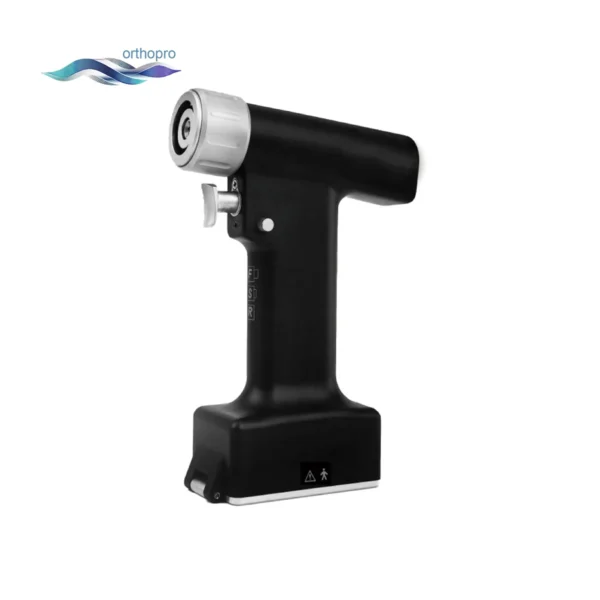
OrthoPro Brushless Mini Multifunctional Saw Drill System | High-Precision Lithium Battery Orthopedic Power Tool for Hand, Foot, and Small Joint Surgery | Wholesale Surgical Equipment
The OrthoPro Mini Multifunctional Saw Drill is a compact, brushless surgical power tool designed for precision in hand, foot, and small joint procedures. This high-performance mini multifunctional saw drill utilizes lithium battery technology to provide stable, long-lasting power for delicate orthopedic operations. Engineered for versatility, the brushless mini surgical drill ensures superior control and durability in complex clinical environments.
Factor 3: Production Capacity, Scalability, and Supply Chain Stability
2026 brings more uncertainty around raw materials and shipping. A good orthopedic tool manufacturer should have enough capacity to handle your growth without constant excuses about lead times. Ask about their current utilization rate, safety stock levels for critical components (like batteries and bearings), and what happens if one supplier has a hiccup.
We keep lean but flexible lines so we can ramp up for seasonal hospital tenders or bigger distributor contracts without six-month delays. For wholesale surgical drills, that means we can usually quote standard orders with 2-4 week lead times once specs are locked. We also help distributors with buffer stock strategies so they don’t get caught short when demand spikes.
One distributor we work with started with small OEM runs of our mini drill and scaled to several hundred units per quarter. They told me the biggest relief was not having to chase missing parts or renegotiate prices every order. Stability like that lets them focus on selling instead of firefighting the supply chain.
Factor 4: Cost Structure and Total Value – Beyond the Sticker Price
Everyone wants competitive pricing on OEM medical equipment, but the lowest quote often hides higher long-term costs. Factor in tooling amortization, minimum order quantities, quality reject rates, warranty claims, and after-sales support. A slightly higher per-unit price from a reliable orthopedic tool manufacturer can save you thousands in avoided returns and lost customer trust.
At OrthoPro we offer tiered pricing for volume OEM/ODM work and we’re transparent about what drives costs – motor quality, battery chemistry, sterilization validation, etc. We’ve had partners switch from cheaper sources and report 20-30% lower overall spend once they stopped replacing failed tools every year. Brushless designs like ours simply need less maintenance.
Controversial take maybe, but I think too many distributors still chase the absolute cheapest factory in 2026. With rising regulatory scrutiny and surgeon expectations around precision, that approach feels riskier than ever. Pay a fair price for proven consistency and you sleep better at night.
Factor 5: Communication, Support, and Long-Term Partnership Mindset
This one separates the vendors from the true partners. Does the manufacturer answer emails in your time zone? Do they have English (or Spanish) speaking project managers who actually understand orthopedic applications? Will they join calls with your end customers to explain technical details?
We treat every OEM/ODM relationship as ongoing. That includes video factory tours, sample approval processes that actually move fast, and post-delivery training materials for your sales or biomed teams. When issues pop up – and they sometimes do in manufacturing – we own them instead of pointing fingers. One client in Latin America had a small batch with cosmetic marking issues. We replaced it overnight and adjusted the process so it never happened again. That kind of response builds the trust that turns into multi-year contracts.
Putting It All Together – Your 2026 Sourcing Checklist
Start with a shortlist of 4-6 potential orthopedic tool manufacturers. Request their ISO 13485 certificate, recent audit summaries (they should share redacted versions), and references from similar distributors. Ask for a sample of the Mini Multifunctional Saw Drill or a comparable tool so your technical team can put it through real sterilization and use cycles.
Visit the factory if you can, or at least do a detailed virtual audit. Check their metrology equipment, clean room standards, and how they handle nonconforming product. Then run the numbers on total landed cost including duties, shipping, and potential warranty exposure.
If you’re ready to explore what a real partnership looks like, come talk to us at OrthoPro. We’ve built our reputation as a dependable orthopedic tool manufacturer by delivering consistent wholesale surgical drills and custom OEM medical equipment that actually performs in the operating room. Head over to our site at https://orthopro.mx/ or jump straight to the contact page to start a conversation. Drop us an email at info@orthopro.mx and tell us what you’re looking for – whether it’s private labeling our existing Mini Multifunctional Saw Drill or developing something new. We’ll get back to you quick with realistic options and no hard sell.
The distributors who win in 2026 will be the ones who lock in stable, capable manufacturing partners early. Don’t leave it to chance.
FAQ
Q: What’s the biggest mistake distributors make when choosing an orthopedic tool manufacturer for OEM work?
A: They focus too much on upfront price and not enough on real quality systems and long-term support. A cheap first batch that fails in the field costs way more than paying a bit extra for proven consistency.
Q: How important is ISO 13485 when sourcing wholesale surgical drills in 2026?
A: Extremely. It’s the baseline for showing you have proper design, production, and risk management processes. Without it you’ll struggle with registrations and hospital approvals in most serious markets.
Q: Can OrthoPro handle small OEM runs or do we need huge minimum orders?
A: We’re flexible. Many distributors start with smaller test orders of our Mini Multifunctional Saw Drill to validate the product in their market before scaling up to full wholesale volumes. Just tell us your targets and we’ll find a workable path.
Q: What kind of customization does OrthoPro offer for ODM orthopedic power tools?
A: We can adjust ergonomics, colors, branding, packaging, and even minor functional tweaks like battery voltage or attachment interfaces. If you have specific clinical needs, bring them to the table and we’ll see how we can adapt our base designs.
Ready to move forward with a reliable orthopedic tool manufacturer? Whether you need wholesale surgical drills today or full OEM medical equipment development, OrthoPro is here to help build something that lasts. Reach out via https://orthopro.mx/contact-us/ or email info@orthopro.mx – let’s talk about what your 2026 lineup needs.