Look, if you are staring at a massive Excel spreadsheet right now trying to figure out your hospital’s orthopedic purchasing budget for this year, you already know the numbers are getting ridiculous. The cost of basic hardware isn’t dropping, and your finance department is probably breathing down your neck to slash expenses without upsetting the surgical staff.
I’ve spent a long time navigating the messy world of medical device supply chains. Most of the industry reports you read are drafted by corporate analysts who have never actualy sat in a room and argued over the bulk unit price of titanium locking screws. They throw around terms like “macroeconomic headwinds,” but they completely dodge the real question: why did the standard distal radius plates you ordered last quarter suddenly jump 9% in price?
We are going to cut through the corporate noise today. Let’s talk about what’s really going on with trauma implant pricing in 2025. No PR fluff, just raw supply chain reality, the hidden markups you are paying, and the exact strategies you need to keep your facility’s budget alive this year.
The real Orthopedic market analysis for 2025
Every major consulting firm is throwing out massive numbers right now. They say the global trauma implants market is pushing past the $8.6 billion mark as we move through 2025. It’s a huge industry, and literally everyone from the raw material supplier to the local distributor is trying to squeeze a larger margin out of your hospital.
Here is my somewhat controversial take: the massive tier-one orthopedic OEMs are artificially inflating the market and using “innovation” as a convenient excuse to rob you blind on standard hardware.
Don’t get me wrong, I respect medical R&D. But let’s be honest about the reality of the operating room. When you look at the basic straight locking plates, one-third tubular plates, and standard 3.5mm cortical screws used in the vast majority of routine fracture fixations, the core engineering hasn’t changed in any meaningful way for over a decade. The metallurgy is the same. The thread pitch is the same. Yet, the price tag keeps getting heavier.
Why? Because when you buy from the giant legacy brands, you aren’t just paying for medical-grade metal. You are funding an incredibly bloated sales rep model. You are paying for the local rep’s commission, their expensive dinners with your chief of surgery, their flights to international symposiums, and a massive corporate marketing machine.
If we look closely at any honest orthopedic market analysis right now, a huge chunk of the alleged “market growth” isn’t coming from higher surgical volumes. A lot of it is just pure price inflation disguised as premium brand value.
Stripping down the costs: Medical device economics
Whenever a vendor tries to push an annual price hike down your throat, what’s their favorite excuse? Raw materials. They love to act like the cost of titanium is putting them out of business.
Let’s look at the actual math of medical device economics.
As of 2025, medical-grade Titanium (specifically Ti-6Al-4V ELI, which is the industry standard for trauma hardware) trades on the open market for roughly $15 to $35 per pound, depending on the exact specification and bar stock precision you need.
Go into your stockroom and weigh a standard 8-hole tibial locking plate. It weighs barely a few ounces. The raw material cost sitting in that sterile blister pack is literally just a handful of dollars. Even after you factor in the high-end 5-axis CNC machining, the surface anodization, the mechanical fatigue testing, and the gamma sterilization process… the actual cost to manufacture that plate is a tiny fraction of the $800 or $1,200 you see on the invoice.
I use a very simple, plain-text formula to explain this to hospital administrators who can’t figure out why they are bleeding cash:
Final Hospital Price = (Raw Material + Machining + QA Testing) x Regulatory Burden Multiplier + (Sales Commission & Brand Tax)
That “Brand Tax” variable is the absolute killer. If your procurement strategy relies entirely on the big three or four legacy brands, that brand tax variable is easily inflating your costs by 300% to 500% over the actual production floor cost.
To make this easier to digest, here is a rough breakdown comparing a traditional OEM model versus an optimized direct-sourcing model for a standard trauma plate. (These are average estimates, but the ratios are painfully accurate).
| Cost Factor | Traditional Big-Brand OEM | Optimized Direct-Sourcing Model |
| Raw Material (Titanium Alloy) | $18.00 | $18.00 |
| CNC Machining & Surface Treatment | $45.00 | $45.00 |
| QA, Sterilization & Packaging | $25.00 | $25.00 |
| Local Distributor/Middleman Markup | $180.00 | $30.00 |
| Sales Rep Commission & Brand Premium | $350.00 | $0.00 |
| Total Estimated Price to Hospital | $618.00 | $118.00 |
The metal is the same. The clinical function is the same. The only difference is the amount of dead weight in the supply chain.
Trauma implant trends: What’s driving the madness?
You really can’t figure out your budget without looking at how clinical trauma implant trends are messing with your bottom line.
Right now, everyone is obsessed with “smart” implants and 3D-printed patient-specific hardware. The industry magazines make it sound like every single broken bone in 2025 needs an implant with an embedded micro-sensor that sends healing data to an iPhone.
Yes, the technology is fascinating. But it is an absolute trap for routine trauma cases. Does an otherwise healthy 45-year-old with an uncomplicated radial shaft fracture really need a $3,500 smart implant? Or will a high-quality, mass-produced compression plate do the exact same job for a fraction of the price?
Your job in procurement is to defend the hospital’s operating margins. Reserve the massively expensive custom 3D printed implants for catastrophic, complex reconstructions where the normal bone anatomy is completely gone. For the other 90% of cases coming through the ER doors, stick to reliable, standard hardware.
Another major trend we are seeing is the shift in how complex pelvic and acetabular fractures are handled. Historically, these surgeries were an absolute financial drain. The specialized plates required to reconstruct a shattered pelvis were priced like luxury cars. But today, advancements in direct manufacturing mean you don’t have to bankrupt the department for a single trauma case.
For example, look at something highly specialized like the Posterior Pelvic Plate from OrthoPro. The anatomical contouring and screw trajectories on these modern plates are phenomenal, but because you are buying from a brand that doesn’t carry the ridiculous corporate overhead of the legacy giants, the pricing actually makes sense. You get the clinical outcome the surgeon demands without the financial hangover.
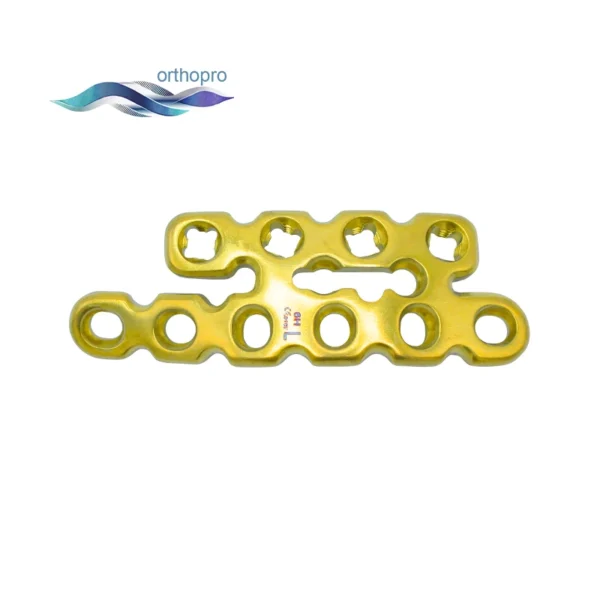
Posterior Pelvic Plate System – Titanium Locking Implant for Pelvic Ring Fracture Fixation
The Posterior Pelvic Plate by OrthoPro is engineered to provide rigid stabilization for complex posterior pelvic ring disruptions. Designed for high-energy trauma cases, this Posterior Pelvic Plate features a low-profile construction that minimizes soft tissue irritation while ensuring superior biomechanical strength. Our locking system offers optimal compression and fixation for sacral and iliac fractures.
The Consignment Trap
We need to talk about consignment because it is one of the biggest blind spots in medical purchasing today.
Hospitals absolutly love consignment agreements. The vendor wheels in six massive trays of plates and screws, puts them on your shelf, and you only get billed when a surgeon actually opens a package. Procurement managers think this is brilliant because it feels like “free” inventory and keeps cash flow looking healthy.
It is not free. Not even close.
When a vendor leaves $100,000 worth of hardware on your shelf, they are taking on a massive amount of inventory risk and capital tie-up. Do you really think they are just eating that cost out of the goodness of their hearts? No. They bake a massive risk premium into the piece-price of whatever items you do end up using. You are essentially paying hidden, high-interest financing fees on that inventory every time a screw is implanted.
A much smarter strategy for your high-turnover, high-volume items (like standard 3.5mm and 4.5mm cortical screws, k-wires, and basic tubular plates) is to buy them outright. You take on the inventory holding risk, sure. But when you buy bulk directly from a solid manufacturer, your unit cost plummets. I’ve seen hospitals drop their annual screw spend by 60% just by moving away from consignment for their most commonly used sizes.
Building a ruthless Global pricing strategy
Pricing in this industry is a geographic joke. What a surgery center pays in Los Angeles is wildly different from what a hospital pays in Munich, Mexico City, or Bangkok.
If you are buying in the US, you are probably dealing with Group Purchasing Organizations (GPOs). I’ll just say it: GPOs often do more harm than good for individual hospitals. They promise you a “volume discount,” but they essentially lock out agile, cost-effective challenger brands and create an oligopoly for the big players. Getting a 15% discount is completely meaningless if the base contract price was artificially inflated by 300% to begin with.
In Europe, the MDR (Medical Device Regulation) rollout has been a disaster for pricing. The sheer volume of paperwork and clinical data required to maintain a CE mark under the new rules was too expensive for many smaller, budget-friendly manufacturers. They simply pulled out of the European market. And what happens when competition disappears? Prices skyrocket.
Then you have Latin America and parts of Asia. Buyers in these regions are generally way more pragmatic. They demand strict ISO certifications and proven clinical outcomes, but they refuse to pay a 400% premium just for a specific logo. This is exactly where value-based direct brands are completely taking over the market.
I was recently working with a procurement director—let’s call him Mateo—who runs the supply chain for a private hospital group in South America. Mateo was furious because his orthopedic consumable spend had jumped 12% year-over-year despite surgical volume staying completely flat.
I looked at his vendor contracts. He was locked into an exclusive deal with one of the biggest global OEMs. I told him bluntly, “Mateo, you are bleeding your budget dry just to have that blue logo on your sterile packaging.”
We did a full audit of his trauma usage. It turned out that over 65% of his volume consisted of completely generic trauma hardware—standard locking plates, intramedullary nails for tibias, and basic screw sets. We slowly transitioned that 65% over to a certified, high-quality alternative manufacturer.
The results were insane. Within eight months, he cut his total trauma implant spend by nearly 35%. There was zero negative impact on patient outcomes. The surgeons grumbled for about a week because the screwdriver handles felt slightly different, but once they realized the threads bit into the cortical bone exactly the same way, the complaints vanished.
This is what a real global pricing strategy looks like in 2025. You cannot just sit back and accept the standard 5% annual price hikes from your legacy reps anymore. You have to actively introduce competition into your purchasing enviroment.
The Surgeon Preference Problem
You can’t fix your trauma implant pricing without addressing the most difficult hurdle in the building: the surgeons.
Procurement wants to switch to a cost-effective brand to save a million dollars a year. But Dr. Miller aggressively refuses to use anything other than the exact brand he trained on during his residency twenty years ago. He threatens to take his profitable elective cases to the competing hospital across town if you mkae him change his hardware.
It is a political nightmare for purchasing managers. So, how do you handle it?
First, you unbundle the contracts. The big legacy brands love to offer “free” instrument sets if you commit to high volumes of their implants. You are paying for those instruments ten times over in the inflated implant markup. Tell your current vendors that you want to buy their instrument sets outright and demand the true floor price for the implants. Watch how fast they start sweating when the pricing transparency comes out.
Second, you use data to force the issue. Bring in a high-quality alternative brand. Put their quote on the table next to the legacy quote. Show the hospital’s CFO that the metallurgy, the fatigue testing, and the clinical indications are identical, but the price is 70% lower. When the CFO sees that Dr. Miller’s brand loyalty is costing the hospital $4,000 extra per surgery, the internal pressure on the surgeon changes dramatically.
Quality Control is Non-Negotiable
Now, I want to be extremely clear about something before you go ripping up all your vendor contracts. When I say you need to ruthlessly cut costs, I am NOT telling you to go buy cheap, uncertified garbage off the internet.
Buying substandard medical implants is professional suicide.
If a plate fails in vivo because a shady manufacturer used cheap, porous titanium or skipped the surface anodization step, the revision surgery is going to cost your facility tens of thousands of dollars. That entirely wipes out whatever money you thought you saved, not to mention the massive legal liability and the devastating impact on the patient.
Quality control cannot be compromised. You must only source from suppliers who maintain rigorous, documented testing standards—torsion testing, bending fatigue testing, and strict sterilization validations.
This is exactly why I point people toward brands like OrthoPro. If you look at the OrthoPro website, you will see they aren’t just slapping a label on some cheap metal. They understand that true medical device economics is about finding that sweet spot: giving hospitals incredibly aggressive B2B pricing while maintaining absolute, bulletproof clinical reliability. You get the ISO certifications and the high-grade Ti-6Al-4V without funding a CEO’s third yacht.
Actionable steps for your Q3 and Q4 budget
We are moving fast through 2025. If you are still relying entirely on the same legacy vendors you used five years ago, you are literally losing money every time an OR door swings open.
Here is what you need to do tomorrow morning to take back control of your budget:
- Isolate your high-volume SKUs: Pull your purchasing data from the last twelve months. Identify the top 20 trauma items you buy the most. I guarantee it will be basic screws, K-wires, and standard locking plates.
- Standardize the basics: Force the surgical team to standardize these high-volume commodities. A hospital does not need to carry six different brands of 3.5mm screws.
- Send out competitive RFQs: Reach out to at least three high-quality alternative manufacturers who hold the proper quality certifications. Get their direct-buy pricing.
- Calculate Total Cost of Ownership (TCO): Use another simple plain text formula.
TCO = (Direct Unit Price x Annual Volume) + Import/Shipping Fees + Instrument Set Maintenance + Estimated Expired Waste.
Run that math, and you will almost always find that buying direct from a challenger brand offers a massively lower TCO than dealing with the big guys.
FAQ: Trauma Implant Pricing
Why are trauma implants suddenly so expensive?
It’s rarely the raw materials. While titanium alloy costs fluctuate slightly, the real drivers of cost are supply chain bloat, new regulatory burdens (like MDR in Europe), and the massive marketing and sales rep commissions baked into the price by legacy OEM brands. The metal isn’t getting dramatically more expensive, but the corporate overhead definitly is.
Is it safe to buy trauma implants from non-legacy brands?
Yes, absolutely, provided you do your homework. The brand name stamped on the box doesn’t heal the bone. What matters is that the manufacturer uses verifiable implant-grade materials (like Ti-6Al-4V), holds rigorous quality management certifications (like ISO 13485), and passes all necessary mechanical fatigue testing. Quality alternative brands offer the exact same clinical safety without the massive brand markup.
How can a hospital successfully negotiate better pricing with big orthopedic vendors?
The only language big vendors understand is a credible threat to their market share. You have to stop accepting bundled, opaque contracts. Demand line-item pricing for implants versus instruments. Most importantly, bring hard quotes from high-quality direct manufacturers like OrthoPro to the negotiating table. If the legacy reps don’t believe you are actually willing to walk away and switch brands, they will never give you their true floor pricing.
Stop Bleeding Money on Brand Names
Are you really going to let the legacy brands dictate your margins for another year?
You’ve seen the market data for 2025, you understand how the economics actually work, and you know that paying a 400% markup for basic titanium hardware is just bad business. Smart hospital procurement teams and B2B distributors are actively tearing down their old supply chains right now. They are ditching the bloated middlemen and sourcing their high-volume trauma implants directly from specialized, quality-obsessed manufacturers.
Imagine walking into your next budget review and showing the CFO that you managed to slash the orthopedic trauma spend by 30% while keeping the surgical staff completely satisfied with the hardware’s performance. That is real money that can be used to hire more nurses, upgrade your imaging equipment, or just keep the hospital’s doors open in a tough economy.
Don’t wait until your Q4 budget is completely exhausted. Take action today. Shoot an email over to the team at OrthoPro at info@orthopro.mx and ask them to quote your top 10 highest-volume trauma SKUs.
Or, if you want to move even faster, head straight over to their contact page and start a real conversation about how much money you are currently wasting. It’s time to stop paying for logos and start paying for clinical value.