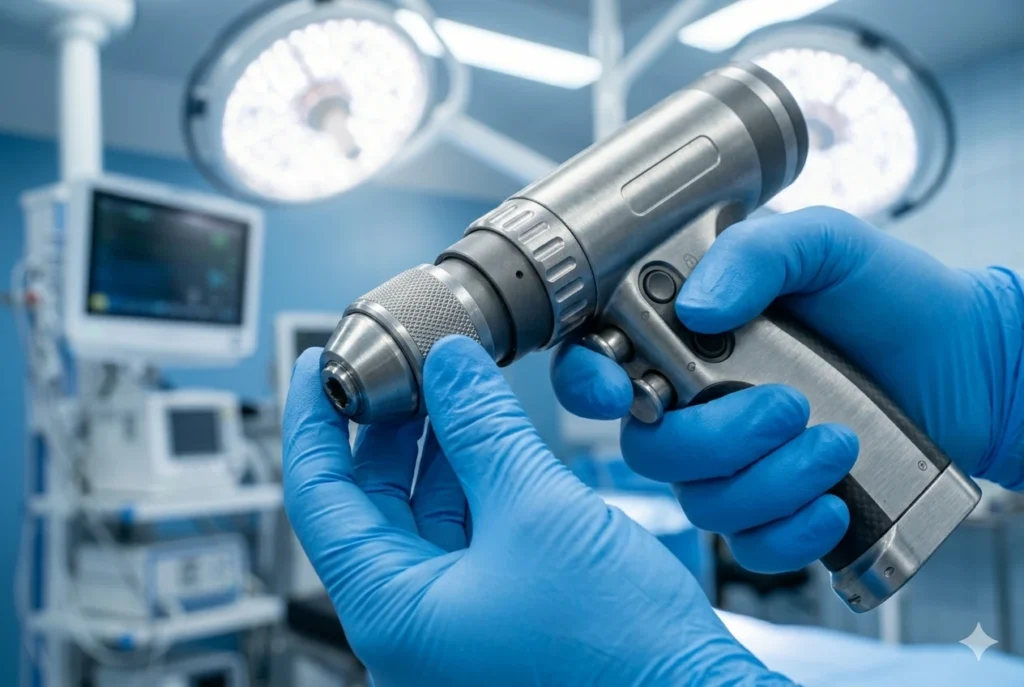
Look, if you are sitting in a hospital procurement office right now staring at a pile of requisition forms from your neurosurgery department, I feel your pain. The numbers just don’t make sense anymore.
You’ve got surgeons demanding the absolute best self-stopping craniotomy drill on the market because, let’s be real, nobody wants to be the guy who accidently plunges a drill bit into a patient’s brain. On the flip side, your CFO is breathing down your neck because the hospital’s capital equipment budget got slashed by 15% this quarter.
I’ve been consulting on medical device procurement for over ten years, dealing with clinics from Bogota to Bangkok. I’ll just say the quiet part out loud: the legacy medical device brands are ripping you off. They slap a fancy blue or green logo on a handpiece, and suddenly a surgical drill costs more than a decent sports car. It’s ridiculous.
The good news? The market has shifted massively in 2026. You don’t have to pay a 400% markup just to get reliable neurosurgical equipment. Smart B2B buyers are bypassing the bloated corporate reps and going direct to high-end manufacturers.
Let’s break down exactly what you should be looking for when buying these drills, the actual math behind how they work, and how to spot a solid cranial perforator supplier without getting burned.
The Elephant in the OR: Why the “Auto-Stop” Actually Matters
Before we talk dollars, we need to talk clinical reality.
When a neurosurgeon is performing a craniotomy for a traumatic brain injury or a tumor resection, they have to drill a burr hole through the skull. The skull isn’t uniformly thick. It varies. Once the drill punches through the inner table of the skull, it hits the epidural space. Right below that is the dura mater—the tough membrane protecting the brain.
If the drill doesn’t stop instantly when the resistance drops, you get a dural tear. According to data published in the Journal of Neurosurgery, unintended dural tears during cranial perforation happen in about 2% to 5% of cases when using older, non-automated systems.
A dural tear means cerebrospinal fluid (CSF) leaks. It means the surgeon now has to spend an extra 45 minutes doing a primary repair or applying synthetic dural grafts. That’s more OR time (which costs about $60 to $100 per minute), higher infection risk, and a massive legal liability.
A true self-stopping craniotomy drill relies on a mechanical clutch mechanism. It requires forward pressure to keep the cutting flutes engaged. The second the drill bit breaks through the bone and hits soft tissue, the forward resistance drops, the clutch disengages internally, and the spinning stops. Instantly. It doesn’t rely on electronics or software that can glitch; it relies on raw physics.
The Math Behind the Cut
Surgeons will tell you they want a “powerful” drill, but as a buyer, you need to translate that into actual procurement specs. Power in a surgical drill isn’t just about speed; it’s the relationship between Torque and RPM.
Here is the basic formula you should keep in mind when evaluating spec sheets from a cranial perforator supplier:
Mechanical Power (Watts) = (Torque in Nm * 2 * 3.14159 * RPM) / 60
If a supplier pitches you a drill that spins at 1200 RPM but only has 1.5 Nm of torque, it’s going to stall when it hits dense cortical bone. The surgeon will have to push harder, which defeats the safety mechanism of the auto-stop clutch.
For a solid cranial perforator, you want a sweet spot. Usually, you are looking for an RPM range of 800 to 1000 for cranial work, paired with a torque rating that can handle heavy bone density without bogging down. High RPMs generate too much heat, leading to thermal necrosis (killing the bone cells), which causes post-op complications.
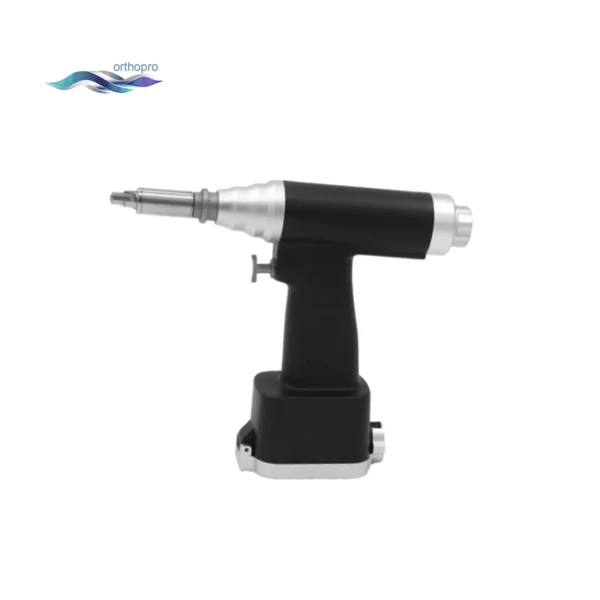
Self-stopping Craniotomy Drill for Neurosurgery | Precision Skull Power Tool for Hospitals & B2B Suppliers
The OrthoPro self-stopping craniotomy drill is an essential neurosurgical power tool designed for safe and efficient skull penetration. This high-precision self-stopping craniotomy drill features an automatic stop mechanism to protect the dura mater. Engineered for neurosurgery, our cranial drill offers variable speed and full autoclavability for superior hospital performance.
The Financial Reality of Hospital Procurement in 2026
Let’s talk money. Buying neurosurgical power tools wholesale used to be seen as a risk. Ten years ago, if you didn’t buy from the top three Western brands, you were rolling the dice on quality.
That is simply not true anymore. The manufacturing technology for brushless DC motors and medical-grade stainless steel has been democratized.
Here is what the current landscape actually looks like:
| Supplier Type | Average Cost per Full Set (Drill + Batteries + Perforator) | Autoclavability | Customization Options | Sales Model |
| Legacy “Big 3” Brands | $30,000 – $45,000 | Good, but proprietary batteries are expensive | Very rigid, you buy the whole kit | Heavy rep presence, high margin |
| Premium Direct-to-B2B Manufacturers | $6,000 – $12,000 | Excellent (135°C standard) | Highly flexible, buy only what you need | Direct wholesale, high ROI |
| Low-End Knockoffs | $2,000 – $4,000 | Poor (seals fail after 10 cycles) | None | Risky, no real warranty |
When you are doing hospital procurement for a trauma center, you don’t just need one drill. You need maybe four or five circulating through the Sterile Processing Department (SPD) to keep up with the OR schedule.
If you buy legacy, that’s $150,000 to $200,000. If you source intelligently from a premium B2B manufacturer, you spend $40,000 and get the exact same clinical outcome. The math is a no-brainer.
How to Evaluate a Supplier (Without Getting Scammed)
I’ve seen hospital buyers get burned bad by shady suppliers who promise the world and deliver equiptment that falls apart after three weeks in the autoclave. When you are looking for a B2B partner for surgical power tools, you need to be ruthless in your vetting process.
1. Check the Autoclave Survival Rate
Every supplier will say their drill is “autoclavable.” Ask them for the specific parameters. A neurosurgical drill needs to withstand 134°C to 135°C (273°F) at high pressure for at least 300 to 500 cycles before the internal seals need replacing. If they cant give you a straight answer on their sealing technology (like using high-grade fluororubber O-rings), walk away.
2. Battery Chemistry and Sterilization
Batteries are the Achilles heel of cordless surgical tools. You have two choices generally:
- Aseptic Transfer: The battery isn’t sterilized. A nurse drops it into a sterile funnel. It’s clunky, but the batteries last forever because they never get cooked.
- Fully Autoclavable Batteries: Much easier for the OR staff, but the heat degrades the lithium or Ni-MH cells faster.
Make sure your supplier offers high-capacity, stable batteries and actually stocks replacements. There is nothing worse than having a $10,000 drill become a paperweight because the manufacturer stopped making the specific battery pack.
3. Real Certifications, Not Just Photoshop
Don’t just look for a CE logo on a website. Ask for the actual CE certificate and the ISO 13485 (Medical Device Quality Management System) documentation. And actually verify it with the issuing body.
Real Talk: A Procurement Case Study
Let me share a quick story. I was working with a mid-sized regional hospital network in Latin America a couple of years ago. They had two aging cranial drills from a massive European brand. Both were constantly breaking down, and the manufacturer was charging them $3,000 just for the repair labor, plus parts, and it took 8 weeks to turn around.
The hospital was bleeding money and canceling non-emergency tumor cases because they didn’t have the gear.
They were terrified to switch brands, but I convinced the head of procurement to trial a system from a specialized wholesale manufacturer. We brought in three complete sets for less than the price of one legacy drill.
The surgeons were skeptical at first because it didn’t have the logo they were used to. But after the first three trauma craniotomies, the head of neurosurgery came down to the procurement office and basically said, “The weight distribution is actually better, and the clutch stopped on a dime. Buy more.”
They saved over $120,000 that fiscal year. That is the power of smart B2B sourcing.
Why I Push My Clients Towards OrthoPro
I don’t recommend suppliers lightly because my reputation is attached to the advice I give. But when procurement guys ask me where to look for neurosurgical and orthopedic power tools, I consistently point them to OrthoPro.
These guys actually understand the B2B market. They aren’t trying to sell you fluff.
If you look at their self-stopping craniotomy drill, it hits every single metric I just talked about.
- It has a pure, physics-based mechanical clutch that reacts instantly.
- The handpiece is perfectly balanced to reduce surgeon wrist fatigue during those long 6-hour cases.
- The whole unit, including the battery housing, is engineered for standard 135°C high-pressure steam sterilization without destroying the internal motor.
- They provide variable speed control (0-900 RPM), so the surgeon can ease up as they get closer to the inner table of the skull.
Plus, because they focus on wholesale and international distribution, their pricing structure actually allows hospitals and local medical distributors to maintain healthy margins and reasonable budgets. You aren’t paying for an army of golf-playing sales reps; you are paying for raw engineering and medical-grade materials.
Don’t Buy Features You Don’t Need
One last piece of advice before we get to the FAQ. When you are buying neurosurgical tools, vendors will try to up-sell you on digital screens, Bluetooth connectivity, and LED lights built into the handpiece.
Stop. You don’t need it.
The OR has massive overhead lights. Bluetooth in a drill is just another electronic component that will fail in the autoclave. A digital screen doesn’t help the surgeon drill a hole; it distracts them.
You need a brushless motor, a fail-proof clutch, and a battery that holds a charge. Keep it simple. Simple is safe. Simple is durable. And simple doesn’t break your budget.
Frequently Asked Questions (FAQ)
Q: How often do the cutting bits (cranial perforators) need to be replaced?
A: The drill handpiece itself lasts for years, but the actual cranial perforator bits (the cutting blades) are strictly single-use consumables. Reusing a perforator is extremely dangerous. The blades get dull after one use, which means the surgeon has to push harder, which can cause the auto-stop clutch to fail and punch through the dura. Always buy fresh bits.
Q: Can we use our existing attachments on a new wholesale drill handpiece?
A: It depends on the coupling standard. Many high-quality wholesale suppliers like OrthoPro design their handpieces with universal quick-connect chucks (like the Hudson or AO standard). However, for the auto-stop mechanism to work flawlessly, it is highly recommended to use the handpiece and the perforator attachments engineered by the same manufacturer to ensure the clutch calibration is exact.
Q: What is the average lead time when ordering neurosurgical power tools wholesale?
A: Unlike legacy brands that might put you on a 4-month backorder because of “supply chain issues,” dedicated B2B manufacturers usually have much more agile production lines. For standard orders, you are generally looking at 2 to 4 weeks for production and quality testing, plus shipping time. Always factor this into your hospital procurement quarterly planning.
Q: Do fully autoclavable drills require any special maintenance from the SPD staff?
A: Yes. While they are built to survive the autoclave, the harsh steam strips away lubrication. Your sterile processing team must apply medical-grade, high-temperature oil to the moving parts and connection joints of the drill before it goes into the sterilizer. Skipping this step is the number one reason hospital drills seize up and die prematurely.
Ready to Fix Your Procurement Budget?
Stop letting your hospital’s capital budget get drained by overpriced legacy brands. You have the data, you know the specs, and you know that patient safety doesn’t have to cost $40,000 a pop.
Whether you are outfitting a brand-new trauma center, upgrading your current neurosurgical sets, or you are a medical distributor looking to offer a superior product to your local clinics, it is time to make a smarter move.
Get the technical manuals, check the specs for yourself, and see the pricing difference. Head over to the OrthoPro homepage to explore their full range of orthopedic and neurosurgical tools.
If you want a custom quote or need to discuss bulk wholesale pricing for your facility, don’t wait. Reach out directly through their Contact Us page or shoot an email straight to info@orthopro.mx. Protect your patients, and protect your budget.