
Look, I’m just going to say what most sourcing agents are terrified to admit. Buying standard consumer electronics or plastic phone cases from overseas is easy. But trying to find a legitimate neurosurgical instruments manufacturer without getting completely taken for a ride? That is an absolute minefield.
You jump onto any of the major B2B platforms right now, type in your search terms, and you instantly get hundreds of “verified” suppliers offering you the cheapest surgical drills you’ve ever seen. They all have shiny catalogs. They all claim to be direct factories. They all slap a CE mark on their product photos.
Here is the controversial reality: 80% of them are just trading companies sitting in a rented office somewhere.
They don’t own a single CNC machine. They don’t have engineers. They buy cheap, untested tools from underground workshops, mark up the price by 30%, and sell them to distributors like you.
When you are dealing with a cranial drill that literally cuts into a human skull millimeters away from the brain, you cannot afford to buy garbage. A mechanical failure in the operating room isn’t just a bad review on a website. It’s a dead patient, a massive lawsuit, and the absolute end of your distribution business.
We need to talk about how you actually filter out the noise. How do you find a real surgical power tools manufacturer? How do you check their actual engineering capabilities without flying 5,000 miles to knock on their door? Grab a coffee, because we are going to get into the gritty details of medical sourcing.
The Trading Company Trap
I flat out refuse to use standard B2B directory sites for Class IIb and Class III medical devices.
Why? Because the medical supply chain requires absolute traceability by law.
If you are buying from a middleman trading company, they are usually sourcing from whichever local workshop gives them the lowest price that specific month. You might order a sample, test it, love it, and place a bulk order for 200 units. But what you don’t know is that for your bulk order, the trader switched factories to save themselves 10%.
Suddenly, the stainless steel quality drops. The motor housing isn’t sealed properly.
A month later, a hospital complains that the drills are rusting after two autoclave cycles. You call the supplier to get a refund. And what do they do? They ghost you. Their account disappears.
You need a direct line to the people actually cutting the metal. When you deal with a real factory, they can pull the exact lot number of a tool, show you the raw material purchase invoice for the titanium alloy, and tell you exactly which machine operator milled the part.
If a new medical bone drill supplier B2B refuses to get on a live video call, walk out to their factory floor, and show you their raw materials while saying your name… walk away. Don’t argue. Just move on.
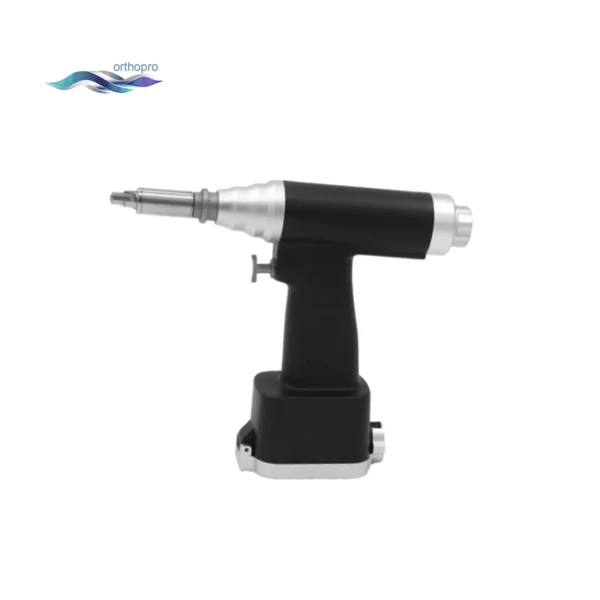
Self-stopping Craniotomy Drill for Neurosurgery | Precision Skull Power Tool for Hospitals & B2B Suppliers
The OrthoPro self-stopping craniotomy drill is an essential neurosurgical power tool designed for safe and efficient skull penetration. This high-precision self-stopping craniotomy drill features an automatic stop mechanism to protect the dura mater. Engineered for neurosurgery, our cranial drill offers variable speed and full autoclavability for superior hospital performance.
4 Massive Red Flags You Need to Watch Out For
Over the years, I’ve developed a sort of sixth sense for spotting fake factories. If you are auditing a new supplier, run them through this exact checklist. If they fail even one, drop them.
1. The “Photoshop” CE Certificate
Since Europe transitioned from the old Medical Device Directive (MDD) to the new Medical Device Regulation (MDR EU 2017/745), getting a legitimate CE mark has become insanely expensive. It takes years of clinical data and hundreds of thousands of dollars.
Because of this, the market is absolutely flooded with fake certificates. A supplier will send you a PDF from a random “testing lab” that looks very official.
But a real CE certified craniotomy drill must be audited by a recognized Notified Body.
Here is how you verify it yourself so you don’t get scammed: Look at the CE mark on the product or the certificate. There should be a 4-digit number next to it (like CE 0123 for TÜV SÜD or CE 2797 for BSI). Go to the European Commission’s official NANDO database online. Type in that 4-digit code. If the company isn’t listed under that Notified Body for that specific product category, the certificate is forged. I see this happen alot.
2. The “We Make Literally Everything” Catalog
You open a supplier’s product catalog. Page 1 is neurosurgical power tools. Page 2 is hospital beds. Page 3 is dental chairs. Page 4 is MRI machines.
No single factory on earth manufactures all of those things. It requires entirely seperate supply chains, different engineers, and different manufacturing licenses. If their catalog looks like an Amazon search results page, you are dealing with a broker.
3. Failing the ISO 13485 Stress Test
Every medical supplier claims to have ISO 13485:2016 (Quality Management Systems for Medical Devices). Having the certificate printed out and hanging on the wall means nothing. You need to know if they actually follow the rules.
Next time you audit a supplier, don’t ask for the certificate. Ask them this exact question: “Can you please send me a redacted copy of your last CAPA report?”
CAPA stands for Corrective and Preventive Action. A real factory deals with production errors. A CAPA report documents what went wrong on the assembly line and how they fixed the process so it doesn’t happen again. A legitimate factory will gladly blank out the sensitive info and show you their quality control process in action. A fake factory won’t even know what you are talking about.
4. The “Send It Back for Repair” Warranty Joke
Always read the fine print on the warranty terms. If a surgical handpiece fails, many cheap suppliers will say, “No problem friend, just mail it back to our factory and we will fix it for free!”
Do you have any idea how hard it is to ship a contaminated, blood-soaked medical device back across international borders? The customs paperwork alone will take months, and biological hazard laws will probably get the package destroyed at the border. You need a supplier who offers a straightforward, 1-to-1 replacement policy for defective units based on video evidence, or one that provides field-replaceable modular parts.
The Brutal Technical Reality of Cutting Bone
Let’s get a bit technical, because you need to understand why cheap engineering actually hurts patients and ruins reputations.
When a surgeon uses a high-speed drill on the skull, the biggest enemy isn’t the hardness of the bone. It’s heat.
There is a widely recognized biological rule in orthopedics based on the famous Eriksson and Albrektsson studies from 1983. They proved that if bone tissue is exposed to a temperature of 47 degrees Celsius for more than 1 minute, thermal necrosis occurs.
The bone cells literally die.
When bone dies, it cannot fuse with titanium implants or plates. The dead tissue becomes a breeding ground for bacteria, leading to massive post-operative infections that require revision surgery.
Cheap drills cause thermal necrosis. Why? Because their flute geometry (the twisted grooves on the drill bit) isn’t machined correctly. Instead of cutting the bone and instantly ejecting the bone chips out of the surgical site, the chips get jammed in the grooves. The drill basically stops cutting and starts rubbing. The friction goes through the roof, and the temperature spikes to 60°C or higher in seconds.
A real manufacturer designs their cutting tools using precise mathematical models. The formula for cutting speed is standard in machining:
V = (3.14159 * D * N) / 1000
Where:
- V = Cutting speed in meters per minute
- D = The diameter of the drill bit in millimeters
- N = Spindle speed in RPM
If a factory just copies the physical shape of a famous European brand but puts a cheap, unbalanced motor in the handpiece that can’t maintain a stable RPM (N) under load, the whole formula breaks down. The drill stalls in the bone. The surgeon pushes harder out of frustration. The heat spikes. The patient suffers.
Let’s Compare: Cheap vs Legitimate Manufacturers
Just to make it really obvious, I put together a quick breakdown of what you actually get when you cut corners versus when you buy from a real, dedicated medical manufacturer.
| Feature / Aspect | The Cheap B2B Platform Supplier | A Real Manufacturer | The Real World Impact |
| Material Sourcing | Generic 304 or 316L Stainless Steel | High-carbon martensitic stainless (440C) for blades, Titanium alloys for housings | Cheap metals dull fast and rust after 10 autoclave cycles. Real medical alloys hold an edge for years. |
| Motor Technology | Brushed DC motors (cheap, gets very hot) | Brushless, autoclavable motors | Brushed motors burn out and cannot survive high-temp sterilization. Brushless motors are reliable. |
| Quality Control | Visual inspection only. “Looks shiny, pack it up.” | Every unit drop-tested, torque-tested, and clutch-tested 100+ times before shipping. | You don’t want the hospital discovering a defect mid-surgery. The factory must catch it first. |
| Traceability | None. Generic batch numbers if you’re lucky. | Unique laser-marked serial numbers linked to raw material heat treatment logs. | If there is an FDA or CE recall, you need exact serial numbers to protect yourself legally. |
A Real-World Disaster (Case Study)
I’ll keep the names anonymous to protect the guilty, but a few years ago, a mid-sized distributor in South America landed a huge government tender. They had to supply 50 sets of neurosurgical power tools to a network of public trauma hospitals.
The distributor got greedy. Instead of using their vetted European supplier, they went online and found a ridiculously cheap factory offering cranial perforators for a fraction of the cost. The samples looked great on a Zoom call. They placed the bulk order.
Three months later, a neurosurgeon was performing an emergency craniotomy on a car crash victim. The tool they were using was supposed to be a self-stopping drill. This specific tool is designed with an automatic clutch. The second the drill bit breaks through the hard skull and hits the soft dura mater (the membrane covering the brain), the drop in physical resistance is supposed to instantly disengage the drive shaft. The motor keeps spinning, but the drill bit stops dead.
Well, the cheap drill didn’t stop.
The internal clutch mechanism had rusted slightly after just a few runs through the hospital’s high-temperature steam autoclave. The internal springs jammed. The bit plunged straight through the dura and damaged the patient’s brain tissue.
The patient survived, barely, but required massive reconstructive surgery and weeks in the ICU. The hospital immediately quarantined the entire batch of 50 drills. The government blacklisted the distributor, and a multi-million dollar lawsuit followed.
When the distributor frantically tried to contact the supplier they bought them from? The website was down. The phone numbers were disconnected. The company had vanished. They probably just rebranded under a new name to scam the next buyer.
That distributor nearly went bankrupt. They survived, but it cost them a fortune in legal fees. After that nightmare, they totally changed how they do business. They stopped looking for bargains and started looking for actual engineering partners.
What Makes a Self-Stopping Craniotomy Drill Actually Safe?
Since we are talking about neurosurgery, the crown jewel of your product catalog is going to be the cranial perforator. You simply cannot mess around with this piece of equipment.
If you want to see what a properly engineered tool looks like, take a look at the Self-stopping Craniotomy Drill.
For a tool like this to work safely, it relies on a highly sophisticated two-part assembly (an inner bit and an outer bit). When the surgeon pushes against the hard bone, the inner drill is pushed back slightly into the housing, which engages the clutch and transfers power from the motor to the cutting edge.
The absolute millisecond the bit breaches the inner table of the skull, that physical resistance drops to zero. The inner drill slips forward by a fraction of a millimeter. This instantly disengages the drive mechanism. Even if the surgeon is sweating and still squeezing the trigger on the handpiece as hard as they can, the cutting bit will not spin.
For this clutch to work reliably—not just once, but after being baked in a steam autoclave at 134°C for 18 minutes during a standard prion sterilization cycle over and over again—the manufacturing tolerances have to be insane. We are talking about micron-level precision.
When you source this product, you need to ask the factory:
- What is the Rockwell hardness (HRC)? The cutting edge should be around 50-55 HRC. Any softer, and it dulls after one surgery. Any harder, and the metal becomes brittle and might snap inside the patient’s skull.
- How do you seal the motor? Cheap factories use standard industrial rubber O-rings. High-pressure steam destroys them in a month. Real medical factories use proprietary fluororubber seals and completely pot the electronic sensors in waterproof resin.
- Can it be dismantled for CSSD? The Central Sterile Services Department in a hospital needs to clean blood and bone dust out of the tool. If the drill can’t be easily taken apart without special tools, biological matter will build up inside, causing cross-contamination.
Why OrthoPro Surgical Tools Are Built Differently
Building a profitable B2B distribution business is stressful enough. You have to deal with hospital procurement boards, strict tender deadlines, international logistics, and crazy import taxes. The very last thing you should be worrying about is whether your products are going to fail in the operating room.
That is exactly why we built OrthoPro surgical tools. We got sick of seeing distributors get screwed over by shady middlemen selling dangerous equipment.
We don’t hide behind stock photos or rent fancy offices while outsourcing our production. We are a real manufacturing partner. We run our own CNC lines, we manage our own heat treatment processes, and our quality control engineers are honestly kind of obsessive.
When we say a drill is autoclavable, we mean we have literally tortured that model in a sterilizer hundreds of times to prove the internal seals hold up. We test our clutch mechanisms until they break, just so we know exactly what the failure point is, and then we engineer it to be 10 times stronger.
We know that in this industry, quality isn’t just some stupid marketing buzzword you put on a brochure. It is quite literally a matter of life and death.
B2B Neurosurgical Equipment Procurement FAQ
I get asked alot of the same questions by buyers who have been burned in the past and are looking to switch to a reliable supplier. Here are a few things you should know.
Q: Can I trust a supplier who claims their attachments fit major brands like Stryker or Medtronic?
You have to be incredibly careful here. While there are legitimate aftermarket manufacturers who make compatible attachments, doing so safely requires exact, micron-level reverse engineering. If the coupling mechanism on a drill bit is off by even a fraction of a millimeter, it will vibrate at high speeds. That vibration destroys the surgeon’s precision and will eventually tear apart the expensive bearings inside the hospital’s main power console. Always demand intense compatibility testing data before you buy.
Q: Why do battery-powered surgical tools fail so quickly if bought from cheap factories?
It’s all about the sterilization process. Batteries absolutely hate heat and moisture. Cheap suppliers use standard lithium cells and try to seal them in cheap plastic boxes. The steam from the autoclave penetrates the box, shorts the battery management board, and the battery dies after five surgeries. Legitimate manufacturers use specialized, non-autoclavable battery packs that are inserted into the sterile field using an aseptic transfer shield, or they use highly specialized high-temperature batteries.
Q: How long does it actually take to manufacture a bulk order of neurosurgical tools?
If a supplier tells you they can ship 100 craniotomy drills tomorrow, they are lying, or they are selling you rejected stock they’ve had sitting in a dusty warehouse for two years. Real medical manufacturing takes time. Sourcing the medical-grade metal, CNC machining, heat treating, surface passivating, assembling, and running QC burn-in tests usually takes a legitimate factory anywhere from 30 to 45 days. You need to plan your procurement cycles accordingly.
Stop Gambling With Your Supply Chain
Sourcing neurosurgical instruments shouldn’t feel like playing roulette with your company’s money. You need a factory that backs up its claims with transparent engineering, real quality control logs, and legitimate international certifications that can be verified online.
If you are tired of dealing with brokers, inconsistent quality, and zero after-sales support when things go wrong, it’s time to upgrade how you do business.
We don’t do the whole fake trading company routine. We build serious, heavy-duty medical tools for serious surgeries. If you want to see exactly how our factory floor operates, review our ISO documentation, or get a direct, no-nonsense quote for your next hospital tender, we are ready to talk.
Don’t wait for a surgical failure to realize you bought from the wrong supplier. You have the power to take control of your supply chain right now.
Get in touch with our engineering and sales team. Head over to our contact us page to schedule a real conversation, or just drop us an email directly at info@orthopro.mx to request our full technical catalog and compliance documentation. Let’s build a partnership that actually lets you sleep at night.