
Picture this. You’ve just wired the final payment for a bulk order of surgical equipment. Your hospital clients are waiting, and the surgery schedules are already locked in. Then you get that dreaded email from your customs broker. Your shipment is on hold. A single mismatched document has basically turned your expensive medical gear into a hostage at the port.
This happens way more often than people in the B2B medical trade like to admit. I’ve seen seasoned buyers pull their hair out because a pallet of surgical drills got slapped with a detention notice over a tiny labeling formatting issue.
If you are dealing with cross-border trade, you know the stakes are incredibly high. Today we are going to look closely at the reality of importing medical power tools, specifically focusing on how to successfully bring in a CE certified shaver system without getting destroyed by surprise regulatory roadblocks. We will cover the messy truth about medical device regulatory compliance, look at real data on why shipments get refused, and give you a blueprint to make sure your next import clears seamlessly.
The Unspoken Reality of Medical Device Regulatory Compliance
Let’s just put a somewhat controversial opinion right out there: a lot of compliance consultants want you to believe that international medical regulations are an unsolvable maze. Why? Because the more complicated it sounds, the more they can bill you for “expert guidance.”
Honestly? It is mostly just a massive math problem of matching the correct piece of paper to the correct regional requirement. Yes, it’s incredibly tedious. No, it isn’t black magic.
The landscape is definately shifting, though. We are seeing a massive tightening of the rules globally. Let’s dive a bit deeper into the U.S. side of things as an example. If you look at the historical data from the FDA’s OASIS database, they process millions of import lines every year. But the rate of refusal for medical devices remains stubbornly high.
In a given year, thousands of shipments are detained. Why? A lot of people think it’s because the products are defective or dangerous. The truth is far more bureaucratic. The vast majority of import refusals for medical devices happen because of what the FDA calls “misbranding” or “adulteration” tied to paperwork. For example, if your device label fails to bear the required user information or the factory’s establishment registration lapsed a week before the shipment arrived, the agency will issue an import alert. Once your supplier is on an import alert list, every future shipment gets flagged for Detention Without Physical Examination (DWPE). That means they hold your goods indefinitely until you prove them innocent, usually by paying a private lab to test the products while they sit in a costly bonded warehouse.
In Europe, things are even crazier right now with the shift from the old Medical Device Directive (MDD) to the new Medical Device Regulation (MDR). According to industry data from late 2025, Notified Bodies are reporting that the average time for a successful MDR certification review is taking anywhere from 13 to 18 months. Because of this massive backlog, experts estimate that thousands of legacy devices might fall out of compliance simply because the regulators can’t process the paperwork fast enough.
This creates a brutal bottleneck in the supply chain. If you are a distributor, you simply cannot afford to have your capital tied up in inventory that is legally stranded.
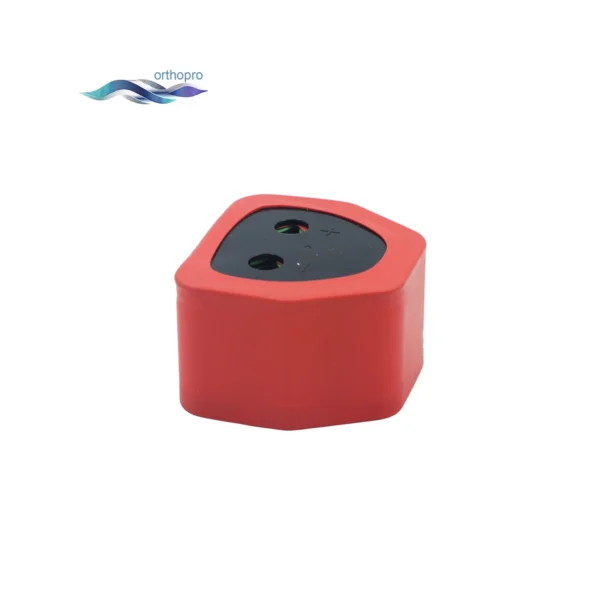
High-Performance Orthopedic Arthroscopy Shaver System for Joint Surgery & Tissue Resection – OrthoPro
Our professional orthopedic arthroscopy shaver system provides exceptional precision for joint surgery and soft tissue debridement. This advanced arthroscopy shaver system features a high-speed, low-noise motor, making the surgical shaver system ideal for knee, shoulder, and hip procedures. Enhance surgical efficiency and patient outcomes with OrthoPro’s reliable and durable orthopedic shaver.
Why Your ISO13485 Orthopedic Tools Keep Getting Flagged
A lot of buyers assume that if a factory hands them an ISO 13485 certificate, it’s a golden ticket to breeze through customs. That is a very dangerous assumption.
Customs agents and health ministries (like the FDA in the US, ANVISA in Brazil, or COFEPRIS in Mexico) don’t just glance at a factory’s quality management certificate and wave the truck through. They look for absolute traceability.
Let’s talk about the supply chain for raw materials. An ISO 13485 audit looks at how a factory manages its suppliers. If your manufacturer builds a bone drill but buys cheap, uncertified internal motors from a third-party vendor without proper incoming quality control, the entire system is tainted. Regulators at the border are getting smarter about this. They are starting to ask for the Bill of Materials (BOM) and tracing the origins of critical components.
If the paperwork shows your ISO13485 orthopedic tools contain critical components from an unverified source, the shipment can be detained. It all comes back to traceability. When you import these tools, the border agents are checking if the specific product models on your commercial invoice match the models listed on the Declaration of Conformity.
A common trap is when a manufacturer updates a product—say, changing a power relay inside a console—but forgets to update the technical file. The physical product arrives, the customs inspector randomly checks the component specification against the submitted documnetation, finds a mismatch, and shuts the whole thing down.
To avoid this, you need a supplier who actually understands the paperwork trail, not just one who knows how to bend metal. This is where partnering with a brand like OrthoPro makes a massive difference. We build the compliance trail at the exact same time we build the tools.
The Anatomy of a Fully Compliant Setup
What does it actually take for a complex surgical power tool to pass these rigorous checks? Let’s break this down using a real-world example: the Arthroscopy Shaver System.
When you import a CE certified shaver system, you aren’t just importing one thing. You are importing a complex ecosystem consisting of a control console (an active electronic device), a motorized handpiece (an electromechanical tool), and disposable shaver blades (sterile consumables). Each of these components faces a completely different regulatory hurdle.
1. The Console and Electrical Safety
The control console plugs into the hospital’s power grid. Therefore, it must pass strict IEC 60601-1 electrical safety standards. Customs and regulatory bodies will want to see the test reports proving the device won’t shock a patient or the surgeon.
They look at metrics like leakage current. Even if you hate math, you need to understand the basic concept the testing labs use. The simplified formula for finding leakage current is:
Leakage Current (I) = Applied Voltage (V) / Insulation Resistance (R)
If a hospital runs on a 240V system, and the internal insulation of the console provides 2.4 Mega-ohms of resistance, the leakage current would be:
I = 240 / 2,400,000 = 0.0001 Amps, or 0.1 mA.
0.1 mA is generally the absolute maximum allowable leakage current for Type CF applied parts (parts that come into direct contact with the heart or internal systems). If the test reports submitted in your customs dossier show a number higher than the regional limit, your CE certified shaver system is getting rejected instantly.
2. The Handpiece and Mechanical Performance
Next up is the handpiece. For an arthroscopy shaver, the surgeon relies on consistent cutting power to remove tissue or bone smoothly. If the motor stalls during a procedure, it’s a huge safety risk.
Regulators will sometimes ask for validation data on the mechanical performance. They look at torque and speed. The basic physics formula for cutting torque is:
Torque (T) = Force (F) x Radius (r)
To prove safety and efficacy, the technical file must demonstrate that the internal motor generates enough force at the blade’s radius to cut through cartilage cleanly without excessive heat generation. If your documentation lacks these basic mechanical validations, a strict reviewer might flag the product as ineffective, completely blocking your import.
3. The Blades and Sterilization
Finally, you have the disposable blades. Because these enter the sterile field, the packaging and sterilization validations are scrutinized heavily. Whether the factory uses Gamma radiation (ISO 11137) or Ethylene Oxide (ISO 11135), you need the certificates proving that the exact batch you are importing has met the required sterility assurance level. A missing lot number on a sterility certificate is one of the most common reasons disposable surgical tools get held up in quarantine.
The No-Nonsense Document Checklist
To make this a bit more practical, I put together a quick reference table. When you are buying a CE certified shaver system, here is what your documentation package should generally look like depending on your target region.
| Target Market | Primary Registration Required | Key Documents for Customs Clearance | Typical Processing/Clearance Time |
| European Union | CE Mark (MDR) | EU Declaration of Conformity, Notified Body Certificate, ISO 13485, EUDAMED Registration | 2 to 5 days (if all docs are perfect) |
| United States | FDA 510(k) Clearance | FDA Establishment Registration, Device Listing, UDI Labeling, 510(k) Summary | 3 to 7 days |
| Latin America (e.g., Mexico/Brazil) | COFEPRIS / ANVISA | Free Sale Certificate (FSC), Letter of Authorization, Translated IFUs, Local Registration Holder | 1 to 3 weeks (varies heavily by port) |
| Middle East / Asia | Ministry of Health Approval | FSC from country of origin, ISO 13485, Legalized/Apostilled commercial documents | 1 to 2 weeks |
If your supplier hesitates when you ask for a Free Sale Certificate or an apostilled Letter of Authorization, run. That is a massive red flag that they don’t actually export globally, and you will be the one paying for their learning curve at the border.
A Real-World Story: Beating the Customs Clock in Latin America
I want to share an anonymous story from a client we worked with recently. They are a mid-sized medical distributor based in Mexico. For years, they had been importing basic trauma implants without much issue. But they recently won a massive hospital tender to supply arthroscopy equipment.
They ordered a batch of shaver systems from a cheaper, unverified supplier they found online. When the shipment arrived at the port in Veracruz, the local health authority requested the full technical dossier to verify the electrical safety limits. The supplier basically ghosted them. They couldn’t produce the IEC 60601-1 test reports because they had never actually done the testing—they had just photoshopped a CE mark onto their PDF brochure.
The distributor was facing steep demurrage fees (port storage costs) and the very real threat of losing a multi-million peso hospital contract.
They reached out to us at OrthoPro in an absolute panic. We couldn’t magically fix their current stuck shipment, but we could fulfill a new order fast. More importantly, we provided them with our complete, iron-clad technical dossier for our Arthroscopy Shaver System before the new shipment even left the factory. We gave them the ISO 13485 certificates, the detailed Declaration of Conformity, the electrical safety test reports, and the sterilization validations for the blades.
When our shipment arrived, their broker handed the massive stack of pristine documentation to the inspector. The goods cleared customs in four days. The distributor saved their hospital contract and fired the old supplier immediately.
That is the difference between buying a piece of hardware and buying a fully compliant business solution.
Navigating the European MDR Bottleneck
If your primary market is Europe, or if you rely on European CE marks to fast-track your registrations in other countries (like Australia or parts of the Middle East), you need to pay close attention right now.
What exactly is causing this massive 18-month delay in Europe? Under the old MDD, many lower-risk devices could basically be self-certified by the manufacturer. The new MDR threw that out the window. Now, almost everything requires strict oversight from an independent third party known as a Notified Body.
The problem is, there simply aren’t enough Notified Bodies to handle the workload. As of early 2024, there were only around 45 designated Notified Bodies for the entire European market. They are completely swamped with applications.
This creates a ripple effect across the global supply chain. Many manufacturers are literally abandoning older, perfectly good products because the cost and time required to recertify them under MDR just doesn’t make financial sense. For a distributor, this means your favorite, reliable supplier might suddenly email you and say, “Sorry, we are discontinuing the line.” You are then left scrambling to find a new supplier for a CE certified shaver system, forcing you to start the tedious vendor validation process all over again.
By partnering with a company that is already ahead of the curve, you insulate your supply chain against these sudden shocks. You have to ask your suppliers directly: “What is the current status of your MDR transition?” If they give you a blank stare, you are taking on a massive supply chain risk.
The Hidden Costs of Getting It Wrong
People usually focus heavily on the purchase price of medical equipment. But the hidden costs of poor medical device regulatory compliance will bankrupt a distribution business much faster than a slightly higher unit price.
Let’s look at demurrage. If your shipment is held at customs pending document verification, the port gives you a few free days. After that, they start charging daily storage fees. For a large shipment, this can easily reach hundreds of dollars a day. A 30-day delay because you are waiting on a factory in Asia to find a translated test report can completely wipe out your profit margin.
Then there is the reputational cost. Hospitals do not care why your shipment is stuck at the border. They just know the equipment isn’t in the operating room when they scheduled a patient for joint surgery. If you miss a delivery window for a tender, you don’t just lose that sale; you get blacklisted from bidding on future contracts.
Paying a tiny bit more upfront for a fully vetted, compliant CE certified shaver system isn’t an expense. It is literally an insurance policy for your business reputation.
FAQ: Everything Else You Might Be Wondering
I get asked the same questions pretty frequently by procurement managers. Here are a few quick answers to help clear the air.
Does having a CE mark guarantee FDA approval in the United States?
Absolutely not. While both are rigorous, they are entirely different regulatory pathways. The EU focuses heavily on safety and performance through Notified Body audits, while the FDA relies on the 510(k) pathway, which requires proving your device is “substantially equivalent” to another device already legally marketed in the US. Having a CE mark makes gathering the data for the FDA easier, but it does not grant you an automatic pass.
How long does it actually take to clear customs with ISO13485 orthopedic tools?
If your paperwork is flawless, your commercial invoice matches your packing list exactly, and your certificates are verified, it usually takes 2 to 5 business days depending on the port. If there is a mismach, it can take weeks or months. The delay is rarely the physical inspection; it’s the bureaucratic back-and-forth.
Can I just use my supplier’s CE certificate to register the product under my own brand name?
This is known as OEM or Own Brand Labeling (OBL). Under the new EU MDR, this has become significantly harder. You can’t just slap your logo on the box and use their cert. You essentially have to take on the legal responsibilities of the manufacturer, meaning you need your own technical documentation and quality management system. If a supplier tells you it’s “super easy to just use our CE mark for your brand,” they are operating on outdated advice from 2015.
What happens if a product gets rejected at the border?
You generally have three options: provide the missing documentation to satisfy the customs query, pay to have the goods destroyed at the port under supervision, or pay to export the goods back to the country of origin. None of these are cheap, which is why getting the paperwork perfect before shipping is critical.
The Bottom Line on Sourcing Smart
Alright, let’s wrap this up. You know the risks now. You understand that international compliance isn’t just a box to check—it is the very foundation of a profitable medical distribution business. You’ve seen how tiny details, from electrical leakage formulas to lot numbers on sterilization reports, can make or break a shipment.
Imagine your next shipment arriving at the port. Your broker submits the dossier. The customs agent reviews it, finds every single document perfectly formatted, cross-referenced, and valid. The stamp comes down, and your goods are on a truck to your warehouse a few days later without a single stressful phone call.
That peace of mind isn’t a fantasy. It is exactly what happens when you work with a manufacturing partner who treats regulatory compliance as seriously as surgical precision.
If you are tired of rolling the dice with unverified suppliers and want to source reliable, fully documented equipment like our Arthroscopy Shaver System, it is time to make a change. Let us handle the heavy lifting of compliance so you can focus on growing your hospital sales.
Reach out to our team at OrthoPro today. You can browse our fully compliant product lines, or just shoot us a direct message via our contact page. Better yet, email us directly at info@orthopro.mx to get a customized quote and see exactly what a bulletproof export dossier looks like. Let’s get your next import done right.