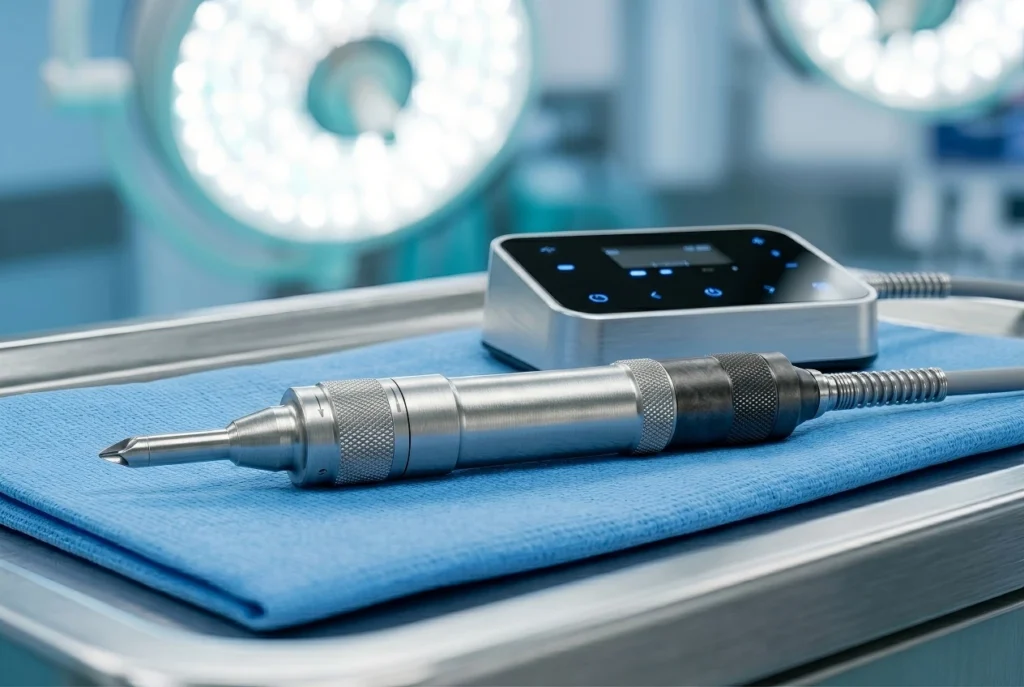
Look, if you’ve been in the medical device distribution game for more than a couple of years, you already know the drill. You bust your back building relationships with orthopedic surgeons, you take procurement managers out for expensive dinners, and finally, you get a shot at a hospital tender.
Then what happens? You either pitch a massive tier-1 brand that gives you a pathetic 10% margin and treats you like a glorified delivery driver, or you take a massive risk on a cheap overseas factory and end up sweating bullets when the handpiece dies mid-surgery.
I’m tired of seeing good distributors get squeezed out of the market. The global arthroscopy devices market hit over $5.3 billion recently (Grand View Research backed that up), but the guys doing the actual groundwork—the local agents and distributors—are seeing their profits shrink year after year.
This guide isn’t some corporate marketing piece. We are going to dig deep into the real mechanics of arthroscopy shaver wholesale, what actually makes a good system, how to protect your margins, and why switching your surgical instruments supplier might be the only way to survive the next five years.
Why Big Tier-1 Brands Are Bleeding You Dry (And Why You Let Them)
Here is a controversial take that will definitly make some corporate VPs angry: you don’t need a massive brand name on the console to win hospital contracts anymore.
A lot of distributors are terrified to pitch anything else. They think, “Well, the surgeon trained on brand X during their residency, so I have to sell brand X.” So they accept terrible commercial terms. High sales quotas. Impossible MOQs. Shrinking territories. And if you miss your quota one quarter? They pull your distribution rights and give them to the next guy.
The reality? Most of these big-name consoles and handpieces are assembled using the exact same core components that independent manufacturers use. The physics of a brushless DC motor don’t change just because you slap a blue or green logo on the aluminum casing.
Hospitals are facing massive budget cuts right now. Procurement committees are actively looking for cost-saving alternatives that don’t compromise patient safety. If you can walk into a purchasing director’s office with an Arthroscopy Shaver System that hits 8,000 RPM, has a flawless oscillation profile, and costs 30% less than the big guys… you win the bid. And your margin? It goes from a measly 10% to a very healthy 35-40%.
The Math Behind Medical Device Distribution
Let’s get into the numbers, because at the end of the day, cash flow is what keeps your warehouse open. If you want to survive in medical device distribution, you need to obsess over your Landed Cost and your Gross Profit Margin (GPM).
A lot of rookies just look at the FOB price from the factory. Big mistake.
Here is the plain text formula you should be using for every single wholesale order:
Landed Cost = (Unit Wholesale Price) + (Freight/Shipping) + (Customs Duties/Tariffs) + (Insurance) + (Quality Control/Testing) + (Cost of Capital/Financing)
If your supplier has a high defect rate, you need to add a “Headache Tax” to that landed cost. If 1 out of 10 shaver handpieces needs to be shipped back for warranty repair, your actual cost just skyrocketed because international medical equipment shipping is brutally expensive. You are shipping bio-hazardous equipment across borders, which is a logistical nightmare.
Once you have the real Landed Cost, calculate your margin:
GPM =[(Selling Price to Hospital – Landed Cost) / Selling Price to Hospital] x 100
If your GPM is sitting below 30% on capital equipment (like the shaver console) and below 50% on consumables (the blades and burrs), you are essentially working for free. You simply won’t have the financial buffer to cover your sales reps’ commissions, local marketing events, and the inevitable delayed payments from public hospitals. We all know public hospitals can take 90 to 120 days to pay an invoice. You need high margins just to float that cash.
The “Razor and Blade” Business Model
You also need to understand where the real money is made. The shaver console and the handpiece? That’s the razor. You sell it once every five to seven years. It’s a capital expenditure (CapEx) for the hospital, which means it has to go through a massive approval process.
The shaver blades and burrs? Those are the blades. That’s an operating expense (OpEx). A busy sports medicine clinic might burn through 50 to 100 blades a month.
When you negotiate an arthroscopy shaver wholesale contract, you need to secure iron-clad pricing on the consumables. Some bad suppliers will lure you in with a dirt-cheap console, but then gouge you on the replacement blades. Make sure your supplier agreement protects your margins on the recurring revenue, because that is what will pay for your kids’ college tuition.
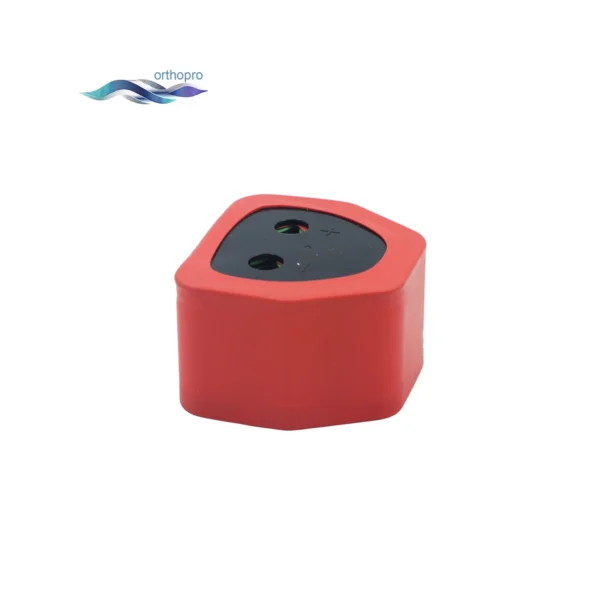
High-Performance Orthopedic Arthroscopy Shaver System for Joint Surgery & Tissue Resection – OrthoPro
Our professional orthopedic arthroscopy shaver system provides exceptional precision for joint surgery and soft tissue debridement. This advanced arthroscopy shaver system features a high-speed, low-noise motor, making the surgical shaver system ideal for knee, shoulder, and hip procedures. Enhance surgical efficiency and patient outcomes with OrthoPro’s reliable and durable orthopedic shaver.
The Tech Specs That Surgeons Actually Care About
You can’t sell a system just on price. Surgeons don’t care about your margins; they care about how the tool feels in their hand during an ACL reconstruction or a messy subacromial decompression. If you hand them a piece of crap, they will literally throw it across the operating room. I’ve seen it happen.
When you are vetting a surgical instruments supplier, you need to ask highly specific technical questions. Don’t let them just send you a glossy brochure.
1. The Motor: Brushless is Non-Negotiable
If a supplier tries to sell you a brushed motor system in 2026, laugh and hang up the phone. Brushed motors generate intense heat, they create internal carbon dust, and their lifespan is ridiculously short.
You need a high-efficiency Brushless DC (BLDC) motor. They run cooler, last exponentially longer, and provide consistent torque without the handpiece vibrating like a cheap cellphone.
2. The Torque Drop-Off Problem (The Real Test)
Speed is easy. Any cheap motor can spin a blade at 5,000 RPM in the thin air of a convention center. The real test is what happens when that blade bites into dense cortical bone or thick meniscus tissue in a fluid-filled joint.
In engineering terms, the relationship is:
Mechanical Power (Watts) = [Torque (Nm) x Speed (RPM)] / 9.55
When a cheap shaver hits bone, the RPM drops massively because the motor doesn’t have the torque to push through the resistance. The surgeon feels the blade “stall” or “chatter.” This causes tissue tearing instead of clean resection, which leads to longer recovery times for the patient.
At OrthoPro, our systems are calibrated with advanced algorithms in the control console. The millisecond the motor detects resistance, the console surges power to the handpiece, keeping the RPM rock steady. That’s the kind of tech that makes a surgeon refuse to give a demo unit back.
3. Autoclave Survival Rates
The sterile processing department (SPD) is the absolute graveyard of bad surgical power tools. Hospitals use prevacuum steam sterilization, usually hitting 134 degrees Celsius (about 273 degrees Fahrenheit) at intense pressure for 3 to 4 minutes.
Cheap handpieces have poor potting (the epoxy resin that seals the electronics) and cheap silicone O-rings. Moisture gets in after maybe 20 or 30 cycles, and the motor shorts out. Your surgeons will scream at you, and you’ll be eating the cost of a replacement. You need a system built with medical-grade titanium or high-density aluminum housings and dual-sealed ceramic bearings.
4. Suction Channel Diameter and Clogging
During joint surgery, visualization is literally everything. If the camera gets clouded by blood and debris, the surgery stops. The shaver blade doesn’t just cut; it acts as a vacuum.
If the internal suction channel of the handpiece is too narrow, or has sharp internal angles, bone chips will clog it. The surgeon then has to pull the tool out, unblock it with a guide wire, and start over. It wastes precious OR time (which costs hospitals thousands of dollars a minute). A top-tier system has a straight, wide-bore suction path that pulls tissue cleanly into the waste canister.
A Cautionary Tale: The “Factory Direct” Disaster
I want to share an anonymized story about a distributor based in South America. We’ll call him Carlos.
Carlos landed a massive government tender for 40 arthroscopy towers. To maximize his profit, he bypassed established OEM partners and went straight to a random factory he found on an online directory. The unit price was unbelievably low. He thought he hit the jackpot.
The shipment arrived. Out of the box, they looked great. But within the first three months, the nightmares started. The foot pedals (which constantly sit on wet OR floors) weren’t properly IPX8 waterproof rated. Saline solution seeped into the circuitry, causing the pedals to trigger the shavers randomly while they were just resting on the patient’s leg.
It was a massive safety hazard. The hospitals recalled all 40 units immediately. Carlos tried to contact the factory, but they suddenly stopped replying to his emails. He had no local warranty support, no spare parts, and no schematic diagrams to fix them himself. He lost the government contract, faced a massive lawsuit, and his company nearly went bankrupt.
This is the hidden cost of bad medical device distribution. You aren’t just buying metal and wires; you are buying liability.
How to Choose the Right B2B Partner
So, how do you avoid becoming Carlos? You need a supplier that actually understands the B2B distribution model, not just a factory that pumps out cheap metal widgets.
The Problem with MOQs (Minimum Order Quantities)
Massive factories want you to order 100 consoles at a time. That’s absurd for a mid-sized distributor. It ties up all your cash flow in warehouse inventory gathering dust.
You need a partner who offers tiered MOQs. At OrthoPro, we understand that you might need to buy 3 or 4 units initially as “demo” units to seed your local hospitals. Once the surgeons try them and demand them, then you place the bulk order of 20 or 50. A real partner scales with you instead of strangling your cash flow on day one.
Blade Compatibility Strategy
Here is where you make your real money. As I mentioned before, the consumables are the golden goose.
Some manufacturers lock you into their proprietary blades. This is great for them, but it can be really hard to convince a hospital to switch if they already have a massive inventory of another brand’s blades sitting on their shelves.
We engineered ourArthroscopy Shaver System to be incredibly versatile. While our OrthoPro blades offer the absolute best performance lock-in, the handpiece chuck is designed to be highly compatible with standard industry blade hubs (like Stryker or Linvatec style hubs). This makes it infinitely easier for you to drop our system into a hospital without forcing them to throw away fifty thousand dollars of their existing consumable stock. You win the capital equipment bid first, then slowly transition them to your blades.
Supply Chain Transparency
You need to know lead times. If you win a bid and the delivery is stipulated at 45 days, but your supplier takes 60 days to manufacture, you pay massive penalties to the hospital.
| Supplier Type | Average Lead Time | Defect Rate | After-Sales Support | Distributor Margin Potential |
| Big Tier-1 Brands | 30-90 Days | < 1% | Strict, Expensive | Low (10-15%) |
| Cheap Online Factories | 15-30 Days | 8-15% | Non-existent | High (but erased by returns) |
| OrthoPro (Professional Partner) | 14-30 Days | < 1% | Dedicated B2B Support | High (35-50%+) |
Table: Evaluating the reality of supply chain partners in the medical device sector.
The OrthoPro Advantage: Why We Get It
Look, we didn’t just wake up yesterday and decide to start making medical tools. The team behind OrthoPro has been deeply embedded in orthopedic engineering and global supply chains for years. We know exactly what it feels like when an OR nurse is yelling on the phone because a piece of equipment failed mid-procedure.
We built our brand specifically to be the backend powerhouse for international distributors.
- We handle the QA so you don’t have to: Every single handpiece goes through rigorous torque testing, vibration analysis, and simulated autoclave cycling before it ever gets put in a shipping box. We don’t let our distributors act as our beta testers.
- Marketing & Channel Support: We don’t just ship you a pallet of boxes and say “good luck bro.” We provide high-res imagery, technical whitepapers, and clinical comparison data so your sales reps actually have ammunition when they walk into a hospital boardroom.
- Modular Repair Kits: Instead of shipping a whole handpiece back across the world, we can supply you with internal modular replacement parts. We train your local biomedical techs on how to swap a motor cartridge or a seal ring in 15 minutes. This keeps your hospitals running and makes you look like a superstar to the local surgeons.
How to Win Your Local Tenders
I want to give you a quick playbook on how to actually win bids against the legacy brands using our equipment.
Phase 1: The Trojan Horse Demo
Don’t walk in pitching a full system replacement. Find the pain points. Usually, it’s handpiece weight or suction clogging. Drop off an OrthoPro system for a free two-week trial. Tell the lead surgeon, “Just try this on your next three knees. It’s 150 grams lighter than what you’re using.” Once they feel the difference in wrist fatigue, they do the selling for you.
Phase 2: The CFO Pitch
While the surgeon is falling in love with the tool, you go to the hospital CFO. You show them the Landed Cost comparison. You show them how our universal blade compatibility means they don’t have to scrap their current inventory. You show them a 5-year Total Cost of Ownership (TCO) that is 30% lower than the Tier-1 brand.
Phase 3: The Service Level Agreement (SLA)
Big brands charge insane annual maintenance contracts. Because our system is so durable and we provide modular parts, you can offer a much more aggressive SLA. You guarantee 24-hour swap-outs because you actually have the margin to keep buffer stock in your local warehouse.
Stop Leaving Money on the Table
The days of making easy money simply by being a middleman are long gone. Hospital budgets are tighter than ever, and local competition is vicious. If you want to build a sustainable, highly profitable distribution business, you need to own your supply chain and partner with a manufacturer that actually protects your margins instead of eroding them.
You definitly don’t want to be stuck pushing outdated tech, and you realy don’t want to be the guy apologizing to an angry orthopedic surgeon for a broken tool.
It’s time to upgrade your portfolio.
You need a system that performs like a $40,000 Tier-1 unit but gives you the wholesale pricing flexibility to win every single bid you enter.
Ready to take over your local market?
Don’t just take my word for it. Let’s look at the actual numbers for your specific region.
- Head over to our website at OrthoPro to see our full line of trauma and sports medicine gear.
- Check out the detailed engineering specs of theArthroscopy Shaver System.
- Reach out to our B2B team directly via our Contact Us page or shoot an email straight to info@orthopro.mx.
Tell us what territory you cover and what your current hospital pipelines look like. We’ll send you a confidential wholesale price list and we can talk about getting a demo unit shipped out to your top surgeon next week.
Stop working for the big brands. Start building your own empire.
FAQ: What Real Distributors Ask Us
Q: Do you offer exclusive territory rights?
We do, but we don’t hand them out on day one. We usually start with a non-exclusive pilot agreement. Once you hit a pre-agreed sales volume target in your region, we are more than happy to lock down that territory for you. We want our distributors protected, but we also need partners who actually move volume.
Q: Are your systems CE marked or FDA cleared?
Regulatory compliance is everything in medical device distribution. Our manufacturing facilities are ISO 13485 certified, and our core arthroscopy shaver systems carry CE marks, making them ready for import into the vast majority of global markets. If your specific country’s Ministry of Health requires additional localized documentation, our regulatory team will work with you to provide the necessary technical files.
Q: What happens if a handpiece motor completely fails within the warranty period?
If it’s a verified manufacturing defect and not abuse (like dropping it in a bucket of bleach—yes, we’ve seen that), we replace it. Period. We don’t make you wait three months for a factory repair. We authorize a replacement from your local buffer stock, and we credit your account or ship you a new unit on your next wholesale order. Your surgeons stay happy, and your reputation stays intact.