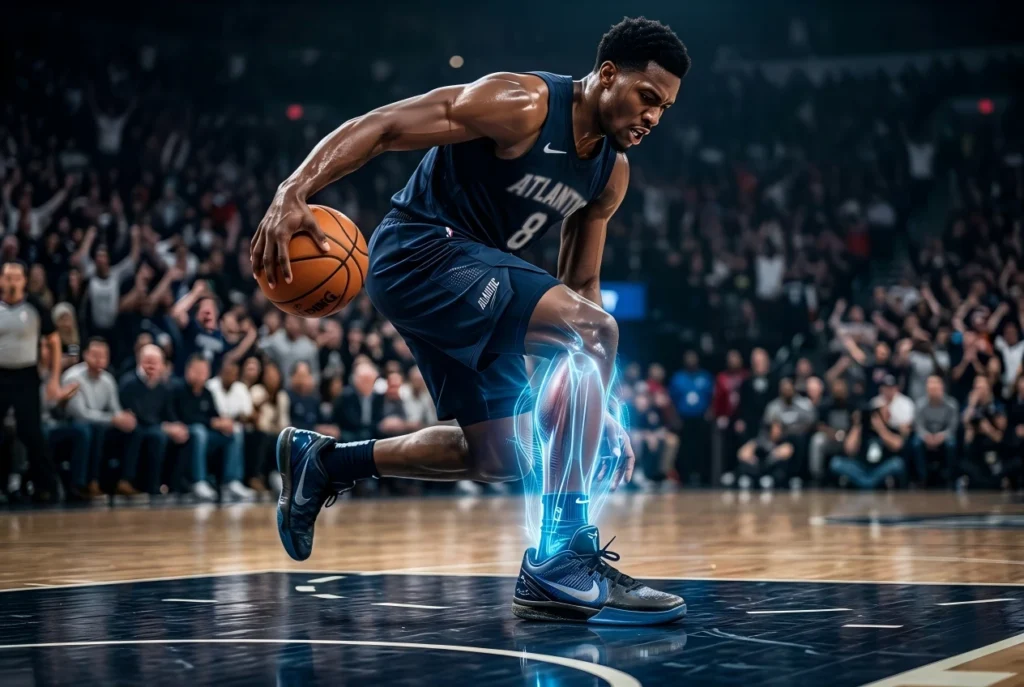
Sitting courtside or even just watching this NBA regular season on a massive screen, you can see the game has completely mutated. These new rookies coming into the league aren’t just tall guys anymore; they are absolute freaks of nature. You’ve got 6-foot-10 forwards moving with the lateral quickness of a point guard, driving to the paint, and launching themselves into the air with 45-inch verticals. It’s breathtaking basketball, sure. But if you work in medical device sales or distribution, watching these guys land off-balance after a high-speed collision makes you wince. You know exactly what kind of catastrophic damage is happening under the skin.
When a 240-pound athlete comes crashing down from 4 feet in the air and all that kinetic energy transfers into a single planted leg, things break. And we aren’t talking about cute little hairline fractures. We are talking about brutal, comminuted long bone fractures that require immediate, complex surgical intervention.
If you supply hardware to hospitals and orthopedic surgical centers, you know that handing a surgeon a basic, outdated compression plate for a high-impact sports injury is a recipe for disaster. The stakes are just way too high. These athletes have multi-million dollar contracts and their recovery timeline is measured in weeks, not years. You need to be sourcing the absolute best sports fracture plates on the market, which means you need to align your wholesale business with a world-class Titanium locking plate manufacturer.
Let’s dig into the reality of these high-impact trauma cases, the biomechanics of why standard hardware fails miserabley, and how you can optimize your wholesale procurement strategy to dominate this high-margin surgical niche.
The Brutal Physics of Pro Basketball Injuries
I’ll be honest, alot of people outside the medical field think of basketball as a low-impact sport compared to football or hockey. But the data tells a totally different story.
If you look at the 17-year epidemiological study published in the Sports Health journal covering NBA injuries, lower extremity trauma accounts for roughly 62% of all injuries in the league. Now, sure, a massive chunk of those are severe ankle sprains. But the season-ending, career-threatening injuries? Those are the high-energy fractures of the tibia, fibula, and sometimes the femur.
Think about the physics of a fast-break chase-down block. The player is sprinting at top speed, jumps, contorts in the air, and gets clipped. The landing force isn’t just vertical; there’s a massive rotational component. When the foot plants and the knee twists, the torque applied to the tibia is insane.
Here is a simplified way to look at the structural failure of a human long bone under these extreme conditions. Forget fancy LaTeX formatting, here’s the plain text formula for the bending stress that snaps a player’s leg:
Bending Stress (σ) = (Bending Moment × Distance from neutral axis) / Area Moment of Inertia
Basically, when the bending moment (the twisting/snapping force from that awkward landing) combined with the player’s body weight creates a stress that exceeds the bone’s ultimate tensile strength, the bone fails. And because of the speed and force involved, the bone doesn’t just crack. It shatters into multiple fragments, known as a comminuted fracture.
When a bone is in five different pieces, standard surgical fixation simply does not work. There is no solid bone left to compress against.

3.5mm LCP Pediatric Hip Plate | Proximal Femoral Osteotomy Implant for DDH & Deformity Correction
The 3.5mm LCP Pediatric Hip Plate is precision-engineered for stable fixation in pediatric proximal femoral osteotomies. Designed to treat Developmental Dysplasia of the Hip (DDH) and fractures, this pediatric hip locking plate combines angular stability with anatomical contouring. Our 3.5mm LCP pediatric hip system ensures optimal bone healing and precise alignment for young patients.
My Controversial Take: Standard Plates Should Be Banned for Pro Athletes
I know some old-school surgeons might disagree, but I strongly believe that using conventional non-locking stainless steel plates on elite athletes borders on malpractice today.
Let’s look at how standard plates actually work. They rely on friction. The surgeon drills a hole, inserts a screw, and tightens it so the plate is forced hard against the bone surface. That friction is what holds the broken pieces together. But in a high-impact NBA trauma scenario where the bone is pulverized, tightening a screw into crushed bone is like trying to screw a heavy shelf into wet drywall. The screw will strip right out.
Even if the surgeon manages to get a bite, the stainless steel plate is pressing so hard against the periosteum (the outer layer of the bone that carries the blood supply) that it actually chokes off the blood flow. No blood flow means delayed healing, or worse, non-union where the bone never heals at all. And if you’re a pro athlete, a delayed union means your career might be over.
This is exactly why the transition to a premium trauma plate system B2B model is critical for distributors. Locking plates completely change the mechanical game.
With a locking plate, the head of the screw actually has tiny threads on it. Those threads lock directly into matching threads on the plate itself. The plate doesn’t even need to touch the bone. It acts as an internal fixator, hovering just above the bone surface, preserving that crucial blood supply while providing a wildly stable, fixed-angle construct. The load bypasses the shattered bone entirely and runs straight through the titanium plate.
The Material Difference: Why Titanium is Non-Negotiable
If you are currently buying orthopedic internal fixation wholesale from generic overseas suppliers to save a few bucks, you need to check the metallurgy reports. Not all metal is the same.
Most cheap plates are made from 316L stainless steel. It’s strong, sure, but it’s incredibly stiff. Human bone isn’t completely rigid; it naturally flexes slightly when you walk or jump. If you slap a hyper-stiff steel plate onto a healing bone, the plate takes 100% of the physical load. Because the underlying bone isn’t feeling any stress, the body stops sending calcium to it. The bone literally starts to weaken and dissolve away. This is a nightmare scenario called “stress shielding.”
This is why top-tier distributors only work with a dedicated Titanium locking plate manufacturer. Specifically, you want plates forged from Ti-6Al-4V (Titanium, 6% Aluminum, 4% Vanadium).
Titanium has a modulus of elasticity that is significantly closer to natural human bone. It flexes just enough to allow micro-motion at the fracture site, which actually stimulates the body to build new, thicker bone (callus formation). Plus, titanium is insanely biocompatible. It integrates with the tissue rather than being rejected as a foreign body.
When you sit down with a hospital purchasing committee and explain that your titanium systems promote faster healing and prevent stress shielding in their million-dollar athletes, price suddenly becomes a secondary conversation.
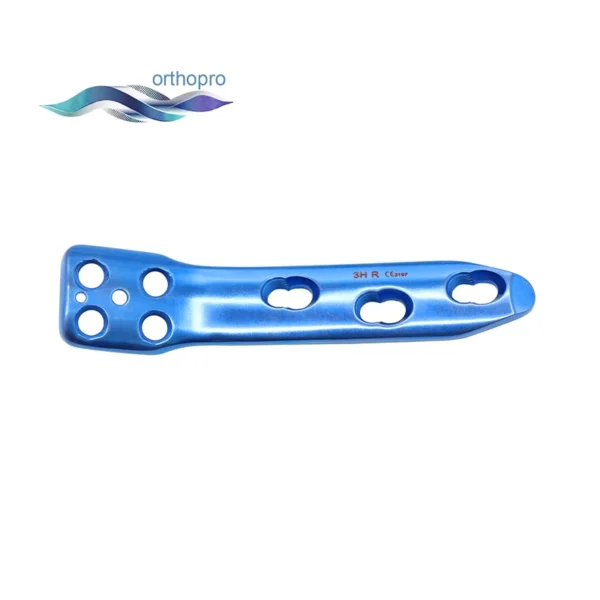
Distal Medial Femoral Osteotomy Locking Plate | Titanium MDFO Plate for Varus Deformity Correction & Knee Realignment Surgery
The Distal Medial Femoral Osteotomy Locking Plate is precision-engineered for varus deformity correction and knee realignment procedures. This high-performance MDFO locking plate provides rigid internal fixation for medial distal femur osteotomy cases. OrthoPro’s distal medial femoral plate features a low-profile design to ensure superior surgical outcomes and minimal soft tissue irritation.
Comparing the Hardware: The Distributor’s Cheat Sheet
When you are training your sales reps to pitch these systems to orthopedic department heads, they need to know the differences cold. I usually give my guys a quick matrix to help them handle objections. Here is a breakdown you can use:
| Feature | Cheap Stainless Steel Standard Plate | Premium Titanium Locking Plate System | Why the Surgeon Cares |
|---|---|---|---|
| Fixation Method | Friction against bone | Fixed-angle screw-to-plate locking | Locking prevents hardware failure in soft, crushed bone. |
| Material Stiffness | Very High (Rigid) | Moderate (Matches bone elasticity) | Titanium prevents stress shielding and encourages bone growth. |
| Blood Supply Impact | Destroys periosteal blood flow | Preserves blood flow (hovering effect) | Faster healing time, lower risk of dead bone (necrosis). |
| Anatomical Contouring | Often requires manual bending in OR | Pre-contoured to specific bones | Saves 30+ minutes of surgical time. Less time under anesthesia. |
| Cold Welding Risk | High (screws can get stuck forever) | Extremely low (machined tolerances) | If hardware needs removing later, titanium screws back out cleanly. |
The Realities of B2B Procurement in Orthopedics
Let’s shift gears from the clinical side to the business side. Because at the end of the day, you are running a B2B distribution company, and inventory management will make or break you.
Procuring high-end orthopedic trauma gear is notoriously difficult. Fractures are completely unpredictable. You don’t schedule a crushed tibia. It happens at 10 PM on a Tuesday during a playoff game, and the hospital calls you at 6 AM on Wednesday demanding three different sterile trays in the OR by noon.
If your manufacturer has terrible lead times, or if they constantly backorder crucial screw sizes, you lose the account. Period.
I remember a few years ago, a mid-sized distributor in Florida scored a massive contract with a regional trauma center. The guy thought he was brilliant because he found a random factory online selling “locking plates” for dirt cheap. He stocked up his warehouse and brought the first set to a major surgery.
Disaster struck. The machining tolerances on the cheap plates were garbage. When the surgeon tried to lock a 3.5mm screw into the plate, the threads mismatched and jammed halfway down. It’s called “cold welding”—the metal literally fuses together. The surgeon couldn’t get the screw in, and he couldn’t back it out. The rep was sweating bullets in the corner of the OR while the surgeon had to use bolt cutters inside the patient’s leg to remove the defective implant. That distributor lost the hospital contract the very next day.
You cannot cut corners on this stuff.
When you are looking for a reliable Titanium locking plate manufacturer, you need to look beyond just the product. You need to look at their manufacturing capacity, their quality control processes (ISO 13485 certification is bare minimum), and their understanding of wholesale logistics.

Acromion of Scapula Locking Plate | Anatomic Titanium Shoulder Fracture Fixation Implant
The Acromion of Scapula Locking Plate is a specialized orthopedic implant engineered for the stable fixation of acromion and scapular spine fractures. Featuring a pre-contoured anatomic design, this Acromion of Scapula Locking Plate minimizes intraoperative bending and soft tissue irritation. Our scapula locking plate system ensures superior angular stability, promoting rapid healing in complex shoulder trauma cases.
Building a Winning Portfolio with OrthoPro
If you want to walk into a hospital and confidently tell the chief of surgery that you have the exact hardware needed to put an NBA player back together, you need a partner that actually understands the stakes.
This is where working with a brand like OrthoPro completely changes your business trajectory. They aren’t just stamping out generic metal plates; they are engineering sophisticated anatomical trauma systems designed specifically for complex fractures.
Their catalog covers everything from distal radius systems to complex tibial plateau locking plates. Every single piece is machined from high-grade titanium with flawless thread tolerances. The screw heads lock in smoothly every single time, giving the surgeon that tactile “click” they want to feel.
But from a B2B perspective, what really sets them apart is how they handle their distributor relationships. They know that you need robust inventory without destroying your cash flow. They offer highly competitive wholesale pricing models that allow you to effectively manage hospital consignment agreements. When you can leave a massive, fully-stocked trauma tray sitting in a hospital’s sterile core without tying up all your operating capital, you win more bids.
And let’s talk about the instruments. A plate is useless if the surgeon doesn’t have the right tools to install it. The instrumentation sets from OrthoPro are incredibly intuitive. Color-coded drill bits, perfectly calibrated torque limiters, and ergonomic drill guides mean the surgery goes faster. Surgeons love speed. When your trays make their life easier, they will specifically request your products for every case.
Stop losing deals because your current supplier’s catalog is thin or their quality is inconsistent. The market for treating high-impact sports injuries is exploding, and the distributors who secure the best hardware are the ones who are going to dominate their territories over the next decade.
If you are ready to upgrade your product offerings and secure better margins, you need to have a conversation with them. Hit up their Contact Page to request a full catalog, or just skip the form and shoot an email straight to info@orthopro.mx. Their B2B team is sharp, they understand distributor challenges, and they can send out sample sets so you can actually feel the machining quality yourself before you commit to a major wholesale order.
1. Why do surgeons specifically request “anatomical” locking plates for sports injuries?
Traditional straight plates require the surgeon to use heavy bending irons in the OR to manually shape the metal to match the curve of the patient’s bone. This wastes a ton of surgical time and actually weakens the metal at the bend points. Premium anatomical sports fracture plates are pre-contoured at the factory based on thousands of CT scans to perfectly match the natural curve of bones like the distal fibula or clavicle right out of the box. It’s faster, safer, and infinitely stronger.
2. How does the B2B consignment model work for orthopedic internal fixation wholesale?
Consignment is the lifeblood of trauma device sales. Hospitals generally refuse to buy a $30,000 tray of plates and screws just to keep it on the shelf, because they don’t know what sizes they will need until a patient crashes through the ER doors. As a distributor, you place the fully stocked tray in the hospital for free. When a surgery happens, the nurse logs which specific plates and screws were used, and you only invoice the hospital for those exact consumed items. Then, you order replacements from your manufacturer to restock the tray. Having a supplier with fast lead times and solid B2B pricing is the only way to make this cash-intensive model work.
3. Is titanium really that much better than stainless steel, or is it just a marketing gimmick?
It is absolutely not a gimmick; it’s basic cellular biology and physics. Titanium (specifically Ti-6Al-4V) has a much lower modulus of elasticity than stainless steel, meaning it bends slightly under pressure. This microscopic flexing prevents “stress shielding” by allowing the healing bone to share the load, which stimulates natural bone regeneration. Plus, titanium is highly resistant to corrosion in the human body and doesn’t trigger the nickel allergies that some patients experience with cheaper stainless steel implants. If you are supplying high-end accounts, titanium is the only acceptable option.