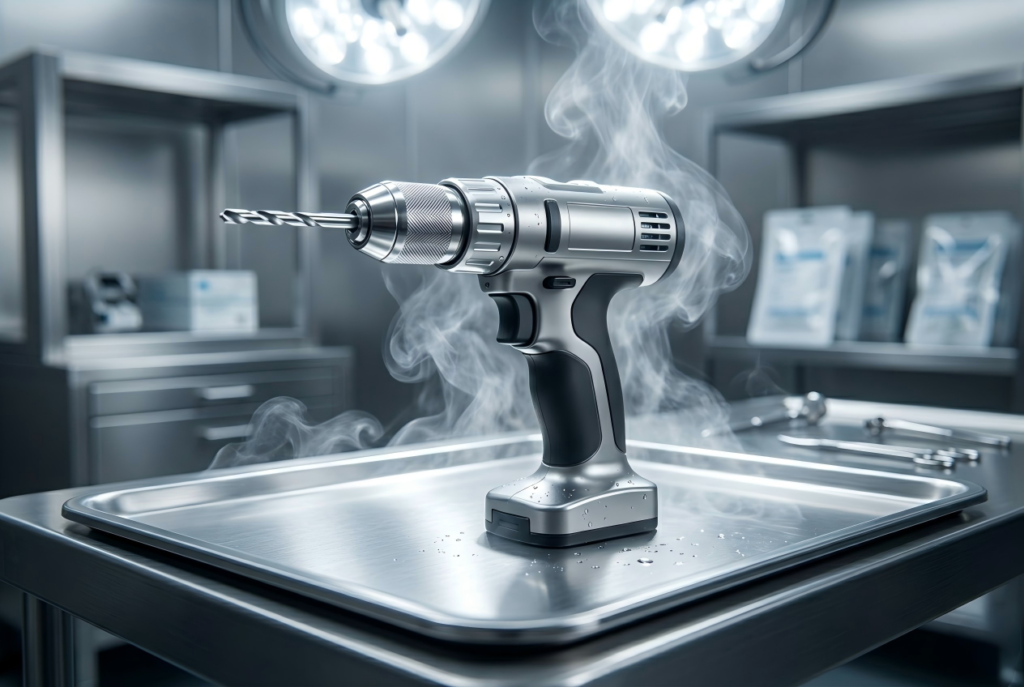
Look, let’s get something straight right off the bat. When NASA launches the Artemis II mission and sends a crew back to loop around the moon, most people are staring at the rocket fire. They’re thinking about the vast emptiness of space, the glory, the history.
But if you’re a procurement manager for a massive hospital network in Bogota, a distributor in Manila, or an engineer designing surgical equipment, you shouldn’t be looking at the rocket. You should be looking at the life support pumps and the internal actuation motors of the Orion spacecraft.
Why? Because the engineering paranoia that goes into keeping an astronaut alive in a vacuum is the exact same engineering paranoia required to build a decent High-speed surgical drill B2B buyers can actually trust.
I talk to hospital procurement directors all the time. Alot of them are exhausted. They are tired of paying a 600% markup for legacy American or German surgical drills just to get a famous logo on the side of the battery casing. And honestly, I don’t blame them. The open secret in this industry—the one that gets people at trade shows really mad when I say it out loud—is that a lot of those expensive Western brands are sourcing their internal components from the exact same manufacturing hubs in Asia that everyone else uses.
So let’s strip away the marketing fluff and talk about what actually matters when you are drilling into a human femur. We’re going to talk about extreme environments, the physics of brushless motors, and why the old bias against Chinese-made medical instruments is not just outdated—it’s financially reckless.
The Artemis II Connection: Surviving Hell
NASA has a problem with the Artemis II mission. Once Reid Wiseman and his crew are 250,000 miles away from Earth, they can’t call tech support if a motor in their air scrubber fails. The equipment has to handle insane vibration on launch, absolute zero temperatures in shadow, and extreme heat in direct sunlight.
In the orthopedic world, we have our own version of space vacuum. It’s called the hospital sterilization department.
If you want to destroy a piece of electronics, putting it through an autoclave is basically the most efficient way to do it. You take a complex, highly calibrated mechanical device, throw it into a steel chamber, suck all the air out to create a vacuum, and then blast it with 135°C (275°F) pressurized steam. And you do this three or four times a day.
Standard motors will just die. The moisture penetrates the housing, rusts the bearings, degrades the coil insulation, and shorts out the electronics.
This is exactly why an autoclavable surgical motor is arguably one of the hardest things to engineer on the planet. To survive this, we at OrthoPro have to borrow from aerospace engineering. We use highly specialized potting compounds—basically industrial-grade resins—to completely seal the electronic stators. The rotor magnets are coated in rare-earth defensive layers. The housing isn’t just cheap metal; it’s heavily anodized aerospace-grade aluminum or titanium.
When you buy a drill for your trauma ward, you aren’t paying for its ability to cut bone. Any $50 hardware store drill can cut bone. You are paying for its ability to survive the autoclave 1,000 times without failing mid-surgery.

Advanced High-Speed Orthopedic Surgical Drill System | Medical Bone Drill Power Tools for Spine & Neurosurgery – OrthoPro
The OrthoPro high-speed orthopedic drill ensures absolute precision in spine and neurosurgery. This advanced high-speed surgical drill delivers stable torque, brushless motor efficiency, and superior control. Our autoclavable high-speed orthopedic drills are ideal for global B2B distributors.
Aerospace vs. Medical Grade: A Parameter Smackdown
To put this into perspective, let’s look at a quick comparison between what spacecraft components endure versus what a top-tier medical drill goes through.
| Parameter | Spacecraft Actuator Motor (e.g., Orion) | Premium Medical Bone Drill |
|---|---|---|
| Operating Environment | Vacuum to 1 atm, Microgravity | Blood, saline, bone fragments |
| Temperature Extremes | -150°C to +120°C (External) | 20°C (OR) up to 135°C (Autoclave) |
| Vibration Tolerance | Massive low-frequency launch vibration | High-frequency cutting vibration, accidental drops on hard OR floors |
| Maintenance Cycle | Zero maintenance post-launch | Must be field-strippable and sterilized daily |
| Motor Type | Sensorless Brushless DC (BLDC) | High-Torque Brushless DC (BLDC) |
Notice something? The medical drill actually has to endure a harsher daily cycle. The spacecraft motor gets beaten up on launch but then sits in a relatively clean vacuum. The surgical drill gets covered in biological matter, dropped by an exhausted resident at 3 AM, and then cooked in high-pressure steam.
Brushless Motors: The Heart of the Beast
If you’re still buying brushed motors for your surgical teams, you need to stop. Seriously, you are burning money and risking patient safety.
A traditional brushed motor uses physical carbon brushes that drag against a commutator to transfer electrical current. The friction generates heat, wears down the brushes, and creates micro-dust. In a sterile OR, carbon dust is a nightmare. Plus, brushes limit your RPM and kill your torque when under heavy load.
Modern orthopedic power tools rely on Brushless DC (BLDC) motors. Since there’s no physical contact transferring the power, you eliminate the friction. This means zero carbon dust, massive torque at low speeds (crucial for reaming), and screaming fast RPMs for K-wire driving or cranial drilling.
Let’s look at a bit of the math we use when testing these things, without making it too much like a college textbook.
The mechanical power of a surgical drill is determined by its torque and speed.
The formula we use is simply:Power (Watts) = Torque (Newton-meters) × Speed (RPM) / 9.55
If a surgeon is reaming the intramedullary canal of a tibia, they need high torque but low speed to prevent thermal necrosis (cooking the surrounding bone tissue, which kills the bone cells and stops healing). If they are driving a Kirschner wire, they need low torque but insanely high speed to puncture the cortical bone cleanly without shattering it.
An advanced brushless motor, managed by a smart internal control board, can adjust the current dynamically. When the drill bit hits a dense patch of cortical bone and the RPMs start to drop, the micro-controller senses the resistance and instantly dumps more amperage into the coils, ramping up the torque to push through. It’s like a car automatically downshifting when you hit a steep hill.
As a leading orthopedic power tool manufacturer, we don’t just guess at these parameters. We calibrate the algorithms so the surgeon feels a smooth, continuous cutting action, no matter what the bone density is doing.
The “Made in China” Elephant in the Room
Alright, let’s tackle the controversy. If you are a B2B buyer in South America, the Middle East, or Southeast Asia, you probably have older surgeons on your board who insist, “We can only buy Swiss or American instruments. Chinese stuff breaks.”
That might have been true in 1998. It is objectively false today.
The reality of global manufacturing is that the precision CNC machines cutting the titanium gears for our drills in China are the exact same five-axis German and Japanese CNC machines used by the legacy brands. The 316L stainless steel and the Ti-6Al-4V titanium alloys come from the same global supply chains.
The difference is purely in the business model. The legacy brands have massive marketing overhead, giant corporate structures, and layers of regional middlemen. They take a beautifully engineered piece of equipment and mark it up so high that a public hospital in Mexico has to wait two years for a budget approval just to buy three drills.
When you go looking for a medical bone drill wholesale partner, you are essentially bypassing the marketing tax.
We use the exact same high-temperature bearings. We use the same autoclave-safe silicone seals. We use advanced lithium-ion battery chemistries that won’t suffer thermal runaway when exposed to high heat. You get aerospace-level parameter superiority—insane torque, true 135°C sterilization resistance, and battery cells that last for hundreds of cycles—at a price point that actually allows you to equip your entire surgical wing instead of just one operating room.

High-Performance Orthopedic Bone Drill for Trauma Surgery | Precision Surgical Power Tools for Bone Drilling and Fixation | OrthoPro Medical Equipment
The OrthoPro orthopedic bone drill is a high-precision surgical power tool designed for efficient bone drilling in trauma and joint replacement surgeries. This orthopedic bone drill provides stable torque and variable speed control to ensure surgical accuracy. As a leading orthopedic bone drill, it features a fully autoclavable design and ergonomic handling to meet the rigorous demands of modern operating rooms.
Anonymized Case Study: The Bogota Turnaround
I want to share a story about a client we worked with recently. For obvious reasons I won’t name the hospital, but it’s a massive Level 1 trauma center in South America. They handle everything from motorcycle crashes to complex joint reconstructions.
They had a fleet of about 15 drills from a very famous European brand. The problem? Their sterilization staff was overworked. These European drills required a very delicate, multi-step teardown process before autoclaving. If you messed it up slightly, moisture would get into the battery casing.
The hospital was blowing over $40,000 a year just on repair fees and replacement batteries. Worse, they had weeks where 5 out of their 15 drills were shipped off to a service center in another country, leaving their surgeons scrambling and delaying critical trauma cases.
The head of procurement finally got fed up and reached out to our contact team.
They were skeptical at first. We sent them two of our heavy-duty trauma drills as a trial. We told them: don’t baby these things. Give them to your busiest trauma surgeons and let your sterilization guys run them through the standard rapid autoclave cycles.
Three months later, the results were in. Our drills survived over 250 autoclave cycles each without a single hiccup in motor performance. The brushless motors maintained their torque, the batteries held their charge, and the chucks didn’t seize up.
Why did ours survive when the European ones died? Because we design for reality. We know sterilization techs don’t have 45 minutes to meticulously clean a single tool. We designed our housings with fewer complex seams, double-sealed the internal motor compartments, and used a more robust locking mechanism on the battery casing that clicks in with a definitive, physical snap so you know the O-ring is engaged.
They ended up replacing their entire fleet with our tools. They saved about 60% on the initial capital expenditure compared to buying new European models, and their maintenance downtime dropped to virtually zero. That is the power of finding the right orthopedic power tool manufacturer who prioritizes engineering reality over brand prestige.
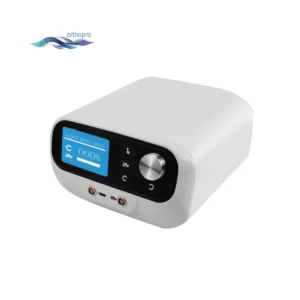
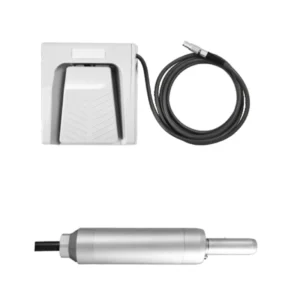
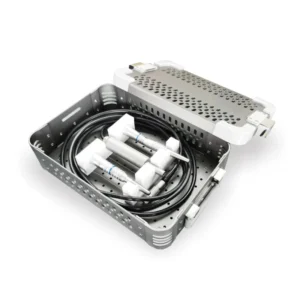

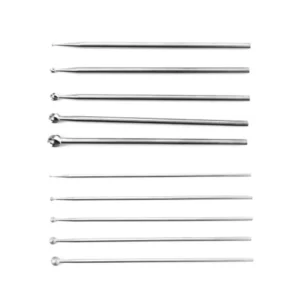
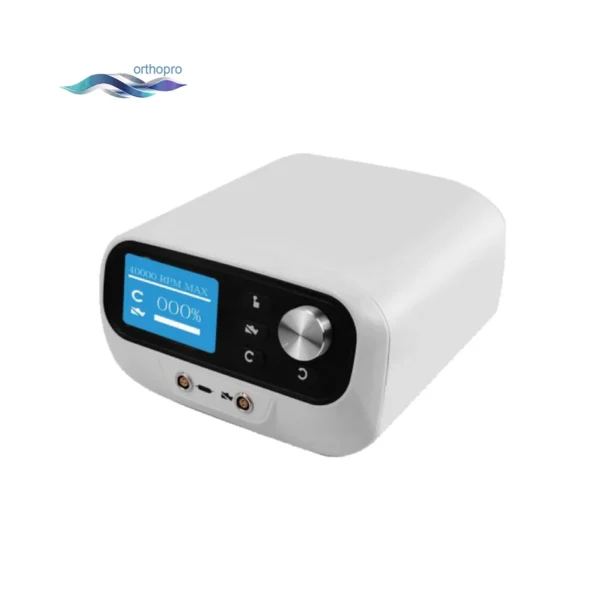

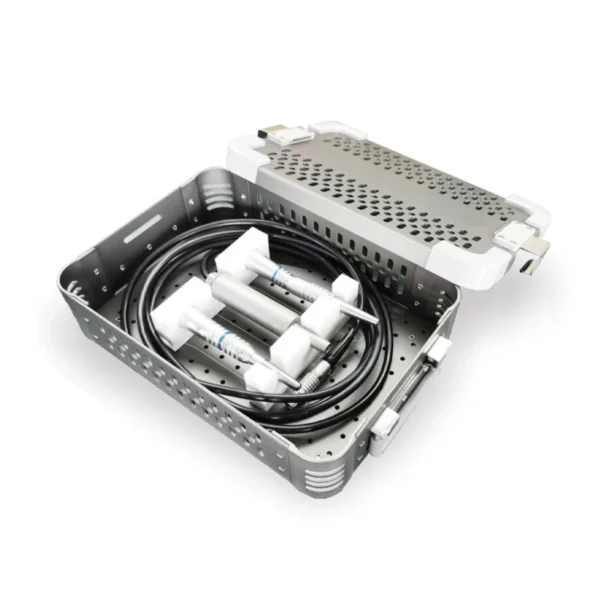
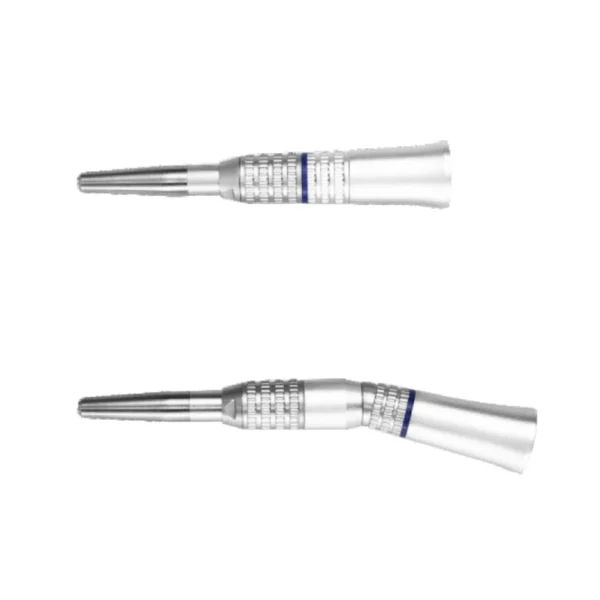
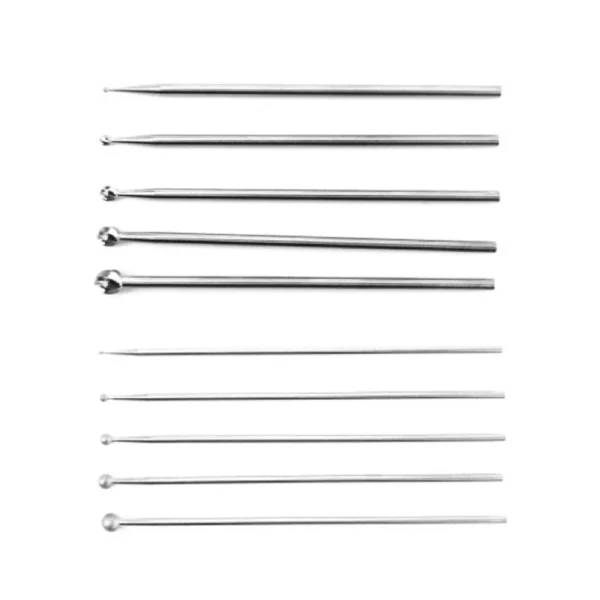
High-Performance Orthopedic High-Speed Drill for Neurosurgery & Spine Surgery | Professional Medical Power Tools for Hospital Procurement
Our Orthopedic High-Speed Drill is a premium surgical power tool designed for precision in neurosurgery and spinal procedures. This high-performance orthopedic high-speed drill offers stepless speed control and high torque for efficient bone cutting. As a reliable high speed orthopedic drill system, it ensures patient safety and clinical excellence.
Specs That Actually Matter in the OR
If you are a buyer, you need to look past the glossy brochures and ask hard questions about the engineering. Here are the parameters you actually need to care about:
- Cannulation Diameter: If you are doing intramedullary nailing, your drill needs a large enough hollow channel (cannulation) to pass a guide wire through. If the specs say 3.2mm or 4.2mm, make sure that tolerance is tight. A wobbly guide wire leads to an off-center ream.
- Battery Potting: Lithium-ion batteries hate heat. If an autoclave hits them, they die. So, the battery housing needs an absolute thermal and moisture barrier. We use advanced insulating polymers to shield the cells. You should ask your supplier exactly how their batteries are shielded against 134-135°C steam.
- Ergonomic Center of Gravity: A trauma drill is heavy because it has a big motor and a big battery. If the center of gravity is off, the surgeon’s wrist is going to burn out after a 4-hour procedure. The battery needs to balance the weight of the motor and chuck perfectly in the hand.
- Variable Speed Trigger Linearity: It sounds minor, but it’s huge. When a surgeon pulls the trigger, the acceleration of the drill needs to be perfectly linear. If it jumps from zero to 1000 RPM too fast, the drill bit will skip off the bone and plunge into soft tissue. Hall-effect sensors in our brushless motors ensure the RPMs ramp up exactly as the surgeon’s finger demands.
Don’t Let Your OR Run on Outdated Tech
Just like NASA wouldn’t send astronauts to the moon using the same computer chips they used in the 1960s, your surgeons shouldn’t be fighting with heavy, underpowered, brushed-motor drills that die every time they get sterilized.
The medical device industry is shifting. The smart money in B2B procurement is moving away from the bloated legacy brands and partnering directly with manufacturers who provide aerospace-grade parameter superiority.
Whether you are looking to outfit a new orthopedic clinic, upgrade your hospital’s trauma center, or become a regional distributor with a product line that actually works and generates real margins, we need to talk.
Stop throwing your budget down the drain on repair fees and overpriced logos. Give your surgical teams the high-torque, autoclavable tools they actually need to operate safely and efficiently.
Want to see our full spec sheets or get a wholesale quote? Shoot us an email directly or head over to the OrthoPro homepage to see the tech for yourself. Let’s upgrade your OR.
Frequently Asked Questions (FAQ)
1. How does your autoclavable surgical motor actually survive 135°C without degrading?
It comes down to aggressive material science and sealing tech. We use a combination of specialized O-rings, aerospace-grade potting resins that encapsulate the delicate electronics, and hermetically sealed brushless motor casings. The steam simply cannot reach the copper coils or the microchips. As long as you follow standard sterilization protocols, the motor is practically bulletproof against moisture.
2. We’ve had issues with Chinese batteries dying after a few months. How is your wholesale medical bone drill different?
I hear this all the time, and it usually happens when people buy from cheap tier-3 factories that use unbranded, low-grade battery cells. We don’t mess around with power. We source premium, high-discharge lithium or Ni-MH cells (depending on the specific tool requirement) designed specifically to handle rapid current draws without overheating. Plus, our proprietary battery housings have thermal barriers to protect the cells during sterilization.
3. As a B2B buyer, if I order a batch of high-speed surgical drills, what kind of after-sales support do you provide?
We understand that equipment downtime is unacceptable in a hospital. While our defect rate is insanely low due to our CNC precision, if something does go wrong, we provide comprehensive technical support. We supply detailed teardown manuals, spare parts kits (like extra chucks or O-rings), and direct engineering support to your local maintenance teams so repairs can be done on-site without shipping the drill across the ocean.
4. Are brushless motors really that much better for orthopedic surgery?
Night and day. Brushed motors create internal friction, generate heat, and produce carbon dust. Brushless motors (BLDC) use electronic commutation. This means they run significantly cooler, last about 5 times longer, and can deliver instant, massive torque even at very low RPMs—which is absolutely vital when a surgeon is tapping a bone or reaming a dense femur.