Building a factory for medical devices from scratch today is basically financial suicide.
I’ve seen distributors and regional medical brands try it. They think, “We have a great sales network, why not make the tools ourselves and keep all the margin?” Three years and millions of dollars later, they’re stuck in regulatory hell, their prototypes keep failing heat tests, and they haven’t sold a single unit.
The smartest players in the orthopedic and trauma sectors aren’t building factories. They are leveraging OEM medical power tools and establishing a medical tool private label.
Look, let’s be real. The big multinational brands are squeezing regional distributors. They cut your margins, dictate your sales targets, and if you miss them by a fraction, they pull your distribution rights. The only way out of this rat race is owning your brand. But you don’t need to own the CNC machines to own the brand.
In this breakdown, I’m going to rip apart how the private label market actually works in orthopedics, the math behind sourcing a custom medical bone drill, and why some suppliers will absolutly ruin your reputation if you aren’t careful.
The Dirty Little Secret of the Medical Device Market
Here is a controversial opinion that most big manufacturers hate admitting: the gap in actual clinical performance between top-tier global brands and high-quality ODM surgical saws is shrinking to almost zero.
A brushless motor spinning at 40,000 RPM in a neurosurgical mill doesn’t care whose logo is laser-etched on the outside. What matters is the torque consistency, the heat dissipation during continuous use, and wether it survives 500 cycles in a 135°C steam autoclave.
According to market data from Grand View Research, the global medical power tools market was valued at over $1.5 billion in 2022 and is expanding fast. A massive chunk of this growth isn’t coming from the big four holding a monopoly; it’s coming from agile, regional brands using OEM and ODM models.

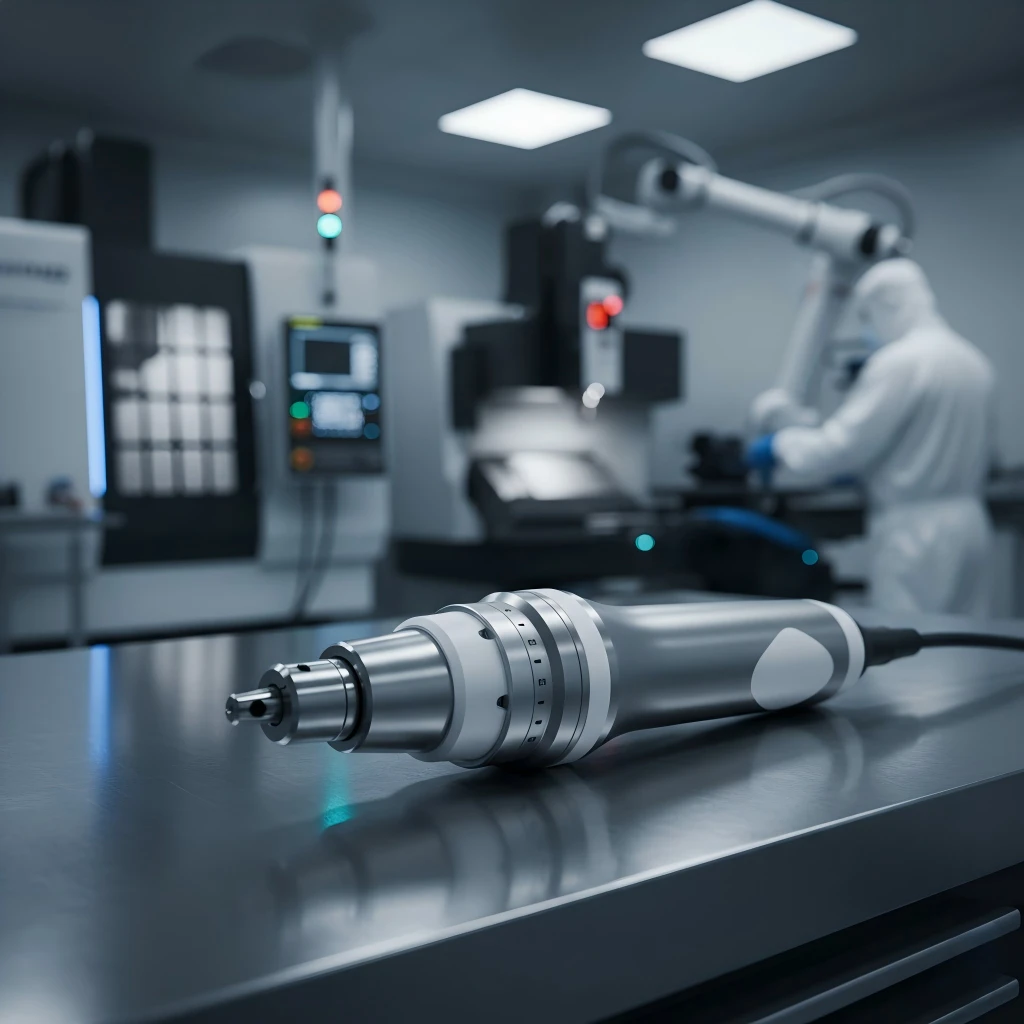
High-Performance Orthopedic Bone Drill for Trauma Surgery | Precision Surgical Power Tools for Bone Drilling and Fixation | OrthoPro Medical Equipment
The OrthoPro orthopedic bone drill is a high-precision surgical power tool designed for efficient bone drilling in trauma and joint replacement surgeries. This orthopedic bone drill provides stable torque and variable speed control to ensure surgical accuracy. As a leading orthopedic bone drill, it features a fully autoclavable design and ergonomic handling to meet the rigorous demands of modern operating rooms.
OEM vs. ODM: What’s the Difference for Your Strategy?
People mix these up alot, but getting it wrong costs money.
- OEM (Original Equipment Manufacturer): You bring the exact design, blueprints, and specs. The factory just builds it. In my experience, unless you have a dedicated R&D team of biomedical engineers on payroll, this is a risky path.
- ODM (Original Design Manufacturer): The factory has pre-engineered, clinically tested platforms. You select a high-performance drill or saw, make specific modifications (battery type, ergonomic grip, software limits, coupling types), and put your brand on it.
For 95% of distributors wanting to create a medical tool private label, ODM is the golden ticket. You skip the 2-year R&D phase and go straight to market with a proven design.
Case Study: Escaping the Margin Squeeze
I’ll keep this anonymous to protect the client, but let’s talk about a mid-sized distributor in South America. For eight years, they sold trauma power tools for a massive European brand. Their gross margin was capped at 18%. When local hospitals started slashing budgets, the distributor was forced to lower prices, eating the loss themselves because the big brand refused to lower wholesale costs.
They came to OrthoPro wanting their own line. We worked with them on an ODM basis.
Instead of starting from zero, we took our proven trauma drill platform. We customized the chuck to be compatible with the specific K-wires and reamers popular in their region, tweaked the battery housing, and laser-marked their new brand logo.
The Result:
- Time to market: 4 months.
- New gross margin: 55%.
- They won three major hospital tenders the next year because they could finally compete on price without sacrificing clinical quality.
The Reality of Sourcing a Custom Medical Bone Drill
You can’t just go on Alibaba, search for a bone drill, and slap your logo on it. Cheap power tools kill patients and destroy brands. If a drill stalls while a surgeon is reaming a femur, or if an ODM surgical saw vibrates too much and damages soft tissue, your brand is dead. Forever.
When you are looking for a partner for OEM medical power tools, you need to look at the engineering math, not just the glossy brochure.
Measuring Quality: Process Capability Index (Cpk)
If a supplier can’t talk to you about their Cpk, hang up the phone. Cpk measures how close a manufacturing process is to its specification limits and how consistent it is.
Here is the formula we use in real manufacturing environments:
Cpk = min ( (USL – Mean) / (3 * Standard Deviation) , (Mean – LSL) / (3 * Standard Deviation) )
- USL = Upper Specification Limit
- LSL = Lower Specification Limit
In plain English: If you order a custom medical bone drill with a concentricity tolerance of 0.05mm, you don’t just want one drill to meet that spec. You want 10,000 drills to meet that spec. An aerospace or medical grade factory aims for a Cpk of 1.33 or higher (meaning the process is highly capable and produces minimal defects).
A lot of shady suppliers will hand-build a perfect prototype for you. It passes all your tests. Then mass production hits, and suddenly 15% of your tools have wobbly chucks. That’s a low Cpk problem. At OrthoPro, our CNC machining centers are calibrated to maintain tight tolerances across full production runs, so the 500th drill performs exactly like the 1st.
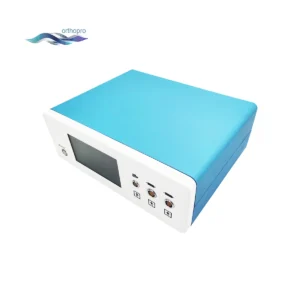


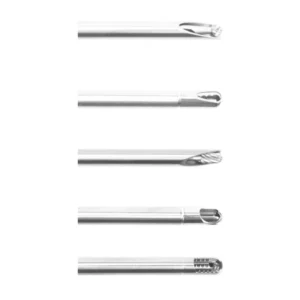
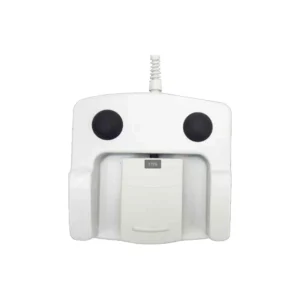
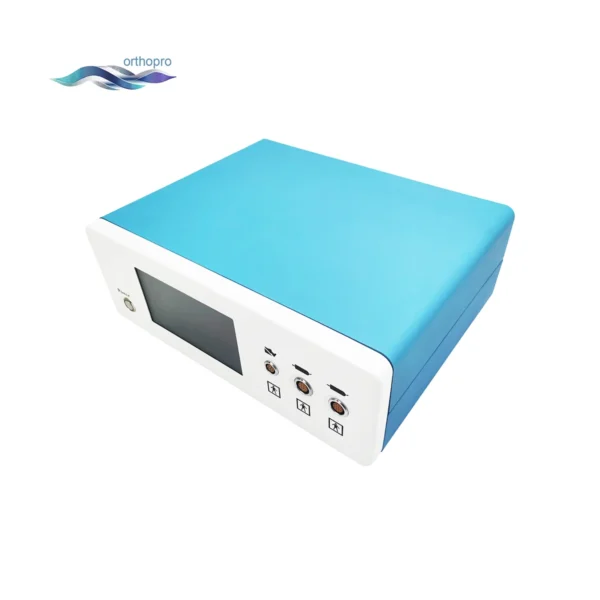
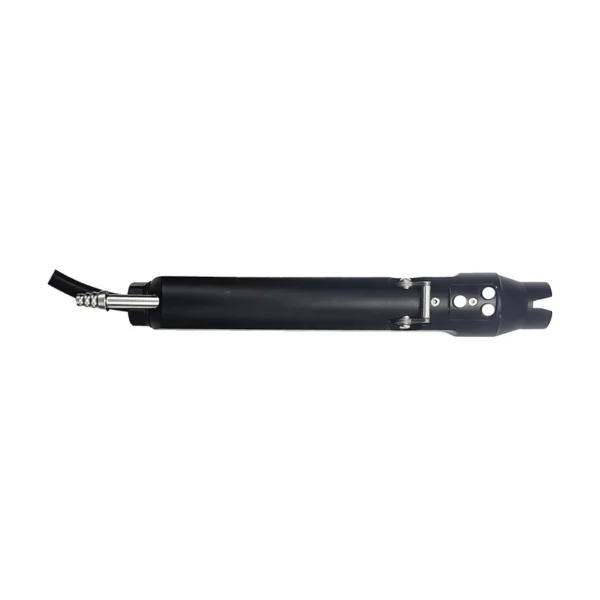
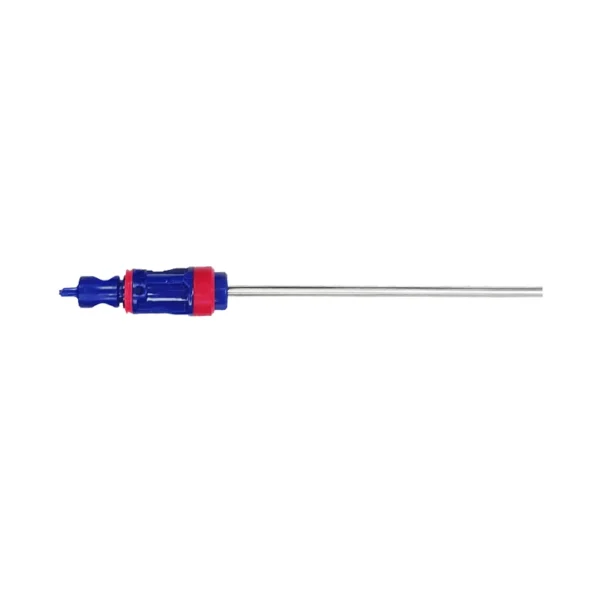

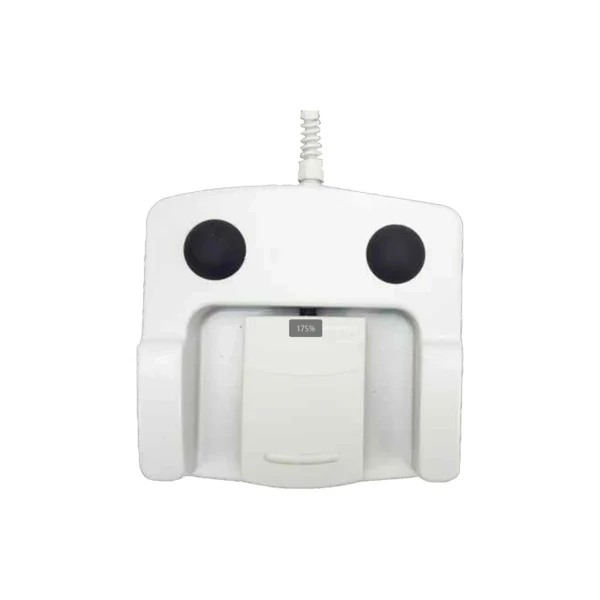
High-Performance Arthroscopy Shaver System for Joint Surgery – Professional Orthopedic Surgical Power Tools for Wholesale
Our Arthroscopy Shaver System is a precision-engineered medical device designed for efficient soft tissue resection and bone debridement in joint surgeries. This reliable arthroscopy shaver system features a high-torque motor and ergonomic handpiece to ensure surgical accuracy. As a leading supplier, we provide this arthroscopy shaver system to hospitals and distributors seeking durable, high-speed orthopedic solutions.
Key Technical Specs You Can’t Compromise On
If you are building a medical tool private label, your spec sheet needs to be aggressive. Here is what hospital procurement officers and surgeons actually care about:
- Motor Technology: Must be Brushless DC (BLDC). Brushed motors create carbon dust and burn out. BLDC motors offer higher torque at lower speeds, which is critical for tapping and reaming.
- Autoclavability: The entire handpiece (minus the battery) must survive 135°C (275°F) steam sterilization. The seals are everything here. If the internal potting of the electronics is cheap, the moisture will fry the motherboard after 20 cycles.
- Torque vs. Speed: A cranial perforator needs high speed (up to 1,200 RPM) and auto-stop safety features. An acetabular reamer needs low speed (250 RPM) but massive torque (>3.3 N.m) to cut dense bone without stalling.
The Hidden Costs: In-House vs OEM/ODM
Let’s break down the math. Why is OEM/ODM so much more profitable? We look at the Total Cost of Ownership (TCO).
TCO = Initial R&D + Capital Equipment + Regulatory Fees + Cost of Goods Sold (COGS) + Maintanence of Quality System
Here is a rough comparison table if you were to launch a new trauma drill system:
| Cost Category | Building In-House (Estimated) | Partnering with OrthoPro (ODM) |
|---|---|---|
| R&D & Engineering | $250,000 – $500,000 | $0 (Using proven platforms) |
| CNC & Factory Setup | $1.5M – $3M | $0 |
| Time to Market | 2 to 4 Years | 3 to 6 Months |
| ISO 13485 Certification | $50,000 + dedicated staff | Handled by Manufacturer |
| Minimum Order Quantity | N/A (but high sunk cost) | Flexible to scale with you |
| Risk of Failure | Extremely High | Very Low |
The numbers don’t lie. By outsourcing the heavy lifting of manufacuring, you preserve your capital to do what you do best: Marketing, Sales, and Distribution.
Red Flags to Watch for When Choosing a Manufacturing Partner
The medical manufacturing space is full of middlemen pretending to be factories. If you are trusting someone with your medical tool private label, look out for these:
1. They claim “FDA Approved” on everything.
Factories are FDA registered. Medical devices receive FDA 510(k) clearance. If a supplier tells you their factory is “FDA Approved”, they don’t know what they are talking about.
2. Refusal to allow third-party audits.
If you want to send an SGS or TÜV inspector to check their facility and they make excuses, walk away.
3. Poor material traceability.
If a surgical saw blade snaps during an amputation, the hospital will investigate. You need to be able to trace that specific blade back to the exact batch of raw 17-4PH stainless steel it was cut from. If your OEM partner doesn’t have a robust ERP system tracking material lot numbers, the liability falls entirely on your brand.
Navigating Regulatory Compliance: CE and FDA
This is the part that scares most companies away from launching their own brand. The regulatory landscape (especially the new European MDR) is brutal.
But when you use a reputable ODM partner, the regulatory path becomes a shared burden.
For example, if you want to sell a custom medical bone drill in the US, you need a 510(k) clearance demonstrating your device is “substantially equivalent” to a legally marketed device (the predicate). When you partner with us, we provide the extensive technical files, biocompatibility test reports, electrical safety data (IEC 60601-1), and sterilization validation reports needed to submit your application.
Trying to generate that data from scratch in your own facility could cost hundreds of thousands of dollars in lab testing alone.
Designing the Perfect ODM Surgical Saw: An Engineering Perspective
Let’s look specifically at saws—oscillating and reciprocating. Surgeons complain about two things with saws: vibration and heat.
If a saw vibrates too much, it causes surgeon fatigue and creates jagged bone cuts, which slows down healing. If the blade heats up too much due to poor mechanical transmission in the handpiece, it causes thermal necrosis of the bone. Dead bone doesn’t heal; it leads to implant loosening and massive lawsuits.
To build a premium ODM surgical saw under your label, we focus on eccentric gear precision. The conversion of rotary motion from the motor to the oscillating motion of the saw head must be nearly frictionless. We utilize specialized dampening materials and aerospace-grade bearings.
This means when your sales reps walk into an OR and hand the tool to an orthopedic surgeon, it feels solid, balanced, and quiet. That tactile feel is what closes the deal.
The Step-by-Step Process of Launching Your Private Label
So, how does this actually work if you decide to pull the trigger? Here is the roadmap we use with our B2B clients:
Phase 1: Market Gap Analysis
You tell us what your market needs. Is it a high-end, heavy-duty large torque drill for joint replacements, or a lightweight, cannulated drill for sports medicine and K-wire placement?
Phase 2: Platform Selection & Customization
We take our base models and customize them. You pick the battery interface, the chuck styles (AO quick-coupling, Hudson, Stryker, etc.), and the ergonomic finishes. We handle the 3D modeling and render what your branded tool will look like.
Phase 3: Prototyping and Validation
We build the physical prototypes. You take them. Put them in the hands of your key opinion leaders (KOLs) and friendly surgeons. Let them use it on sawbones or in cadaver labs.
Phase 4: Regulatory Paperwork & Mass Production
While you register the product with your local Ministry of Health, we lock in the manufacturing SOPs. Once clearance is granted, we hit the big red button on mass production.
Phase 5: After-Sales and Spares
A power tool brand is only as good as its repair service. We supply you with OEM spare parts—motors, gearboxes, batteries—so your local technicians can service the tools quickly, keeping the hospitals happy.
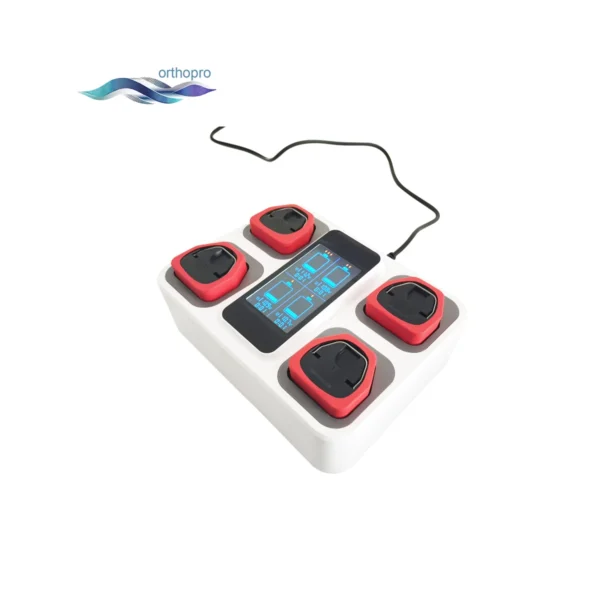
Arthroscopy Shaver System for Orthopedic Joint Surgery | High-Speed Endoscopic Shaver for Knee and Shoulder Procedures | OrthoPro Surgical Power Tools
The Arthroscopy Shaver System by OrthoPro is an advanced surgical solution designed for precision soft tissue resection and bone debridement. This high-performance Arthroscopy Shaver System offers surgeons exceptional control and efficiency during minimally invasive joint surgeries. Engineered for durability, our Arthroscopy Shaver System ensures optimal clinical outcomes in knee, shoulder, and hip arthroscopy.
Calculating Your ROI on an OEM Project
You need to know if this is worth your time. Here is the basic ROI formula for switching from distribution to private label:
ROI = ( (Annual Profit from Private Label – Annual Profit from Distributed Brand) – Initial Setup Cost ) / Initial Setup Cost * 100
Let’s say your setup cost (regulatory, first inventory batch, marketing) is $100,000.
As a distributor, you made $200,000 profit a year.
With your own brand, your margins double, and you make $400,000 a year.
ROI = (($400,000 – $200,000) – $100,000) / $100,000 * 100 = 100% ROI in year one.
Year two? It’s pure profit acceleration because the setup costs are gone.
Stop Building Someone Else’s Empire
Every time you sell a drill with another company’s logo on it, you are building their brand equity. You are doing the hard work of relationship building, tender negotiations, and surgeon training, but they own the asset.
It is time to shift the power dynamic.
At OrthoPro, we are not just a factory; we are the backend engine for some of the fastest-growing regional orthopedic brands in the world. We specialize in OEM medical power tools that stand toe-to-toe with global giants in quality, but give you the margin flexibility to dominate your local market.
If you are a regional distributor moving over $1M a year in trauma or joint replacement products, you are leaving money on the table by not having your own power tool line.
Stop accepting shrinking margins. If you are serious about taking control of your supply chain and building a medical tool private label that surgeons actually respect, you need a partner who understands the clinical and manufacturing realities.
Don’t wait until your current supplier cuts you out of the market. Take the first step towards independence. Contact our team today to discuss your custom medical bone drill project, or drop us your specs directly at info@orthopro.mx. Let’s build something that lasts.
Frequently Asked Questions (FAQ)
Q: How long does it realistically take to launch an ODM surgical saw or drill under our own brand?
A: If we are adapting an existing, clinically proven platform, you can have prototypes in your hand in 4-6 weeks. Full mass production and shipping usually take 3 to 4 months, depending on how fast your local regulatory bodies process the paperwork.
Q: We are a mid-sized distributor. Do we need to order 1,000 units to start an OEM medical power tools project?
A: No. We know that medical devices aren’t cheap consumer electronics. We offer flexible Minimum Order Quantities (MOQs) for our B2B partners starting a medical tool private label, allowing you to test the market without destroying your cash flow.
Q: How do you handle warranty and repairs for custom medical bone drills?
A: We provide comprehensive technical training for your local biomedical engineers and supply you with modular spare parts. This means you can fix 90% of issues locally within 48 hours, which is a massive selling point against big brands that force hospitals to ship drills overseas for repair.
Q: Can we customize the attachments to fit the specific implants we currently sell?
A: Definetly. The coupling mechanism (the chuck) is highly customizable. Whether you need AO quick couplings, Hudson, Zimmer, or a proprietary design for your specific trauma screws and K-wires, our engineering team can machine it to exact tolerances.