
Let’s be brutally honest for a second. If you sit in the supply chain office of a mid-sized hospitel or a massive regional healthcare network, you already know the orthopedic service line is tearing a massive hole in your budget.
Every single month, you watch invoices roll in for basic trauma hardware, and the numbers are completely detached from reality. We all just sit around pretending it’s totally normal to pay $1,500 for a small piece of machined titanium just because a guy in a suit stood in the corner of the operating room while the surgeon put it in.
The traditional model of buying trauma hardware—ordering single plates on consignment, letting sales reps treat your sterile core like their personal locker room, and relying entirely on national contracts—is completely broken. It’s a massive, institutionalized leak.
Today I’m going to strip the corporate marketing garbage away. We are going to talk about the actual mechanics of how to scale your purchasing. We’re getting into the weeds on how to actually bulk buy orthopedic implants without causing your surgeons to riot in the hallways.
This isn’t some academic theory written by a consultant who has never stepped foot on a loading dock. This is the gritty, highly controversial reality of pulling millions of dollars out of your supply chain by bypassing the traditional sales model completely.
The Big GPO Myth (Why You Are Still Overpaying)
I’ll just say it out loud, and the contract managers at the big GPOs (Group Purchasing Organizations) will probably want my head for it: GPOs are not the magic bullet for physician preference items.
If you need to buy ten thousand boxes of nitrile gloves, bedpans, or a truckload of saline, sure, use your GPO. They leverage national volume to get you a slight discount on cheap commodities. But trauma implants are not commodities in the eyes of the market. They are highly protected, wildly high-margin preference items.
Here is what actually happens when you buy a standard distal radius locking plate through a traditional brand-name GPO contract. The manufacturer sets a completely arbitrary, sky-high list price of, say, $1,800. Your GPO flexes its “buying power” and gets you a 20% discount. You pay $1,440. Your finance team high-fives each other feeling like tough negotiators.
But look at what you are actually funding with that $1,440:
- Roughly $80 to $120 for the actual medical-grade titanium and the CNC machining time.
- $300 for the company’s global R&D and massive executive overhead.
- $400 for marketing, sponsorships, and “medical education” golf retreats.
- $400+ directly into the pocket of the 26-year-old sales rep standing in your OR.
When you buy single items on a traditional contract, you are funding a massive sales machine. If your goal is truly efficient hospital orthopedic procurement, you have to cut that middle layer out entirely. You have to go direct to the manufacturer, and you have to bring actual volume to the table.
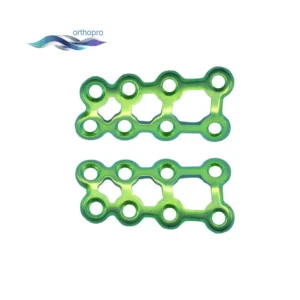
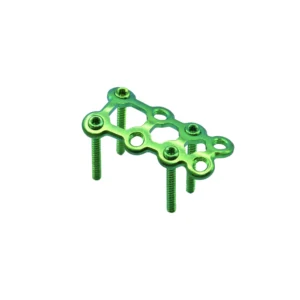
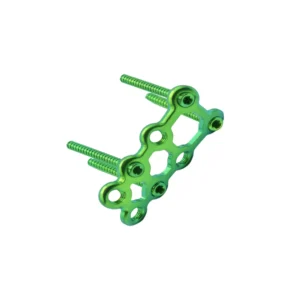


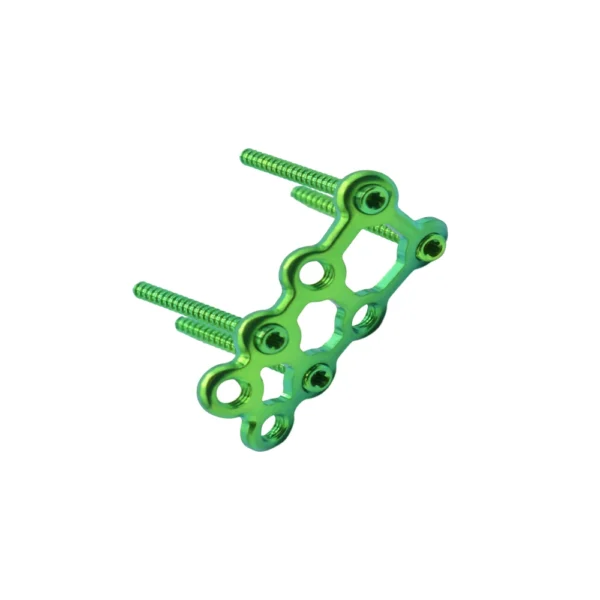
1.5mm Mini Strut Locking Plate (Oblique-angled) | Titanium Hand Fracture Implants | OrthoPro
The 1.5mm Mini Strut Locking Plate (Oblique-angled) is designed for the precise fixation of oblique and spiral fractures in phalanges and metacarpals. Featuring a unique angled geometry, this mini strut locking plate allows for optimal interfragmentary screw placement and buttressing. OrthoPro supplies these specialized 1.5mm locking plates to global orthopedic distributors, ensuring superior stability for complex small bone trauma.
Why Buying Singles is Killing Your Margins
Let’s look at the hidden costs of your current buying habits. Most trauma centers operate on a replace-as-used model. Dr. Smith uses a 6-hole locking plate on a Tuesday night on-call shift. On Wednesday morning, your buyer cuts a Purchase Order for one single replacement plate.
This is financial suicide by a thousand papercuts.
Every single time you place an order for one piece of hardware, you are triggering a cascade of administrative costs that nobody tracks.
- The labor cost of your purchasing agent creating the PO.
- The overnight FedEx shipping fee (because the rep always says it’s “urgent for a case tomorrow”).
- The receiving dock labor to log a single tiny box into the hospital’s ERP system.
- The accounts payable time to process and cut a check for that specific invoice.
Supply chain experts look at the Total Cost of Ownership (TCO). A very conservative estimate in the US healthcare sector is that processing a single PO costs a hospital between $50 and $75 in pure administrative overhead.
If you process 3,000 individual plate and screw orders a year across your network, you just burned $200,000 on paperwork and shipping alone. That’s before you even factor in the inflated cost of the metal itself.
By transitioning to a quarterly bulk order strategy, you slash those hidden admin costs to nearly zero. You receive one pallet, process one invoice, and distribute internally.
The 80/20 Rule in Trauma Procurement
So you want to scale up and buy direct. The immediate fear every CFO has is holding too much dead stock. Nobody wants to write a check for $800,000 worth of titanium just to watch it expire on a shelf in five years. (And yes, the sterile packaging degrades and expires, even though the metal doesn’t care).
This is where you need to get surgical with your data. You cannot blindly order 500 of every single SKU in a vendor’s catalog. That’s how you get fired.
You need to apply the Pareto principle to your Case Mix Index. If you pull your surgical billing data from the last 36 months, you will find a very predictable, almost boring pattern. Human anatomy doesn’t change much, and the ways we break our bones falling off ladders or crashing cars are surprisingly consistent.
Roughly 80% of your trauma volume is going to be handled by about 20% of the available plate shapes and sizes.
When you sit down to negotiate a bulk direct purchase, you only want to aggressively stock your high-turnover bread and butter:
- Standard 3.5mm and 4.5mm broad/narrow dynamic compression plates.
- Volar distal radius locking plates (these fly off the shelves constantly).
- Proximal humerus plates.
- Basic cortical and cancellous locking screws.
You leave the highly specialized, weird anatomical plates (like a complex 3D calcaneal plate or a customized pelvic reconstruction plate) on an ad-hoc ordering basis. But for the daily grind of long-bone fractures, you lock down the volume.
The Economic Order Quantity (EOQ) Math
Alright, let’s get slightly nerdy but keep it highly practical. How do you actually know exactly how many plates to buy at once?
If you guess and buy too many, your holding costs (storage space, capital tied up, expiration risk) eat your savings. If you buy too few, you get hit with those shipping and admin costs again.
Serious procuremnt teams use the EOQ formula. It looks intimidating in textbooks but it’s actually very simple math that will save your job when finance audits your decisions.
The basic text formula is: Square root of [ (2 * Annual Demand * Cost per Order) / Holding Cost per Unit ]
Let’s run a real scenario so you can see it work.
Your network uses 1,200 distal tibia plates a year.
Your internal cost to process a PO and handle the shipping is $120.
Your cost to hold one plate in inventory for a year (capital opportunity cost plus shelf space) is roughly $15.
Step 1: 2 * 1,200 * 120 = 288,000.
Step 2: Divide that by 15 = 19,200.
Step 3: The square root of 19,200 is roughly 138.
There is your magic number. Your mathematically optimal order size is 138 plates. This means you should be placing a bulk order roughly 8 to 9 times a year for that specific SKU.
Most hospital supply chains just guess. They say, “Uh, just order 50 of them and see how it goes.” Stop guessing. Put the actual math into your spreadsheets and watch your efficiency skyrocket.
The Stigma Around “Discount” Hardware
We need to address a really dirty word in the medical device industry: discount.
When I talk to clinical directors about finding discount locking plates, orthopedic surgeons immediately tense up. They picture a rusty piece of scrap metal made in a dirty garage. They have been totally brainwashed by legacy brand reps to believe that if a plate doesn’t cost a fortune, it’s going to snap in half inside the patient’s leg.
Let’s look at the actual facts.
Premium direct manufacturers—the kind you actually want to partner with for bulk deals—use the exact same raw materials as the giant legacy brands. We are talking strictly about ASTM F136 Ti-6Al-4V ELI (Extra Low Interstitials) titanium alloy.
They use the exact same multi-axis Swiss CNC machines to cut the metal. They use the same surface anodizing and shot-peening treatments to maximize the fatigue strength of the plate. They test to the exact same ASTM F382 biomechanical bending standards to prove the plate can survive a million walking cycles.
A discount locking plate isn’t a cheapened medical device; it is a cheapened supply chain. You are paying a lower price because you aren’t paying for a bloated corporate structure.
Look at this quick breakdown of what you are actually funding:
| Cost Driver | Traditional Brand Consignment | Direct Bulk Purchase Model |
|---|---|---|
| Titanium & Manufacturing | 10% – 15% of price | 60% – 70% of price |
| Sales Rep Commission | 20% – 30% of price | 0% (Eliminated) |
| Marketing & Overhead | 30% – 40% of price | 10% – 15% of price |
| Hospital Cost per Plate | $1,200+ | $300 – $450 |
The data is right there staring you in the face. By buying direct, you are just buying the engineering. Nothing more.
Surviving the Surgeon Pushback (The Real Fight)
This is the real battlefield. The math is easy. The warehouse logistics are completely manageable. The absolute hardest part of this entire process is telling Dr. Jones that he can no longer use his favorite legacy plate that he’s used since his residency.
There was a fascinating study in JAMA Surgery a few years back that found most surgeons have absolutely zero concept of what their implants cost. They just ask the scrub tech for the tray, drill the holes, place the screws, and move to the next OR to do it again.
If you walk into a Value Analysis Committee (VAC) meeting and tell your surgeons, “We are switching vendors because it saves us money,” you will lose. Immediately. They will claim you are compromising patient safety, and hospital administration will always side with the doctors over the supply chain guys.
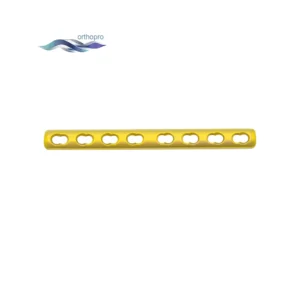
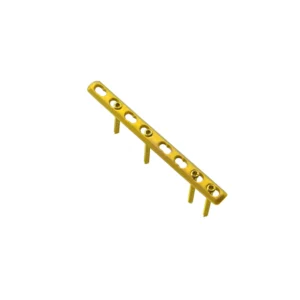

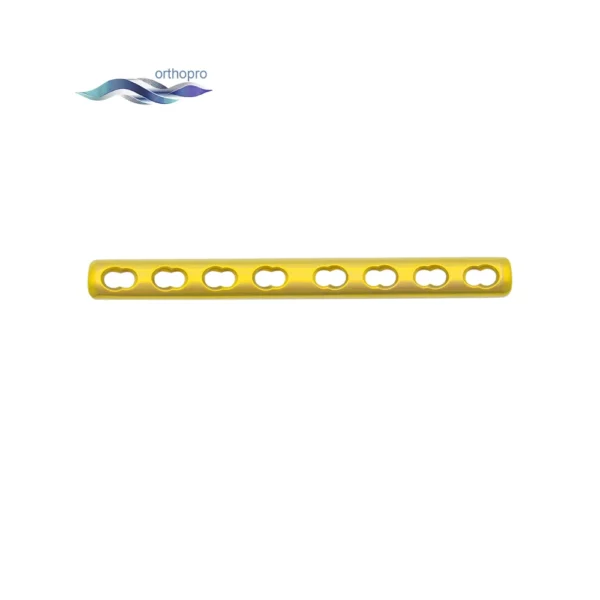
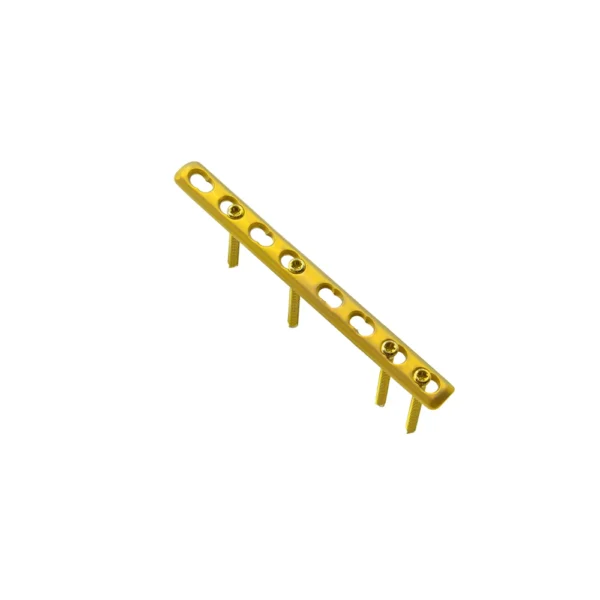

1/3 Tubular Locking Plate | Titanium Small Fragment System | Distal Fibula & Clavicle Fracture Fixation
The 1/3 Tubular Locking Plate by OrthoPro is a versatile implant designed for the internal fixation of small bone fractures, particularly in the distal fibula and clavicle. This one-third tubular plate features a low-profile design with threaded locking holes, providing superior angular stability compared to conventional plates. Ideal for osteopenic bone, our 1/3 tubular locking plate offers surgeons a reliable solution for lateral malleolar and other small fragment fractures.
Here is the exact playbook to win that fight:
1. Lead with Biomechanical Data, Not Dollars
Before you even mention the price tag, put the engineering reports on the table. Show them the independent ASTM F382 fatigue testing results of the direct-buy plates. Show them that the new plate withstands 1 million cycles of bending stress perfectly. You have to prove clinical equivalence first. If the metal is identical and the fatigue strength is identical, the clinical outcome will be identical.
2. Isolate the Key Opinion Leaders (KOLs)
Do not try to convince the entire ortho department at once. It’s a mob mentality. Find one or two younger, data-driven surgeons who actually care about the hospital’s financial health. Bring them in early. Let them test the instruments in a sawbone lab. Once they realize the screwdrivers have good bite and the drill bits are perfectly sharp, they will champion the product for you to the older docs.
3. Implement Gainsharing (Legal Bribery)
This is the most powerful tool in your arsenal. Tell the orthopedic department: “If we standardize our high-volume trauma plates and save the hospital $1.2 million this year, I will dedicate 20% of those savings to buy you that new 3D C-arm or robotic surgical assistant you’ve been begging for.”
When you align their clinical desires with your financial goals, suprise suprise, they suddenly become very open to using different hardware.
Real World Case Study: The 5-Hospital Flip
I want to share an anonymous but very real scenario from a mid-sized healthcare group operating 5 hospitals in the Midwest (a mix of Level II and Level III trauma centers).
Three years ago, their trauma spend was a total disaster. They had 6 different legacy vendors floating around. Reps were constantly fighting for shelf space in the sterile core. The procuremnt team was drowning in thousands of overlapping SKUs. They were spending just over $4.2 million annually on fracture hardware alone.
They brought in a ruthless new Director of Supply Chain. She didn’t care about the legacy relationships or who the reps took to dinner. She pulled three years of usage data and identified their top 30 highest-volume SKUs.
She took that exact list to three direct-manufacturing partners and asked for a 12-month bulk volume commitment bid.
She faced massive pushback for the first three months. Two older surgeons even threatened to take their cases to a competing hospital across town. But she held firm, used the gainsharing tactic to get the younger docs on board, and forced the transition.
The results after 18 months?
- They dropped their average cost per locking plate from $1,150 down to $340.
- Their total annual trauma spend plummeted to $1.8 million.
- They completely eliminated rep traffic in their sterile corridors, massiveley improving infection control protocols.
They literally pulled $2.4 million in pure profit out of thin air just by changing how they bought, not what they bought.
The Logistics of Centralized Inventory
When you fire the reps and move away from vendor-managed consignment, you now own the inventory. This scares a lot of traditional buyers because they don’t want to do the work.
You need to establish a hub-and-spoke distribution model. You do not send pallets of plates to individual surgery centers. You receive the bulk order at your central warehouse hub.
From there, you need a bulletproof Unique Device Identification (UDI) barcode scanning system. Every single plate, screw, and K-wire must be scanned when it leaves the hub, and scanned again when it is consumed in the OR. If your ERP system isn’t set up to auto-decrement inventory upon scanning, you will fail and run out of stock.
You also have to actively manage expiration dates. Implement a strict First-In, First-Out (FIFO) shelf policy. It sounds incredibly basic, but you would be shocked how many multi-billion dollar hospitals end up throwing out $50,000 worth of expired titanium because a lazy tech shoved the new boxes in front of the old boxes on the shelf.
Your central warehouse manager needs to pull a monthly report on any sterile items hitting the 12-month expiration window, and physically push them to the high-volume trauma centers to ensure they get used first.
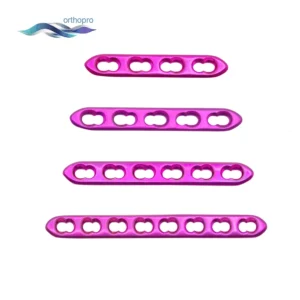
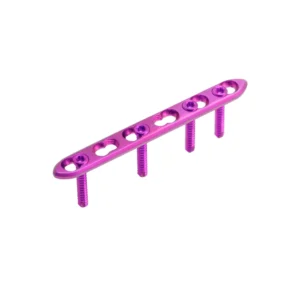
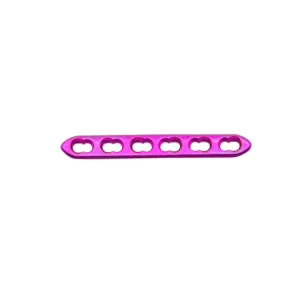

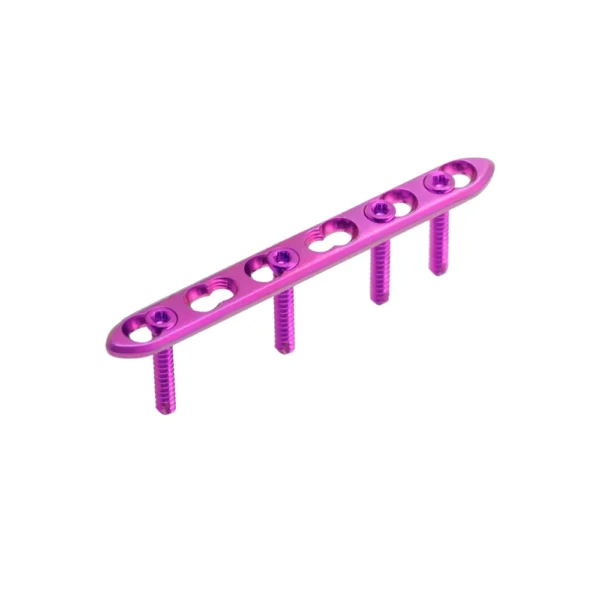
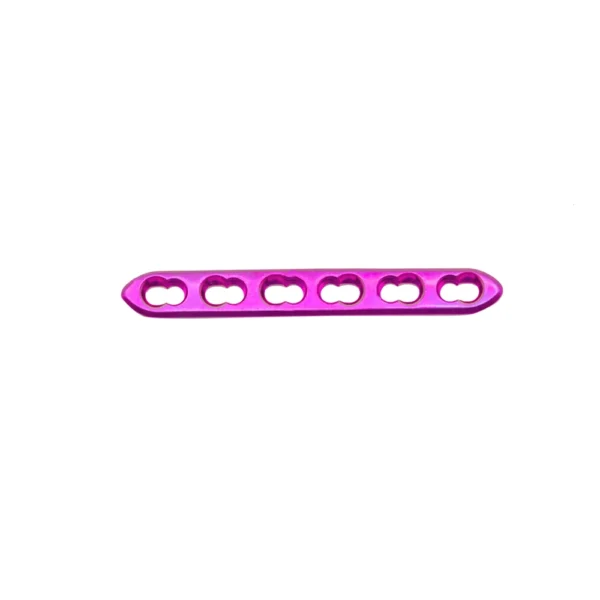
2.0mm Mini Locking Plate System | Titanium Hand & Foot Fracture Implants | OrthoPro
The 2.0mm Mini Locking Plate is engineered for the stable fixation of fractures in metacarpals, metatarsals, and phalanges. Designed for trauma surgery, this mini locking plate features a low-profile construct to minimize soft tissue irritation while ensuring high fatigue strength. OrthoPro supplies these precision 2.0mm locking plates to global orthopedic distributors and medical institutions
Navigating the Instrument Tray Dilemma
One of the biggest hurdles in switching to a bulk direct model is the instrumentation. Surgeons need drill guides, depth gauges, plate benders, and torque limiters to actually put the plates in.
Legacy companies loan you the instrument trays for “free” as long as you promise to keep buying their ridiculously expensive implants. When you buy direct, you usually have to purchase the instrument sets outright.
Do not let this upfront capital expenditure scare you away from the deal.
Yes, a comprehensive trauma instrument set might cost you $15,000 to $25,000 upfront. But if that set allows you to use $300 plates instead of $1,200 plates, your ROI is usually achieved in less than 20 surgical cases. After that, every single surgery for the next five years is pure savings. It is definitly the best capital investment a hospital can make.
Quick FAQ: Bulk Orthopedic Purchasing
Q: Will smaller independent hospitals actually benefit from bulk buying, or is this just for massive networks?
Absolutely they can benefit. You don’t need to order 5,000 plates to see a massive price drop. Even moving from single-unit overnight ordering to a bi-annual order of 50 high-use plates will drastically cut your shipping and admin overhead. Direct manufacturers are often much more willing to negotiate with independent surgery centers than the massive legacy brands are because they don’t have massive minimum quotas to hit.
Q: What happens if a patient presents with a highly unusual fracture and we don’t have the specific plate in our bulk inventory?
You never eliminate ad-hoc ordering entirely. Human anatomy is wild and unpredictable. Your goal with bulk buying is 80% coverage, not 100%. For that highly specific comminuted pelvic fracture, you still call in the specialty rep and buy that one specific plate off-contract. You are just removing the premium markup from your everyday, routine fracture cases.
Q: How do we manageeing sterilization and tray tracking without a rep present?
Your Sterile Processing Department (SPD) handles it, exactly like they handle general surgical instruments. Direct manufacturers provide detailed FDA/CE validated Instructions for Use (IFU) for cleaning and sterilizing their trays. Without reps hovering around moving things, your SPD actually gains more control over their workflow and tracking.
Stop the Financial Hemorrhage Today
If you are exhausted by the constant battle over surgical implant costs, and you are tired of watching your budgets get blown up by rep commissions, it’s time to drastically change your strategy. You do not have to sacrifice clinical quality to achieve massive financial savings. You just have to be willing to modernize your supply chain.
At OrthoPro, we specialize in cutting through the industry noise. We partner directly with hospital networks, centralized procurement groups, and forward-thinking surgery centers to provide premium, biomechanically superior titanium trauma hardware at true factory-direct pricing.
Stop playing the single-order consignment game. If you want to see exactly what your margins could look like when you ditch the reps, we need to talk. Reach out directly through our contact us page or email our team directly at info@orthopro.mx. Send us a blinded list of your top 20 trauma SKUs and your current annual usage. We will run the math, provide the testing data, and show you exactly how much money you are leaving on the table.