If you’re a buyer or supply chain manager dealing with medical supplies right now, your stress levels are probably off the charts. The whole world of global trade has turned into a massive headache over the last couple of years. We are sitting here in 2026, and the old playbook for buying medical goods is completely broken. You used to be able to just email a factory in Asia, get a cheap quote, and wait for the boat to arrive. Easy. Not anymore.
Today, unpredictable trade policies and massive duties are eating companies alive. The sheer cost of bringing products across the ocean has mutated into a monster. If you haven’t adjusted your strategy yet, you’re likely bleeding cash without even realizing the full extent of the damage.
The Brutal Reality of the Orthopedic Import Tax Right Now
Let’s be brutally honest for a second. The people running purchasing departments who only stare at the factory unit cost on a spreadsheet are actively destroying thier companies. I see it all the time. They get a quote for a batch of bone screws or joint replacements from a supplier overseas, see a low per-unit price, and immediately sign the purchase order. They are totally ignoring the reality of the orthopedic import tax.
Over the past few years, the U.S. government has slammed heavy duties on imported healthcare equipment. If you look at the Section 301 tariffs, things got incredibly nasty. We are talking about average rates hitting 54% for certain Chinese imports, and in some retaliatory phases, the numbers being tossed around were even higher. Think about that. You buy a product for $100, and you owe the government a massive percentage just to bring it inside the country. And that doesn’t even count the freight logistcs.
The situation with medical device tariffs is a massive wake-up call for the industry. You cannot run a profitable distribution business when the government is taking a massive cut right at the port. When the tariffs first rolled out years ago, the medtech industry lobbied hard to get exemptions, arguing that healthcare products shouldn’t be weaponized in trade wars. But those exemptions dried up. Now, raw materials like medical-grade titanium and stainless steel are caught in the crossfire alongside finished goods.
And let’s not pretend these taxes are going away anytime soon. Trade tensions are the new normal. Political leaders love using tariffs to look tough, and medical devices somehow ended up right in the middle of it. If you build your 2026 business plan hoping that the tariffs will magically disappear, you are setting your business up for a spectacular failure.
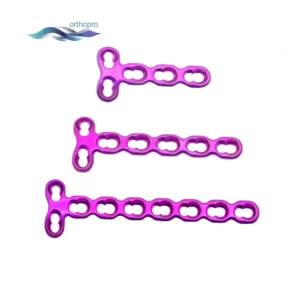

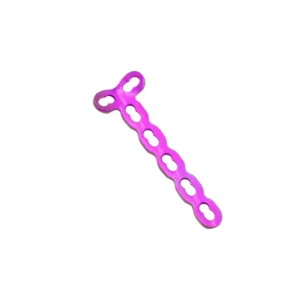
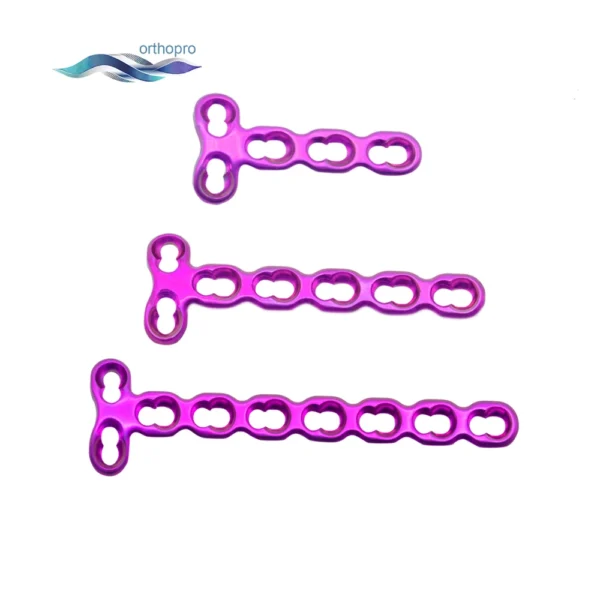
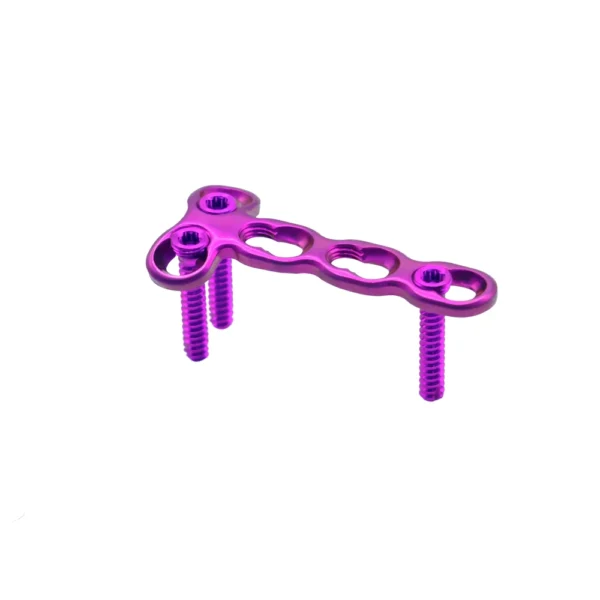
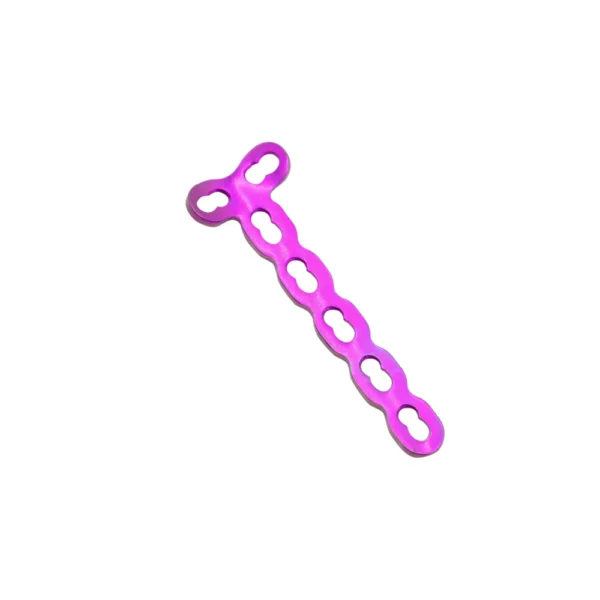
2.0mm Mini T Reconstruction Locking Plate | Hand & CMF Trauma Implants | OrthoPro
The 2.0mm Mini T Reconstruction Locking Plate provides superior angular stability for the fixation of small bone fragments in hand, wrist, and maxillofacial surgeries.[1] Engineered with a low-profile interface to minimize soft tissue irritation, this 2.0mm Mini T Reconstruction Locking Plate is ideal for comminuted fractures in osteopenic bone. Its specialized T-shape design facilitates optimal anatomical reduction and rapid healing.
Breaking Down the True Cost of Sourcing (The Math)
Let’s do some actual math. Because until you put the numbers on paper, it’s easy to live in denial about how much money you’re wasting. We need to calculate the Landed Cost, not just the factory cost. Far too many buyers still don’t understand how to model this properly.
Here is the plain text formula you should be using for every single shipment:
Landed Cost = Factory Price + Ocean/Truck Freight + (Factory Price x Tariff Rate) + Customs Brokerage Fees + Inventory Carrying Cost
Let’s run a side-by-side comparison. Imagine you need a massive order of titanium implants. You get two quotes. One from China, one from Mexico.
Scenario A: The Traditional Asian Supplier
- Factory Price: $50 per unit
- Tariff Rate: 25% (A conservative estimate for recent Section 301 duties on medical goods)
- Freight Cost per unit: $4.00 (Ocean freight is volatile, subject to port delays and container shortages)
- Customs/Brokerage per unit: $1.00
- Inventory Carrying Cost: High. Because transit takes 35 to 40 days, you have to order massive batches and store them, tying up your cash. Let’s add $3.00 per unit for warehouse space and frozen capital.
Calculation:
$50 + $4.00 + ($50 x 0.25) + $1.00 + $3.00 = $70.50 Landed Cost
Scenario B: Nearshoring to Mexico
- Factory Price: $55 per unit (Looks more expensive at first glance, right?)
- Tariff Rate: 0% to 4.5% (Thanks to USMCA rules of origin. Let’s use 0% for fully compliant goods)
- Freight Cost per unit: $1.50 (Just driving a truck across the border)
- Customs/Brokerage per unit: $0.75
- Inventory Carrying Cost: Low. Transit is just 3 days. You can order just-in-time. Let’s add $0.50 per unit.
Calculation:
$55 + $1.50 + $0 + $0.75 + $0.50 = $57.75 Landed Cost
Do you see what just happened? The “cheaper” Asian supplier actually costs you almost $13 more per part. If you order 10,000 parts, you just burned $130,000 because you were obsessed with the $50 factory price instead of the true landed cost. You need to keep the factory cost seperate from the true cost of doing business. This math is exactly why the old way of doing things is completely dead.
China vs. Mexico: The Ultimate Sourcing Showdown
The shift of manufacturing power is happening right in front of our eyes. Mexico actually surpassed China as the top source of U.S. goods imports recently, holding about 15.5% of the market share compared to China’s 13.4%. This isn’t just a random blip; it’s a structural change driven by automotive, aerospace, and heavily by medical equipment.
Let’s look at the hard facts. Why are so many medtech companies packing up and moving thier operations down to places like Tijuana, Juárez, or Monterrey?
- Labor Rates: This might surprise you, but the labor cost dynamic has flipped over the last decade. Based on recent 2026 data, Mexico averages around $4.90 per hour for manufacturing labor. China is sitting around $6.50 per hour. You’re getting a 25% advantage just on the hourly wage before you even talk about shipping or tariffs.
- Transit Times: Land transport from a Mexican facility takes about 2 to 7 days to reach a U.S. distribution center. A container ship from Shenzhen? You’re looking at 20 to 40 days, assuming there’s no port strike, no canal drought, and no random logistcs meltdown at the terminal.
- Trade Agreements and Policy: The USMCA is the golden ticket here. It offers duty-free or vastly reduced rates for qualifying goods. China doesn’t have that preferential access, meaning you get hit with volatile, punitive duties over and over. Mexico also has the IMMEX program, which allows manufacturers to temporarily import raw materials and components tax-free, as long as the finished goods are exported. This is a massive cash flow benefit.
- Intellectual Property Protection: Let’s talk about the elephant in the room. When you send your proprietary CAD drawings for a revolutionary new spinal implant overseas, how confident are you that the design won’t mysteriously end up in a competitor’s catalog a year later? The legal frameworks under USMCA provide much tighter IP protections compared to traditional overseas sourcing.
Here’s a quick breakdown to keep things crystal clear:
| Feature | Sourcing from China | Sourcing from Mexico |
|---|---|---|
| Average Labor Cost | ~$6.50/hour | ~$4.90/hour |
| Standard Transit Time | 20 – 40 Days | 2 – 7 Days |
| Tariff Exposure | High (25% – 54%+) | Low (0% – 4.5% USMCA) |
| Supply Chain Risk | High (Geopolitical tension) | Low (Cross-border trucking) |
| Time Zone Alignment | Terrible (12+ hours difference) | Great (Same business hours) |
| IP Protection | High Risk | Strong (USMCA enforced) |
You really have to ask yourself why you’d tolerate a 12-hour time difference and 40-day shipping delays when you can get better rates and stronger legal protections right next door.
Securing Your Global Supply Chain Trauma Plates
Let’s get specific about a critical product category. When you are dealing with trauma products, speed and reliability aren’t just nice to have; they are the entire business model. You can’t tell a hospital to hold off on a surgery because your container of locking plates is stuck in customs in Long Beach.
Trauma cases are entirely unpredictable. A hospital might burn through their inventory of distal radius plates, dynamic compression plates, or intramedullary nails in a single weekend if there’s a massive car pileup or a major local emergency. As a distributor, your ability to replenish that hospital’s stock immediately is what keeps you on their preferred vendor list.
If your global supply chain trauma plates are coming from the other side of the planet, you are forced to hold massive amounts of safety stock in your own warehouse. You have to buy 6 months of inventory upfront just to buffer against shipping delays. That is millions of dollars of your company’s cash sitting on shelves, collecting dust, just so you don’t run out of a specific screw size.
When you shift production to North America, that safety stock requirement plummets. You can run a leaner operation. You can order smaller batches more frequently to accomodate the actual surgical demand. This is the secret to freeing up working capital while still keeping your demanding hospital clients perfectly happy. You can even nearshore the packaging and sterilization processes, so the products cross the border ready for the operating room.
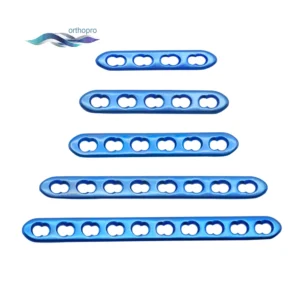

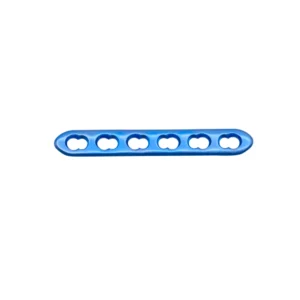
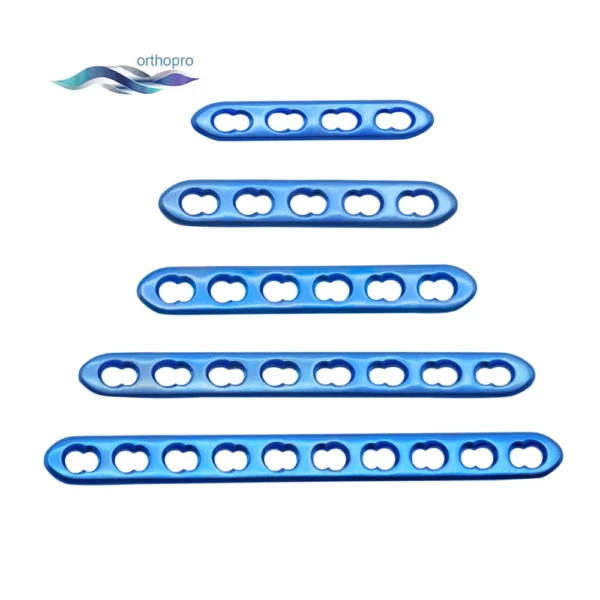
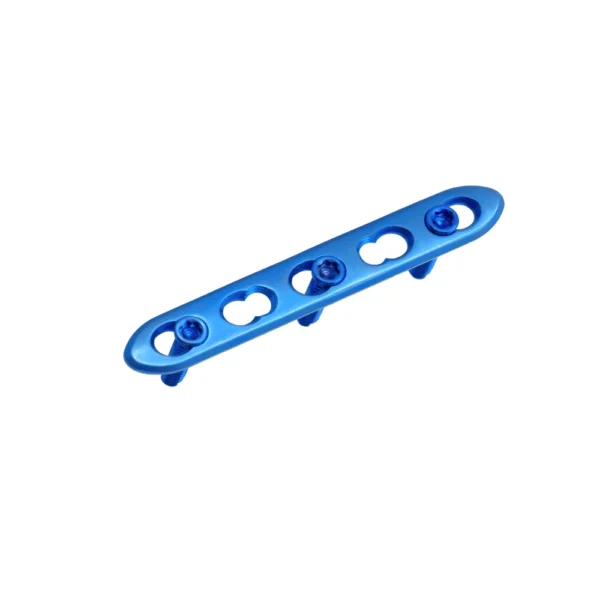

2.4 mm Mini Locking Plate | Titanium Small Fragment & Trauma Implants | OrthoPro
The 2.4 mm Mini Locking Plate provides robust angular stability for the fixation of small bone fractures and osteotomies. Engineered with a low-profile design to minimize soft tissue irritation, this 2.4 mm Mini Locking Plate is compatible with our mini fragment system, offering versatile solutions for hand, wrist, and foot surgery.
The Hidden Costs of Overseas Quality Control
I have a highly controversial take on quality control that upsets a lot of traditional managers: finding a defect at your own warehouse means your supply chain system has already failed.
Think about the timeline. A factory in Asia produces a batch of pedicle screws. They put them in a box, load them on a ship, and 35 days later they arrive at your loading dock in California. Your inspection team opens the box, runs a dimensional check, and realizes the thread pitch is out of tolerance.
What do you do now?
You call the factory. They argue with you. They ask for pictures. They finally agree to remake the batch. It takes them 2 weeks to manufacture, and then another 35 days to ship it back to you. You just lost over two months. Two months where you have zero product to sell. Your customers are going to buy from your competitor, and honestly, they might never come back.
Now imagine that same scenario with a factory in Mexico. You find a defect. You get on the phone in the exact same time zone. The factory manager drives a truck up to your facility three days later with the replacement batch, or you literally fly down there for the afternoon to inspect the raw material yourself. The crisis is completely averted. The geographic proximity isn’t just about saving on shipping costs; it’s about crisis management. The ability to fix mistakes quickly is a massive competitive advantage that doesn’t show up on a standard spreadsheet.
The FDA and Nearshoring: It’s Easier Than You Think
A lot of buyers are terrified of moving production because they think the FDA registration process will be a nightmare. I get it. The paperwork is awful. But moving to Mexico isn’t like starting from scratch in an unregulated market.
Because Mexico is so deeply integrated with the U.S. economy, the contract manufacturers there are already intimately familiar with FDA CFR 21 Part 820 and ISO 13485 standards. When you source CNC machined implants or Swiss-turned pedicle screws from a reputable Mexican facility, you’re working with quality teams that speak the exact same regulatory language as your auditors in the States. You don’t have to sacrifice compliance to beat the tariffs. You just need to work with a partner who already has thier quality management system completely dialed in.
A US Distributor’s Wake-Up Call (Real Story)
Let me share a story about a mid-sized distributor out of Texas. I won’t name them to protect thier privacy, but their situation is incredibly common in the orthopedic space.
Two years ago, they were doing great margins on thier orthopedic lines. Then the new wave of tariffs hit. Suddenly, their cost of goods sold spiked by 25% overnight. They couldn’t pass that massive price hike onto the hospitals because they were locked into multi-year, fixed-price vendor contracts. Thier margin essentially evaporated. They were barely breaking even on every surgery they supplied.
They tried negotiating with their Asian suppliers, but the factories were already operating on razor-thin margins due to thier own raw material inflation and refused to drop prices.
Out of pure desperation, they started looking south. They audited a few facilities in Mexico, did a trial run on some basic instrumentation, and eventually moved thier high-volume trauma plates over.
The results were wild. Because the goods qualified under USMCA, the 25% tariff disappeared completely. Their freight costs dropped by 60%. But the biggest shock was the cash flow recovery. Since lead times dropped from 40 days to 5 days, they stopped buying 4-month inventory blocks. They freed up over $1.2 million in working capital in the first quarter alone. That was cash they used to hire three new sales reps and expand their territory into a neighboring state.
They didn’t just survive the tariff hike; they used it as leverage to completely restructure their business and crush their competitors who were still waiting on slow boats from overseas.
Future-Proofing Your Sourcing Strategy
If you want to survive the next five years in the medical device industry, you have to get proactive. Stop waiting for the evening news to tell you how much your products are going to cost next month. You need to take control of your supply lines right now.
First, you need to audit your current tariff exposure. Go through your entire product catalog and figure out exactly what HTS (Harmonized Tariff Schedule) codes you are using. Find out exactly how much you paid in duties last year. You might be shocked at the final number when you see it all added together.
Second, start a pilot project. You don’t have to rip up your entire supply chain tomorrow and risk everything. Take one product family—maybe a specific line of intramedullary nails, a set of basic surgical instruments, or even external fixators—and try to source it locally. Test the waters. See how the communication and logistcs feel when dealing with a partner in the same time zone.
Finally, you need to deeply understand the rules of origin. Just because something ships from Mexico doesn’t automatically mean it’s duty-free. The product actually has to be substantially transformed or manufactured there to qualify for USMCA benefits. Slapping a label on a product that was fully built in Asia won’t save you; customs will catch that and fine you heavily. You need a legitimate manufacturing partner who understands compliance and has the documentation to prove it.
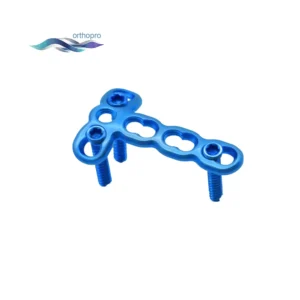

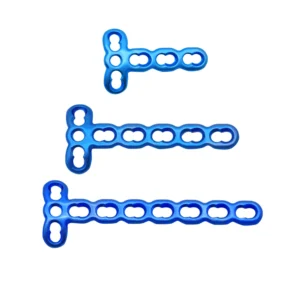
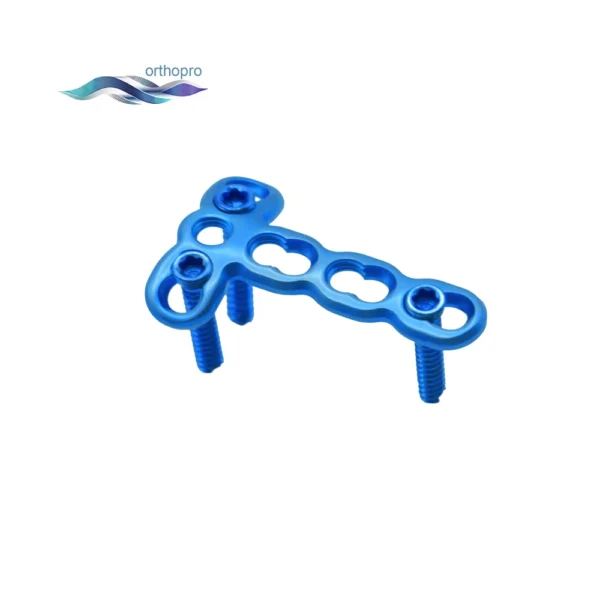
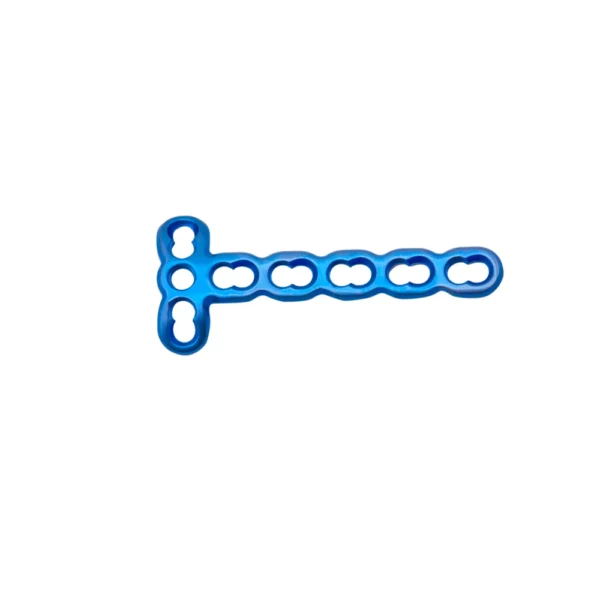

2.4 mm Mini T Locking Plate | Titanium Distal Radius & Metacarpal Fixation | OrthoPro
The 2.4 mm Mini T Locking Plate is engineered to provide rigid angular stability for juxta-articular fractures in the hand, wrist, and foot. Featuring a low-profile anatomical design, this 2.4 mm Mini T Locking Plate reduces soft tissue irritation while offering superior buttressing for small bone fragments. Ideal for treating metacarpal and distal radius fractures, our Mini T Locking Plate ensures reliable fixation and rapid recovery.
Frequently Asked Questions
Are medical device tariffs going to decrease anytime soon?
Honestly, it’s highly unlikely. Both major political parties in the U.S. have embraced tariffs as a standard tool for trade negotiation and protecting domestic manufacturing interests. Planning for duties to disappear is a terrible business strategy. You should assume the current rates are the new baseline and plan your supply chain accordingly. If you wait for the government to save your profit margins, you will be waiting forever.
How does USMCA actually work for orthopedic implants?
The United States-Mexico-Canada Agreement allows products to enter the U.S. duty-free or at severely reduced rates, but only if they meet specific “Rules of Origin.” This means a certain percentage of the manufacturing process or the value of the materials must originate in North America. You can’t just route finished Asian goods through Mexico to avoid taxes. You need real production happening across the border, which is why partnering with established facilities is mandatory.
Is the quality of medical manufacturing in Mexico reliable?
Definately. Mexico has spent decades building up specialized manufacturing hubs, especially in places like Tijuana and Ciudad Juárez. They produce everything from aerospace components to FDA-regulated class III medical devices. The workforce is highly skilled, and many global giants like Medtronic, Johnson & Johnson, and others already have massive footprints there. It’s not the 1990s anymore; the facilities are world-class and strictly adhere to ISO 13485 and FDA standards.
What is the hidden cost of long lead times?
The biggest hidden cost is frozen capital. When a product takes 40 days on the water, you have to pay for that product long before you can sell it. You also have to over-order to ensure you don’t run out during the transit time. This means hundreds of thousands of dollars are tied up in warehouse safety stock instead of being used to grow your business, hire sales staff, or invest in new equipment.
Let’s Fix Your Supply Chain Margins Today
Are unpredictable tariffs and brutal shipping delays eating your margins alive? It really doesn’t have to be this way. Continuing to do the same thing and hoping the trade war magically ends is a recipe for disaster.
Imagine running a leaner operation where your lead times are counted in days, not months. Imagine completely eliminating those 25% to 54% penalty taxes off your balance sheet. By nearshoring your production, you can lock in your costs, protect your cash flow, and actually sleep at night knowing your inventory is just a truck ride away.
You need a partner who understands the intricacies of Mexican manufacturing and can deliver pristine quality without the logistical nightmares. Stop burning money on ocean freight and government taxes.
Take action right now. Reach out to the team at OrthoPro. We can look at your current setup, crunch the numbers, and show you exactly how much you could save. Don’t wait for the next tariff hike to ruin your quarter. Drop us an email at info@orthopro.mx or visit our Contact Page to request a detailed quote and start future-proofing your business today.