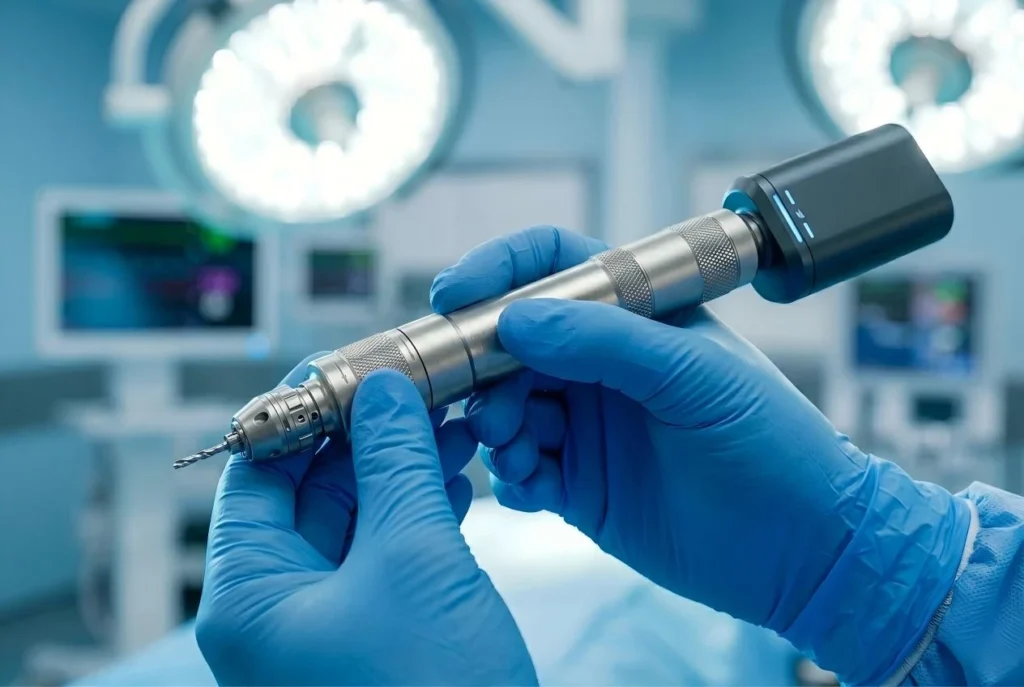
Look, if you are still pushing the same heavy, corded, single-purpose bone drills to your local hospital networks, you are going to have a really hard time hitting your sales quotas by 2026. The medical power tools market is shifting faster than most regional distributors realize.
I talk to hospital procurement directors and independent distributors every single week. The conversations have completely changed over the last two years. Buyers used to ask for the standard trauma drill, then a seperate reamer, and maybe a standalone oscillating saw. Now? They just don’t have the budget or the physical operating room space for that kind of bloated inventory.
Surgeons want versatility. Procurement wants cost-cutting. And as a distributor, you need products that actually win tenders. That is exactly why multi-functional bone drills are absolutely dominating the upcoming orthopedic drill trends. If you want to grab market share from the legacy players, you need to understand where this demand is coming from and how to position your inventory right now.
What the Medical Power Tools Market Data Actually Says
Let’s look at some real numbers so we aren’t just guessing. According to data from Grand View Research, the global surgical power tools market was valued at around $2.1 billion a couple of years ago and is on track to smash through $3.2 billion by the end of the decade. But that growth isn’t spread evenly.
The segment seeing the most aggressive growth? Cordless, battery-operated, multi-attachment systems.
Why is this happening in 2026? A few massive shifts:
- The Outpatient Boom: More orthopedic procedures are moving from massive hospitals to smaller Ambulatory Surgical Centers (ASCs). ASCs have smaller sterilization departments and tiny storage rooms. They literally cannot store five different bulky tools for one joint replacement.
- Staff Shortages: Nurses and scrub techs are overworked. Passing a completely different power tool across the table takes time and increases the risk of dropping something unsterile. Swapping a quick-connect attachment on a single handpiece takes two seconds.
- Sterilization Bottlenecks: Sterilizing three separate handpieces costs three times as much and takes up three times the space in the autoclave.
Hospitals are waking up to this. The days of buying a dedicated drill just for K-wires and a totally separate saw for osteotomies are dying out.
The Controversial Truth About Joint Surgery Equipment
I’m going to say something that alot of the big legacy brands don’t want distributors to talk about. The major “Tier 1” orthopedic device manufacturers have spent the last two decades intentionally locking hospitals into highly restrictive, single-purpose ecosystems.
They sell a base drill at a slight discount, but then they absolutely hammer the hospital on maintainance contracts, proprietary batteries, and specialized repair fees for every individual unit. If the reamer breaks, you have to buy their specific replacement part at a 400% markup.
Honestly, this is a massive rip-off, and hospital administrators are finally pushing back.
They are actively looking for alternative suppliers who offer open-architecture, highly adaptable advanced surgical instruments. They want a main handpiece that is basically an indestructible workhorse, which can seamlessly transition between drilling, reaming, and sawing just by clicking on a different head.
This is your biggest opportunity as an independent distributor. When you walk into a procurement meeting pitching a high-quality multi-functional system, you aren’t just selling a tool. You are selling a way for that hospital to break free from the monopoly of legacy service contracts. You win the bid because your total cost of ownership (TCO) absolutely destroys the competition.
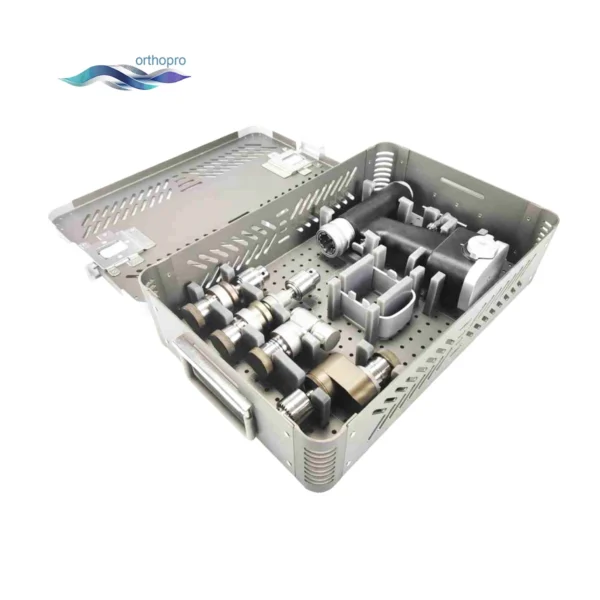
Multi-Functional Orthopedic Bone Drill System for Joint Surgery | OrthoPro
The OrthoPro Multi-Functional Orthopedic Bone Drill is a premium surgical power tool for precise bone drilling and cutting. This versatile orthopedic bone drill features a robust brushless motor. Ideal for B2B medical suppliers, our surgical bone drill ensures reliability in joint and trauma surgeries.
Orthopedic Drill Trends: The Tech That Actually Matters
If you are planning your inventory strategy for 2026, you need to know which features actually close deals. Don’t just buy whatever is cheapest from an unknown factory. Surgeons are incredibly picky about their power tools. If the drill feels unbalanced or stalls during a dense bone cut, they will throw it off the sterile field and demand the hospital never buy from you again.
Here is what you need to look for when sourcing a multi-functional orthopedic bone drill:
1. Brushless Motor Technology
Old brushed motors create friction, they get dangerously hot, and the carbon brushes eventually wear out and die mid-surgery. Brushless motors are non-negotiable now. They run cooler, they are significantly quieter (which surgeons love because ORs are loud enough), and their lifespan is generally 30-50% longer.
2. True Autoclavable Batteries
A few years ago, hospital staff had to use aseptic transfer rings to get non-sterile batteries into sterile housings. It was a clumsy, annoying process. The 2026 standard is lithium-ion batteries that can literally be tossed right into the autoclave along with the handpiece. If the system you are distributing still uses old NiMH batteries or requires weird aseptic funnels, you will lose the tender.
3. The “Quick-Connect” Ecosystem
The true value of a multi-functional unit lies in its attachments. A premium base unit should instantly recognize and lock into:
- A standard Jacobs chuck for drilling.
- An AO quick-coupling for specialized drill bits.
- A high-torque acetabular reamer attachment for hip replacements.
- An oscillating saw head for knee arthroplasty or major osteotomies.
- A wire/pin driver for trauma fixation.
When a surgeon is deep into a complex trauma case, they need to switch from driving a K-wire to drilling a pilot hole to driving a screw in less than a minute. Your equipment has to keep up.
Breaking Down the Math: Single-Purpose vs Multi-Functional
When you sit down with a hospital CFO, you need to speak their language: numbers. You need to show them exactly how much cash they are burning on legacy single-purpose setups.
Here is a simple ROI formula you can use in your pitch presentations. You don’t need fancy software, just write this out on a whiteboard for them:
Total Cost of Ownership (5 Years) = Initial Hardware Cost + (Annual Maintenance Cost x 5) + (Sterilization Cost Per Cycle x Number of Surgeries over 5 Years)
Let’s look at a realistic scenario for a mid-sized orthopedic department doing 500 joint and trauma cases a year.
| Expense Category | 3 Separate Single-Purpose Tools (Drill, Saw, Reamer) | 1 Multi-Functional System with 3 Attachments |
| Initial Hardware Buy-in | High (Buying 3 separate motors/handpieces) | Medium (Buying 1 motor/handpiece + attachments) |
| Battery Inventory Needed | 6-9 batteries (different sizes for different tools) | 3-4 standardized batteries |
| Sterilization Volume | 3 large trays per surgery | 1 medium tray per surgery |
| Annual Maintenance Contracts | Tripled (3 separate motors to service) | Single (Only 1 motor to service) |
| OR Storage Footprint | Massive | Minimal |
By swapping out the old way of thinking, you can usually show a hospital a 30% to 45% reduction in their 5-year Total Cost of Ownership. That is how you get signatures on a purchase order.
Real Talk: How One Distributor Stole 40% Market Share (Anonymous Case Study)
Let me share a quick story about a mid-sized distributor we work with down in South America. Let’s call them “Distributor X” to protect their market position.
For years, Distributor X was scraping by on tiny 10% margins, acting as a middleman for one of the giant American orthopedic brands. They were constantly losing government hospital tenders because the European and US brands were simply too expensive for the local healthcare budget.
In late 2023, they totally flipped their strategy. They dropped the legacy brand and partnered with an independent manufacturer to import a high-end multi-functional bone drill system.
Because they were buying a multi-functional system, their import shipping costs plummeted (shipping one box with attachments instead of three heavy boxes). Their warehouse holding costs dropped.
They took this system into a massive regional hospital that was notoriously cheap. Instead of pitching “better clinical outcomes” (which every sales guy says), they pitched “Operational Efficiency.” They showed the scrub nurses how light the handpiece was. They showed the sterilization department how easy it was to clean. And they showed the procurement director the TCO math.
Within 14 months, Distributor X displaced the legacy brand entirely in that hospital network. They increased their own profit margins from 10% to over 35%, and they captured roughly 40% of the regional market share simply because they had the right product at the right time. They definately wouldn’t have survived if they kept pushing the old single-purpose tools.
Advanced Surgical Instruments and the Push for Minimally Invasive Surgery (MIS)
You can’t talk about the medical power tools market without mentioning Minimally Invasive Surgery (MIS). Patients today refuse to be cut wide open if there is an alternative. They want tiny incisions, less blood loss, and faster rehab.
This trend directly impacts the kind of joint surgery equipment you need to hold in your inventory. Old, bulky drills block the surgeon’s line of sight when they are working through a tiny two-inch incision.
Modern multi-functional drills are engineered to be highly ergonomic. The weight is balanced perfectly over the surgeon’s wrist so the tip of the drill doesn’t dip. When you attach a sagittal saw head, the vibration is absorbed by the handpiece, not the surgeon’s hand, allowing for incredibly precise bone cuts without tearing up the surrounding soft tissue.
If your hospital clients are setting up new MIS or arthroscopy rooms, a multi-functional system is the only logical choice. It gives them the heavy-duty torque needed for a total hip replacement, but the refined control necessary for delicate sports medicine repairs, all in the exact same base unit.
Your 2026 Action Plan
So, what should you do right now to prepare for the next couple of years?
First, audit your current inventory. If your warehouse is full of heavy, corded equipment, or dedicated single-use bone drills, you need to start clearing that stock out.
Second, find a reliable manufacturing partner. You don’t want to buy from a random factory that vanishes when you need spare parts. You need a brand that understands B2B realities, offers robust warranties, and actually supports their distributors with marketing material and technical training.
This is exactly what we do at OrthoPro. We don’t just sell boxes; we help our international agents build profitable, long-term businesses in their local markets. Our multi-functional systems are engineered with premium brushless motors, universal quick-connect interfaces, and autoclavable lithium batteries that compete directly with the tier-1 brands, but at a price point that actually allows you to make a healthy margin.
Stop losing tenders because your product catalog is stuck in 2015. The market is moving fast, and the hospitals in your territory are actively looking for the solutions we’ve just talked about.
If you are ready to upgrade your product offerings and want to see the exact specifications of our systems, go check out our flagship multi-functional orthopedic bone drill.
Want to discuss regional exclusivity, request a sample unit for your top surgeon to test out, or just get a wholesale price list? Don’t wait around. Shoot us an email directly at info@orthopro.mx or reach out through our website to contact our team. Let’s get your inventory dialed in for 2026.
Frequently Asked Questions (FAQs)
Q: Are multi-functional bone drills less powerful than single-purpose drills?
Not anymore. Ten years ago, maybe. But with today’s advanced brushless motor tech and high-discharge lithium-ion batteries, a quality multi-functional handpiece can deliver the exact same torque (or even higher) as a dedicated single-use drill. Whether a surgeon is reaming a dense acetabulum or driving a thick trauma screw, the power output is incredibly consistent.
Q: How do the maintenance costs compare for distributors handling warranties?
As a distributor, handling repairs on multi-functional units is actually way easier and cheaper. Instead of having to diagnose and stock replacement motors for three different machines, you only have one core motor base to worry about. The attachments themselves (the saw heads, the chucks) are purely mechanical and very rarely break down if they are cleaned properly. Your repair turnaround times will drop massively.
Q: Can the batteries really be put directly into the hospital autoclave?
Yes, assuming you are buying modern, high-grade equipment. The batteries we supply with our multi-functional systems at OrthoPro are completely sealed and designed to withstand standard hospital high-temperature, high-pressure steam sterilization cycles. This eliminates the need for annoying non-sterile battery transfers in the operating room, which scrub nurses absolutely hate doing anyway.