Look, sitting in a purchasing meeting at a hospital or trying to build a product catalog for your medical distribution business is getting harder every year. The surgeons are pounding their fists on the table demanding the absolute latest, flashiest tech. Meanwhile, the finance guys are sweating over spreadsheets, trying to figure out how to slash CapEx budgets by 20%. And there you are, stuck in the middle, trying to source an Arthroscopy Shaver System that doesn’t cost as much as a luxury car but won’t die halfway thru a rotator cuff repair.
Honestly, the market for joint surgery equipment has gotten pretty ridiculous lately. Every manufacturer out there slaps a “premium” or “next-gen” label on their boxes. But when you actually crack open the casing and look at the components? A shocking amount of it is the exact same brushed motor tech from 2015, just repainted with a fancy touchscreen.
If you’re a B2B buyer, a hospital procurement director, or a regional distributor looking to import surgical power tools wholesale, you can’t afford to buy based on shiny brochures anymore. The global arthroscopy devices market is projected to hit around $8.5 billion by 2028 according to Grand View Research. That means alot of money is moving, and alot of subpar factories are trying to grab a piece of the pie.
I’ve spent years dealing with overseas manufacturers, negotiating OEM contracts, and watching clinics blow their budgets on the wrong gear. Today, we are going to strip away the marketing garbage. We’re gonna look at what actually matters when you buy this equipment in 2026.
Why Most Buyers Get Scammed on the Medical Shaver Console
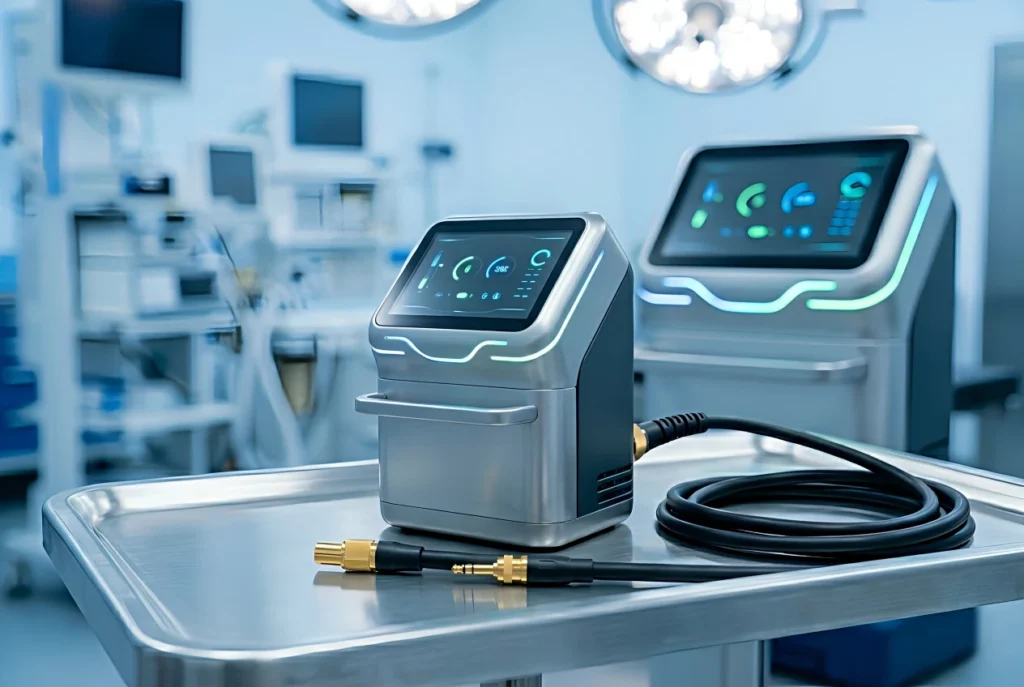
Let’s start with the brains of the operation: the medical shaver console.
A lot of buyers think the console is just a power supply. It’s not. It’s the central nervous system of the surgery. If the software inside that box is laggy, the foot pedal response will be delayed. Try explaining to an angry orthopedic surgeon why the blade kept spinning for a half-second after they took their foot off the pedal while they were working millimeters away from a critical ligament. Yeah, it’s not a fun conversation.
Here is a controversial opinion that usually gets me angry emails from big-name reps: You do not need a console that connects to the hospital’s WiFi so it can download firmware updates from the cloud. It’s a bone shaver, not a Tesla. You need a box that boots up fast, doesn’t crash, and delivers consistent voltage to the handpiece without overheating.
When you are evaluating a manufacturer, ignore the size of the touchscreen. Ask them about their motor control algorithms.
- Does it have auto-window lock? When the surgeon stops the shaver, the blade window needs to automatically close so they don’t accidentally snag healthy tissue when pulling the tool out of the joint. If the console doesn’t support this natively, walk away.
- What is the foot pedal latency? It needs to be under 50 milliseconds. Anything slower, and the surgeon will feel a “drag” in responsiveness.
- Pump integration: Does it talk to the fluid management pump? In 2026, standalone consoles that don’t sync with the irrigation system are basically dinosaurs.
Decoding the Orthopedic Shaver Handpiece (Where the Real Money is Lost)
The console sits on a rack. The orthopedic shaver handpiece is what actually goes to war. It gets dropped, it gets covered in saline and bone fragments, and worst of all, it gets thrown into the autoclave.
This is the biggest pain point I see with B2B clients. They buy a cheap system to save 30% upfront. Six months later, they are buying replacement handpieces because the internal seals failed during sterilization.
If you are sourcing equipment, you gotta understand that the autoclave is the enemy of all electronics. High-pressure steam at 134°C (273°F) will find any microscopic flaw in a handpiece’s housing.
When you are talking to a supplier, demand to know their IP rating and their exact sealing mechanism. Are they using cheap rubber O-rings, or are they using laser-welded titanium encasements with proprietary high-temp polymer seals? A solid handpiece should comfortably survive 500 to 1000 sterilization cycles before needing factory maintanence.
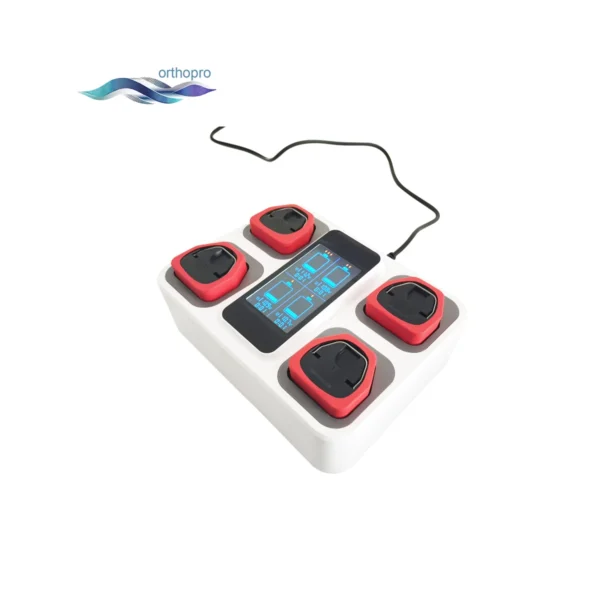
Arthroscopy Shaver System for Orthopedic Joint Surgery | High-Speed Endoscopic Shaver for Knee and Shoulder Procedures | OrthoPro Surgical Power Tools
The Arthroscopy Shaver System by OrthoPro is an advanced surgical solution designed for precision soft tissue resection and bone debridement. This high-performance Arthroscopy Shaver System offers surgeons exceptional control and efficiency during minimally invasive joint surgeries. Engineered for durability, our Arthroscopy Shaver System ensures optimal clinical outcomes in knee, shoulder, and hip arthroscopy.
RPM vs Torque: The Endless Battle
Sales reps love to brag about RPM (Revolutions Per Minute). “Our new handpiece hits 12,000 RPM!”
Cool. Who cares?
If there is no torque behind that speed, the blade is going to stall the absolute second it hits a piece of dense cortical bone. It’s like putting a lawnmower engine in a Ferrari; it might spin fast when it’s lifted off the ground, but the moment the rubber meets the road, it chokes.
For soft tissue resection (like cleaning up a torn meniscus), high RPM is great because it prevents tissue from wrapping around the blade. But for acromioplasty or bone burring, you need pure, unadulterated torque.
You want a system that offers a massive speed range. Look for something that can do 500 RPM for delicate work and ramp up to 8,000+ RPM for aggressive burring, all while maintaining at least 30 to 40 oz-in of torque.
Here is a quick cheat sheet you can use when comparing specs:
| Feature | The “Cheap” Wholesale Stuff | Professional-Grade Systems | Why It Matters for B2B Buyers |
| Motor Type | Brushed DC Motors | Brushless DC (BLDC) | Brushless generates less heat, lasts 3x longer, and requires zero carbon brush maintanence. |
| Cable Connection | Flimsy plastic pins | Gold-plated, reinforced locking collars | Surgeons tug on cables all day. Cheap connectors snap and ruin a $2,000 handpiece. |
| Ergonomics | Heavy, bulky aluminum | Balanced, lightweight titanium/alloy | Surgeon fatigue leads to longer OR times. A lighter handpiece makes you the hero. |
| Sterilization | “Wipe down only” or low cycles | Fully Autoclavable (1000+ cycles) | Hospitals will not tolerate equipment that requires special, slow sterilization methods. |
Sourcing Surgical Power Tools Wholesale: Don’t Get Screwed
If you are a distributor looking to bring in a new line of joint surgery equipment, you are probably looking at overseas manufacturers to protect your margins. I get it. We all do it. A lot of European and American brands are literally just white-labeling Asian-manufactured goods and marking them up 400% anyway.
But buying wholesale medical devices isn’t like buying wholesale phone cases. Things get messy real fast if you don’t know what you’re doing.
First off, check the regulatory paper trail. In 2026, the regulatory hurdles are brutal. If you are importing into Europe, the CE MDR (Medical Device Regulation) is a nightmare. If a factory tells you “Yeah yeah, we have CE,” you need to physically check the certificate with the notifying body. Half the time, their certificate expired in 2023 or it’s only a directive (MDD) certificate, which is basically toilet paper now.
Second, test the supply chain for disposable blades.
This is the razor-and-blade business model. You might sell the console and handpiece at a thin margin, but you make your real money selling the disposable shaver blades and burrs every single month. If your wholesale partner has terrible lead times, your hospitals will run out of blades. When a hospital cancels a surgery because they don’t have blades, they don’t blame the factory. They fire you.
Before you sign an exclusive distribution agreement, buy a few different blade profiles (straight, curved, aggressive, smooth) and give them to a friendly surgeon to test. If the teeth on the burr dull after 5 minutes of hitting bone, the metal alloy is trash.
A Real-World Disaster (And The Fix)
Let me share an anonymized story about a mid-sized distributor we know down in Brazil. About three years ago, they won a massive public tender to supply 40 regional hospitals with orthopedic power systems.
They wanted to maximize their profit, so they bypassed the proven brands and went with a factory they found on a B2B directory that offered rock-bottom prices on shaver systems.
Month one was fine. By month four, the nightmare started.
The handpiece cables started shorting out because the internal wiring couldn’t handle the bending radius during shoulder surgeries. Then, the footswitches started sticking. Surgeons were having to physically kick the pedal to get the blade to stop spinning.
The hospitals freaked out. The distributor had a 45% failure rate within six months. The factory overseas suddenly stopped answering emails and claimed the warranty was void because the hospitals “sterilized them wrong” (a classic excuse). The distributor almost went bankrupt replacing the gear out of pocket to avoid lawsuits.
They eventually scrapped the cheap junk and partnered with a reliable manufacturer. They ended up using the OrthoPro product line because the equipment actually lived up to the specs. The upfront cost was higher, but their return rate dropped to near zero, and they finally started making passive income on the disposable blade sales.
The lesson? Cheap equipment is the most expensive thing you can buy in the medical industry.
The Cost-Benefit Math You Need to Run
When you pitch a hospital procurement director, you can’t just talk about clinical features. You have to speak their language: numbers. You need to show them the Total Cost of Ownership (TCO).
Since WordPress visual editors hate fancy math codes, here is the plain text formula you should be writing on the whiteboard when you negotiate:
TCO per Year = (Purchase Price of Console & Handpiece / Expected Lifespan in Years) + (Annual Repair Costs) + (Cost of Disposable Blades per Surgery * Surgeries per Year)
Let’s say a premium brand charges $15,000 for the system, and a budget brand charges $8,000.
If the budget brand handpiece breaks twice a year, costing $2,000 in repairs and causing 4 cancelled surgeries (which cost the hospital $5,000 each in lost revenue and OR time), that “cheap” $8,000 system actually cost the hospital over $30,000 in its first year.
When you frame it like that, selling a high-quality Arthroscopy Shaver System becomes incredibly easy. You aren’t selling a medical tool; you are selling financial predictability.
How OrthoPro is Changing the Game for Distributors
If you are exhausted from dealing with unreliable suppliers, wildly fluctuating lead times, and equipment that makes surgeons yell at you, it’s time to rethink your sourcing strategy.
At OrthoPro, we don’t play those games. We engineer our orthopedic surgical instruments specifically for the brutal realities of high-volume hospitals. Our shaver handpieces are balanced for absolute precision, our consoles run custom algorithms for zero-latency pedal response, and our equipment is actually built to survive the autoclave.
We understand the B2B side of this business. We know you need strong margins, rock-solid reliability, and a manufacturer who actually picks up the phone when you have a technical issue. We focus on building long-term partnerships with distributors and clinics who refuse to compromise on patient safety.
Don’t let subpar equipment ruin your reputation or your hospital’s budget this year.
Stop guessing and start working with equipment you can actually trust. Head over to our contact us page right now, or shoot an email directly to info@orthopro.mx. Tell us what your current pain points are, what volume you are looking at, and let’s put together a wholesale package that actually makes sense for your business in 2026.
FAQ: B2B Procurement for Arthroscopy Systems
Q1: How many sterilization cycles should a high-quality orthopedic shaver handpiece survive?
Honestly, if a manufacturer won’t guarantee at least 500 autoclave cycles, you shouldn’t buy it. Premium handpieces (like the ones we engineer) use advanced potting compounds and laser-welded seals that can push past 800-1000 cycles if the hospital follows proper cleaning protocols (like not dropping them while they are still hot). The sterilization cycle lifespan is the single biggest factor in your ROI.
Q2: Is it better to buy a multi-functional console or a dedicated shaver console?
It depends entirely on the clinic’s budget and OR setup. Multi-functional consoles that run shaver handpieces, wire drivers, and bone saws are great for saving space on the surgical tower. However, if a multi-console goes down, the hospital loses three tools at once. For high-volume joint centers, having a dedicated medical shaver console is usually preferred for redundancy and specific pump integrations.
Q3: Why are the disposable shaver blades from big OEM brands so ridiculously expensive, and can I use third-party blades?
The big brands sell their capital equipment (the console) at a discount and trap hospitals into predatory contracts for the consumables. It’s the classic printer-and-ink model. Some hospitals try to use third-party “knock-off” blades to save money, but this is incredibly risky. If a cheap third-party burr breaks off inside a patient’s knee, the hospital is looking at a massive lawsuit. The best middle ground is to source your entire system from an independent, high-quality manufacturer like OrthoPro, where the capital equipment is fairly priced and the proprietary consumables don’t bankrupt the department.